Get Full Government Meeting Transcripts, Videos, & Alerts Forever!
Get email alerts on the Transportation Budget topic
No spam. Unsubscribe anytime.
South Carolina DOT asks legislature for more bridge, maintenance and EV-fee authority as gas-tax revenue shifts
Summary
Secretary Justice Powell told a Senate Finance subcommittee the Department of Transportation’s FY26 budget seeks additional bridge funding, continuation of existing match authority and changes to small‑parcel appraisal rules while flagging long‑term revenue pressure from electric vehicles and a paused federal EV charging grant.
Justice Powell, Secretary of Transportation, presented the South Carolina Department of Transportation’s proposed fiscal 2026 budget and multi‑year priorities to the Senate Finance Transportation and Regulatory Subcommittee, outlining requests for additional bridge funding, continuing federal match authority and changes to acquisition appraisal rules.
Powell said the department’s estimated revenues for the coming year are just under $2.8 billion, including about $1 billion in federal reimbursements and roughly $1.63 billion in state funds. He described the budget as focused on maintenance and system preservation — about half of the appropriation — with interstate and capacity improvements as the largest remaining slice. He noted the agency has been debt free since 2023.
The presentation put DOT’s recent 10‑year plan gains and ongoing needs in context. “We have already gotten 1,126 miles underway,” Powell said of railroad safety projects tied to the 2017 roads bill, and he added the agency raised that target to 1,300 miles after an additional appropriation from the Homestead Exemption Fund.
Powell told senators DOT has seen measurable safety results on completed corridors: “we've seen a 20 percent reduction in fatal and serious injury crashes on those corridors.” He said almost 9,400 miles of state highway pavement are either completed or under contract for repaving. On bridges, Powell said DOT owns 8,400 bridges (out of about 9,500 government‑owned bridges statewide), and that 2,400 bridges are 60 years old or older. At the current pace of roughly 50 major bridge projects per year, he warned that the number of 60‑plus‑year bridges DOT owns could grow to about 3,900 in a decade.
To address those needs, Powell described the department’s FY26 requests: continuation of an existing $120 million per year match (used to pull down federal funds), and an additional $200 million for bridges. He said the General Assembly appropriated $200 million last year for bridges, of which DOT has already committed $67 million and intends to obligate the remaining funds before the end of the fiscal year.
Natural‑disaster costs are also part of the request. Powell reported roughly $70 million in infrastructure damage from Hurricane Helene and asked for an additional $50 million to complete debris cleanup in 16 upstate counties for costs not covered by FEMA or the Federal Highway Administration.
Powell raised a longer‑term revenue concern: rapid growth in hybrid and electric vehicles and the effect on gasoline‑tax receipts, DOT’s primary state revenue source. He noted hybrids and EVs are about 3 percent of the state’s roughly 3.4 million registered vehicles and have grown roughly 22 percent annually since 2022. “If you drive an internal combustion vehicle … you are paying at least $200 per year in gasoline taxes,” he said, then contrasted that with South Carolina’s current EV/hybrid registration fee of $120 every two years (about $60 per year). He recommended the General Assembly consider a higher registration fee — citing peer states charging around $200 annually — and suggested a per‑kilowatt‑hour charge to capture pass‑through charging activity.
Powell also described a pause on the federal EV charging infrastructure program: South Carolina had been allocated $70 million, and procurement was about to start when the administration placed a pause. He said the pause had not left DOT “in any financial lurch” because little had been spent beyond planning.
Powell identified two large discretionary federal grants awaiting final agreements: a $175 million grant for replacing the Lake Marion Bridge on I‑95 and funding for reconstructing the Long Point Road interchange in Mount Pleasant. He said DOT is working to finalize grant agreements so projects can proceed.
On administrative matters, Powell asked the subcommittee to consider a proviso reversing a recent appraisal‑board requirement that DOT obtain full appraisals on small parcel acquisitions (the board’s ruling would require appraising entire tracts rather than the small strips needed for right‑of‑way). He said full appraisals for many small acquisitions average about $2,500 and could have a roughly $10 million statewide impact; DOT proposes restoring an expedited, limited‑scope appraisal process for parcels valued under $20,000.
Powell also outlined two requested deletions of outdated provisos, and described an ongoing county transportation (C‑fund) program: 3.99 cents of the gas tax is allocated to counties, distributed by population, land area and rural road mileage. He noted last year’s one‑time General Assembly deposits to CTC committees and said those transfers historically fluctuate by legislative action.
The department also requested a recurring increase in litter‑pickup funding, raising recurring roadside cleanup from $3 million to $8 million to address high‑visibility corridors.
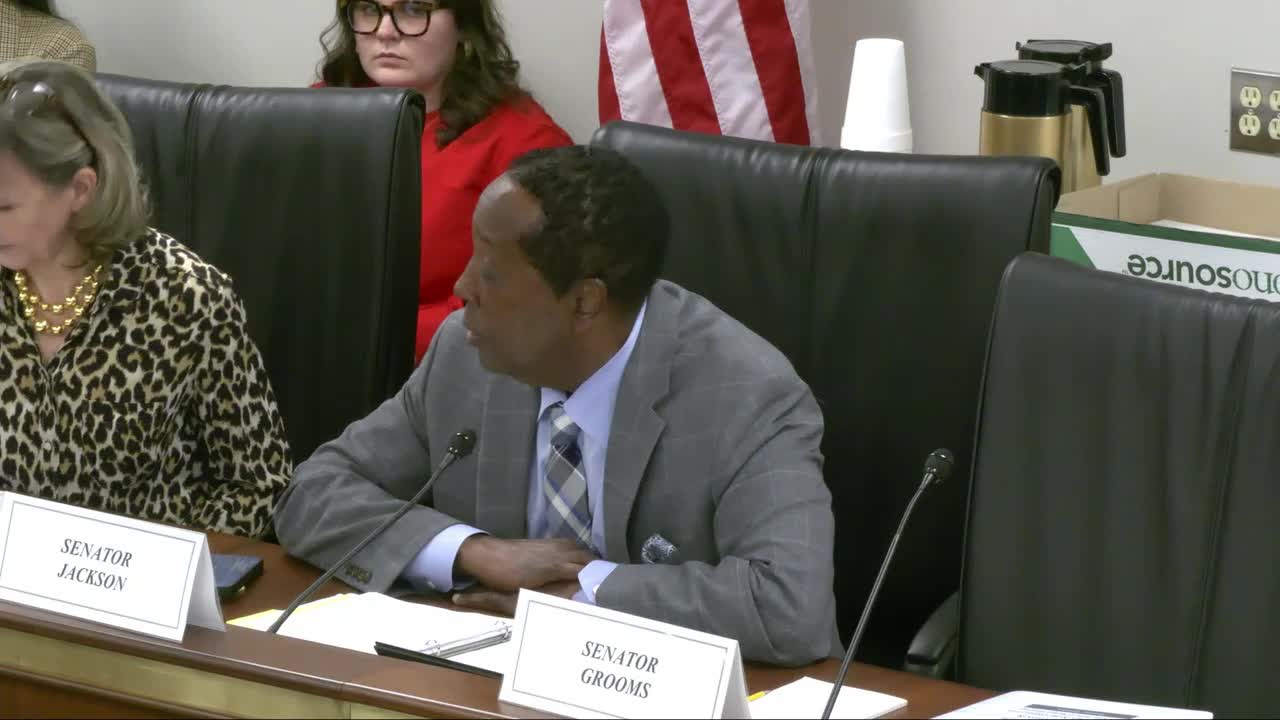
The subcommittee exchanged questions with Powell about the appraisal change, the exact scope of bridge and C‑fund requests, the status of federal grants and how an increasing EV fleet will affect future revenue. No formal votes or final decisions were recorded in the transcript; Powell’s requests will require action by the full Senate and the General Assembly.
Looking ahead, the department’s budget requests and proposed proviso changes will need legislative approval and any permanent change to registration fees would require statutory amendment in Title 56.