Get Full Government Meeting Transcripts, Videos, & Alerts Forever!
Get email alerts on the Finance topic
No spam. Unsubscribe anytime.
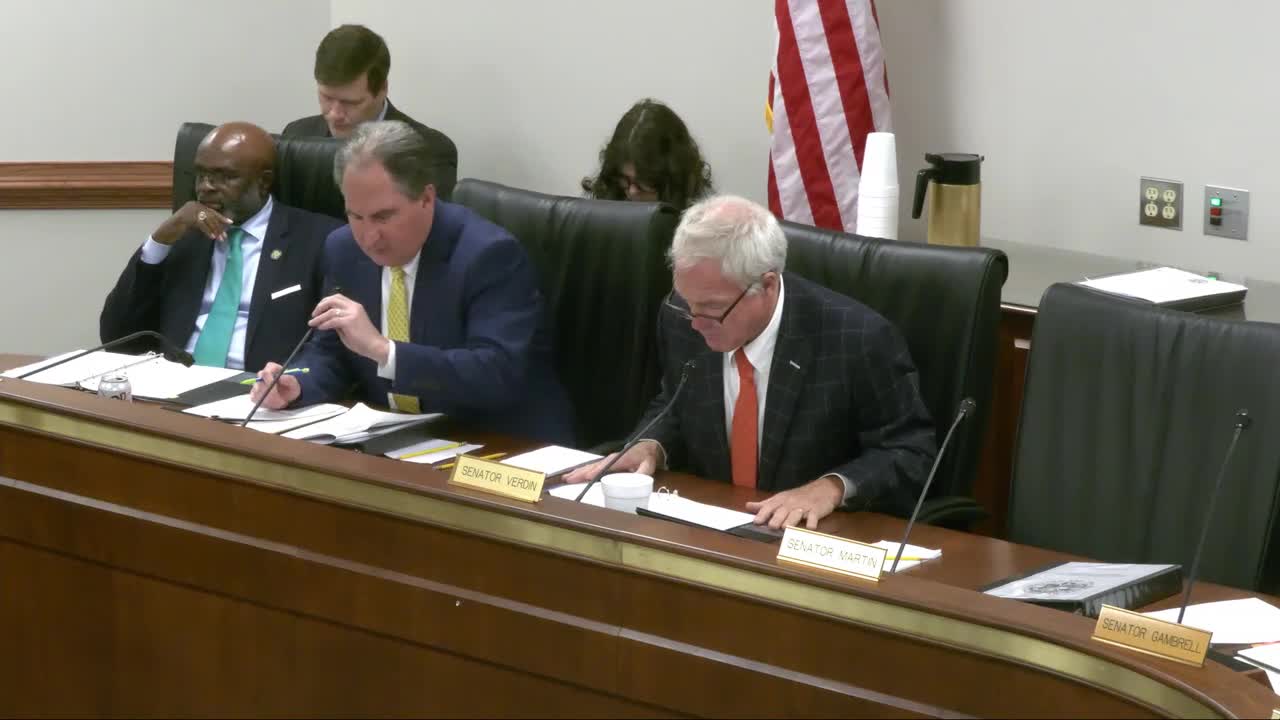
Panel reviews bill letting South Carolina towns impose operating millage after long hiatus
Summary
A legislative subcommittee heard a bill that would let municipalities with no current operating millage impose one up to one-third of prior general fund expenses; members discussed referendum and timing amendments and agreed to keep working the language.
A legislative subcommittee on Finance on Oct. 12 considered a bill to clarify how South Carolina municipalities with no operating millage can establish one and how municipalities that previously repealed millage can reinstate it.
Grant Gibson, a staff member assisting the subcommittee, summarized the measure as “a bill dealing for cities that have no millage rates,” saying the proposal would provide “a mechanism for cities with no operating millage to impose an operating millage.” The draft would let a city that had no operating millage on Jan. 1, 2025—or one that incorporates after that date—impose an operating millage that can generate up to one-third of the municipality’s general fund expenses from the previous fiscal year.
Erica Wright of the Municipal Association of South Carolina, which identified the item as a 2025 advocacy priority, told the panel the language mirrors Senate Bill 227, which the Senate passed in 2019 but did not become law. “We do believe that cities and towns have the authority right now to implement millage, but because it's not expressly stated in law, there is hesitancy,” Wright said, explaining the association’s request to codify the authority so hesitant municipalities can raise revenue for police, fire and other services.
Representative Blake Sanders, a former two-term mayor who said he represents District 9 and works as a landscape architect, described local planning benefits if towns can access general fund revenue: it would allow them to “increase public safety, to work on their own roads, to work on their own administration, to build their own parks,” and to prepare multi-year capital improvement plans tied to general fund capacity.
The bill also contains provisions for municipalities that previously had an operating millage and repealed it: those towns could reimpose an operating millage equal to the last millage imposed plus the cumulative increases that would have been allowed since the millage was repealed (growth in CPI and population was discussed as the adjustment mechanism).
Subcommittee members probed edge cases for newly incorporated towns and raised questions about implementation timing. Staff said an amendment before the panel would address how a newly incorporated municipality documents a budget baseline for the one-third limit—using incorporation filings and the projected operating budget prepared as part of the charter process.
Members debated a chairman’s amendment and a separate amendment proposed by Representative Sanders that would add voter protections through a referendum or delay implementation until after the next general election. Sanders said an elected body could vote to create millage but recommended that the millage “would not occur until the next general election,” so voters would have the chance to respond at the ballot box. Some members said waiting for a general election could delay urgently needed revenue; Erica Wright said the association would need to consult its membership before taking a position on any referendum timing.
Committee members repeatedly cited the example of Edgefield and several small textile-era towns that once relied on millage-alternative revenues and now lack stable local funding. Panel members said 59 municipalities in the state currently lack an operating millage while roughly 212 municipalities do have one, a disparity the association said is driving the request for statutory clarification.
No formal vote occurred on the bill. Members agreed to continue working the language in subcommittee and to present alternative amendment language to the full committee after stakeholder consultation. The subcommittee said it would reconvene to consider revised language and additional bills.
Ending on procedure, the chairman closed the hearing and said the subcommittee would return to the item after stakeholders and staff refined the draft amendments.