Get Full Government Meeting Transcripts, Videos, & Alerts Forever!
Get email alerts on the Juvenile Jurisdiction topic
No spam. Unsubscribe anytime.
Debate over moving juveniles to adult court resurfaces as senators weigh transfer procedures in LB407
Summary
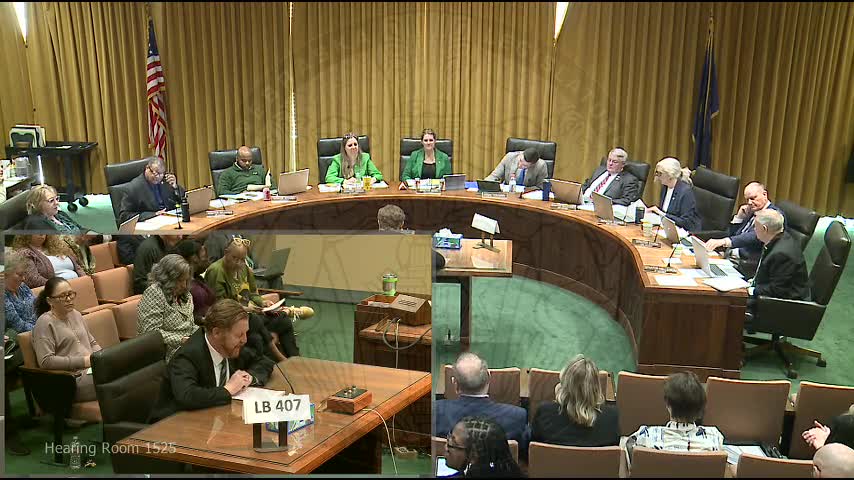
Lincoln — Sen. John Kavanaugh (D–District 9) introduced LB407 as an alternative approach to proposals that would allow younger children to be prosecuted initially in adult court.
Lincoln — Sen. John Kavanaugh (D–District 9) introduced LB407 as an alternative approach to proposals that would allow younger children to be prosecuted initially in adult court.
The bill would place original jurisdiction in juvenile court for children ages 13 through 16 charged with serious felonies (class 2A or higher), and allow proceedings to transfer to adult district court if the juvenile court finds the youth "not amenable to rehabilitation" under statutory standards.
Kavanaugh said the measure is meant to preserve the rehabilitative focus of juvenile court while providing a carefully calibrated backstop: "Sometimes it may be necessary to charge children as adults, but only after we've demonstrated that rehabilitation has not worked," he said. "Maybe that means this is onto something."
Opposition testimony came from the Omaha NAACP, the Sarpy County Public Defender's Office and the Nebraska County Attorneys Association. Meghan Bucher (County Attorneys Association) argued LB407 raises jurisdictional and constitutional problems, including potential double jeopardy if an adjudicated juvenile case were later refiled in district court. She said the bill's post‑dispositional refiling language (a new filing "after disposition") could mean an adjudicated juvenile would face a second proceeding for the same conduct.
Sarpy County public defender Chelsea Crels said the bill's transfer wording would create a second trial years after an adjudication in juvenile court — when memories fade and witnesses are harder to locate — and that would be unfair to youth. Several defenders urged preserving the existing juvenile transfer mechanisms (initial filing choices and transfer hearings) over the post‑dispositional refiling scheme proposed.
The County Attorneys Association and other prosecutors told the committee they recognize rising serious juvenile crime and asked for tools to address repeat high‑risk offenders. Don Kleine, Douglas County Attorney, provided county-level numbers showing a rise in juvenile felony filings and said prosecutors would still often file in juvenile court but need workable statutory procedures when rehabilitation fails. Sheriff Aaron Hansen of Douglas County said his office has had to monitor some younger juveniles who could pose immediate risks and supported creating options for detention and careful judicial review.
Supporters and opponents agreed on several technical points: juvenile records sealing rules, whether juvenile adjudications can later trigger adult jury trials, and the need for clear procedures for preliminary hearings and custody transfer if cases move to district court. Opponents urged the committee to narrow any statutory changes to avoid constitutional challenges and to preserve juvenile court's rehabilitative mission.
Kavanaugh told the committee this is his third attempt at related juvenile court reforms, noting prior bills — including proposals to extend juvenile jurisdiction and to require original filing in juvenile court — advanced the same goals. He said LB407 attempts a middle path and welcomed further technical work.
Ending: Testimony drew a wide range of juvenile justice stakeholders and highlighted three recurring themes: (1) desire to keep low‑level and early cases in juvenile court, (2) prosecutor concerns about repeat high‑risk juveniles and public safety, and (3) significant technical and constitutional drafting issues (jurisdictional mechanics and double‑jeopardy risk) that defenders insist must be resolved before moving the bill forward.