Get Full Government Meeting Transcripts, Videos, & Alerts Forever!
Get email alerts on the Juvenile Health Coverage topic
No spam. Unsubscribe anytime.
Neb. bill would keep Medicaid, CHIP active for youth detained pending adjudication
Summary
Sen. Victor Rountree introduced LB318 to require the Department of Health and Human Services to seek federal authority to continue Medicaid and CHIP coverage for youth held in secure settings while awaiting adjudication, a change proponents say would improve continuity of care and reduce county costs.
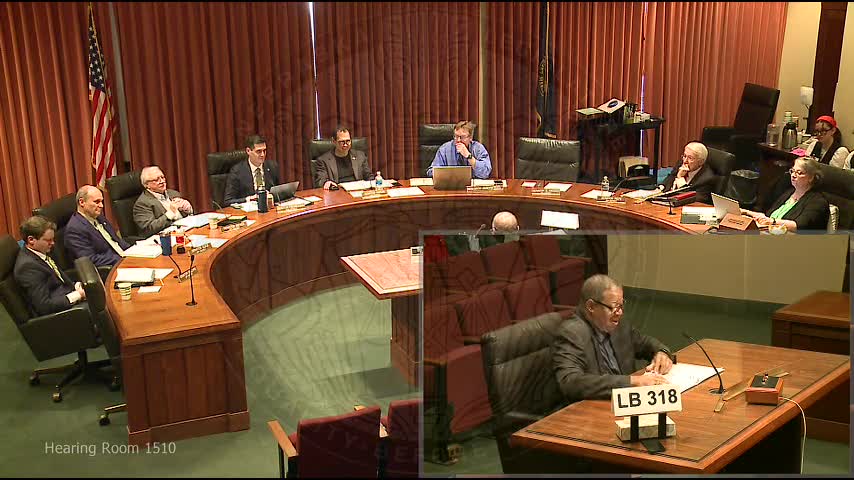
Senator Victor Rountree, sponsor of LB318, told the Health and Human Services Committee on March 18 that the bill would require the Department of Health and Human Services to seek federal approval to continue Medicaid and Children's Health Insurance Program (CHIP) coverage for youth detained in certain secure settings while their cases are pending. Rountree said the change responds to a new federal option that allows states to cover services for justice-involved youth pre-adjudication and follows recent federal guidance focused on screening, assessment and case management for youth leaving correctional settings.
Proponents emphasized continuity of care and county budget implications. Savanna Havsa, a practicing speech-language pathologist in Omaha, said she serves students at several alternative programs including the Douglas County Youth Center (DCYC) and called attention to the number of detained youth with identified disabilities. "Today, over 40 percent of children in DCYC ... have identified disabilities," Havsa told the committee, adding that interruptions in services such as speech therapy and access to glasses can harm progress and learning.
Elaine Menzel, representing the Nebraska Association of County Officials, and Lori Harder, an independent consultant with decades of DHHS experience, also testified in support. Menzel told senators the change would help counties that now pay much of the cost for medical services provided to detained youth. In written testimony read into the record, the Lancaster County Board of County Commissioners estimated the legislation could impact more than 100 youth in Lancaster County annually and result in roughly $250,000 in county property-tax savings.
Advocacy groups highlighted operational effects. Sarah Marash, director of the Health Care Access Program at Nebraska Appleseed, explained LB318 would permit facilities to provide the full array of Medicaid and CHIP services to eligible youth while detained, invoking the federal Early and Periodic Screening, Diagnostic and Treatment (EPSDT) standard for children on Medicaid. Anahi Salazar of Voices for Children in Nebraska testified that detained youth can wait an average of 49 days for trial at DCYC and said the bill would reduce delays in care during pre-adjudication.
Committee members asked how the bill would operate in practice. Senators pressed whether Medicaid or CHIP would remain active when youth are held, whether coverage would ease transitions on release, and whether continued coverage could reduce recidivism. Rountree and proponents said the goal is continuity — keeping coverage open to allow immediate access to prescribed medication and ongoing mental-health or developmental services and to draw down federal funds that otherwise fall to counties.
No formal action or vote was recorded during the hearing. Several speakers noted technical and implementation details would fall to DHHS and to the federal Centers for Medicare & Medicaid Services if the committee approves the state plan amendment request.
LB318 now moves to further committee consideration; a committee report or amendment was not recorded at the hearing.