Get Full Government Meeting Transcripts, Videos, & Alerts Forever!
Get email alerts on the Trade Tariffs G7 topic
No spam. Unsubscribe anytime.
Secretary says tariffs aim to restore U.S. industrial base; G7 visit will focus on broader agenda, not annexing Canada
Summary
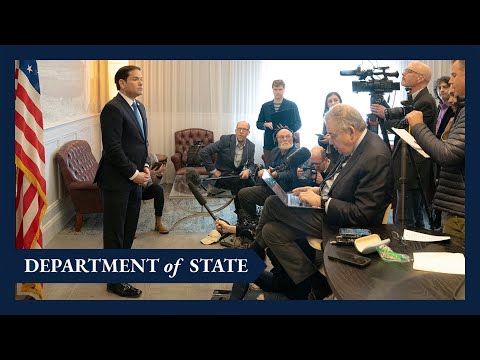
Secretary Jason told reporters that steel and aluminum tariffs are intended to rebuild U.S. industrial capability and ensure national security; he said the G7 meeting will focus on shared issues such as Ukraine and continental defense, not proposals to alter Canada’s status.
Secretary Jason said the administration's tariffs on steel and aluminum are driven by national-security and industrial-policy goals, including rebuilding domestic capacity to produce materials needed for defense. He told reporters that the president “outlined the need to develop a domestic capability” because lacking steel and aluminum undermines the ability to build ships and aircraft.
Jason said that most G7 topics will center on shared priorities—trade frictions notwithstanding—and that discussions will include Ukraine and continental defense arrangements. Asked whether the G7 trip would address a joking or hypothetical suggestion about making Canada a U.S. state, he said, “That’s not what we're gonna discuss at the G7.”
On tariffs and trade friction, Jason acknowledged that the policies have prompted retaliatory measures by other countries but defended the measures as steps to counteract deindustrialization and unfair subsidies abroad. “There are a lot of unfair trade practices…they subsidize their industries so that they can get gain global market share,” he said, adding that such dynamics harmed U.S. industry and long-term security.
He said it is possible to pursue tariffs while remaining constructive with allies on other issues. “I think it is quite possible that we could do these things, and at the same time, deal in a constructive way with our allies and friends and partners on all the other issues that we work together on,” he said.
Jason declined to preview the reception he might receive at G7 events and said the administration would attend despite tensions. He described Canada as a longtime security partner—citing joint continental defense arrangements such as NORAD—and said G7 discussions will focus on the practical agenda rather than hypothetical territorial changes.
The secretary did not provide details on tariffs’ economic modeling, the precise scope of retaliatory tariffs, or specific timelines for negotiations with trading partners; those matters were raised by reporters but not detailed in the briefing.