Get Full Government Meeting Transcripts, Videos, & Alerts Forever!
Get email alerts on the Ukraine Ceasefire topic
No spam. Unsubscribe anytime.
U.S. says Ukraine offered to halt fighting; awaits Russian response as negotiations loom
Summary
At a press briefing, Secretary Jason says Ukraine has offered to stop battlefield activity and begin negotiations; the U.S. is making multiple levels of contact with Russian counterparts and says monitoring and security guarantees would be part of any deal but specifics remain to be negotiated.
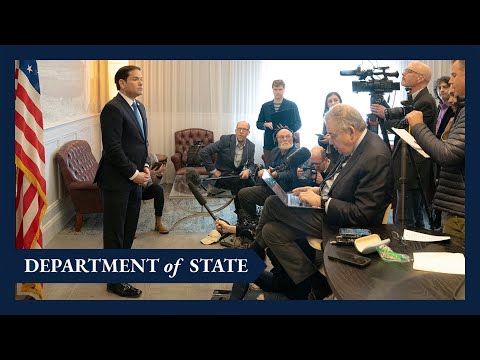
Secretary Jason told reporters that Ukraine has proposed stopping “all battlefield activity” and beginning immediate negotiations to seek “an enduring end of the war.” He said the United States will bring that proposal directly to Russian counterparts and is awaiting Moscow’s response.
The declaration matters because, if Russia accepts, Jason said, “we've made real progress and there's a real chance of peace.” If Russia rejects the offer, he said, that would “make their intentions clear.” The secretary added the outreach is recent and that Russian officials are likely “processing the news the same as the rest of the world.”
Jason described ongoing, multilevel contacts with Russian counterparts and said U.S. officials expect further talks “today.” He and reporters discussed what a cease-fire and subsequent negotiations would include; Jason stressed that negotiations require both sides to stop shooting before detailed security arrangements are settled. “If their response is yes, then we know we've made real progress,” he said.
On what a negotiation would cover, Jason said conversations so far focused on process rather than public, granular terms. He listed humanitarian priorities that Ukraine intends to include: exchanges of prisoners of war, the return of children taken from conflict zones, and humanitarian assistance for badly damaged areas. He said these topics were “inclusive in the negotiation process” and described them as among the “kinds of items that need to be on any negotiation agenda.”
The question of enforceable security measures drew repeated attention. Jason declined to commit to a specific set of security guarantees, saying only that “we're looking at…securing their long term” and that any arrangement must create a credible deterrent against future aggression. “There is no way to have an enduring peace without the deterrence piece being a part of it,” he said, adding that how deterrence is constructed would be discussed if both sides reach negotiations.
Jason also said economic development could strengthen Ukraine’s long-term security, citing a possible minerals-related deal as an example of economic growth that would give Ukraine “a tremendous amount of leverage and power” to fund its own defenses. He cautioned that such economic measures are not themselves security guarantees.
On monitoring a cease-fire, Jason noted modern surveillance capabilities and broad “eyes on the ground,” including commercial satellite imagery, that would make it difficult to hide major violations such as missile or drone strikes. He said parties would need to agree on whom both sides trust to monitor small-arms incidents on the ground but that monitoring arrangements are “practices that have become common” and “would not be difficult to set up.”
Jason said European sanctions and decisions about frozen Russian assets are likely to figure in any comprehensive settlement, and he said European countries’ security promises to Ukraine would also be relevant. He described the role of European partners as necessary but said whether they are involved at the “front end” or “back end” of a process would “have to play itself out.”
He repeatedly emphasized that the United States wants a lasting peace, not a temporary cessation of hostilities, and that the administration’s immediate objective is to stop the shooting so a negotiating process can begin. “Neither side is shooting. Not rockets, not missiles, not bullets, not artillery. The shooting stops, the fighting stops, and the talking starts,” Jason said.
The secretary declined to preview punitive steps should Russia reject the offer, saying it would be “not constructive” to issue threats before Russia responds. He said all existing sanctions remain in place and that if Moscow says no, the U.S. will “have to examine everything and sort of figure out where we stand in the world and what their true intentions are.”
Reporters asked whether U.S. envoys would meet senior Russian leaders during separate trips; Jason said multiple points of contact are planned but declined to confirm travel or meeting dates. He said counterparts Russia selected for earlier talks—identified by him as senior security and foreign-affairs advisers—were appropriate for the discussions that took place.
If Russia accepts Ukraine’s offer, Jason said the immediate goal is to reach an initial cessation of hostilities and then negotiate the longer, more difficult elements of a settlement. If Moscow declines, Jason said the response will inform U.S. policy choices going forward but that the administration would withhold further public assessments until Russia has formally replied.