Get Full Government Meeting Transcripts, Videos, & Alerts Forever!
Get email alerts on the Trade Policy topic
No spam. Unsubscribe anytime.
State Department explains U.S. plan for global reciprocal tariffs; says Canada‑state remark not on G7 agenda
Summary
The secretary described a proposed global reciprocal tariff approach aimed at resetting international trade baselines and said the president's remark about Canada becoming a U.S. state was not part of the G7 summit agenda.
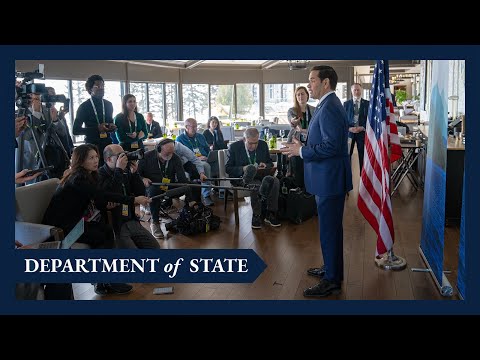
The secretary told reporters that the administration's announced approach to tariffs is a global, reciprocal plan meant to "reset the baseline of international trade" so the United States charges other countries the same tariffs they charge the United States.
He said the tariff approach covers sectors identified as critical to national security and domestic capacity — including steel, aluminum, semiconductors and autos — and is intended to protect domestic industries the administration regards as vital. "We want to charge other countries what they charge us," he said.
On the president's public comment that Canada should become a U.S. state if tariffs made it "unable to survive," the secretary said that topic "was not on our agenda" for the summit and that it emerged from a separate exchange between the president and Prime Minister Trudeau. He said the summit discussion focused on other issues and did not center on that remark.
The secretary said European countries and others have imposed their own tariffs and sanctions, and that the United States will provide input to partners but cannot direct EU decisions. He framed the tariff policy as a baseline for later bilateral negotiations rather than an immediate hostile act against allies.