Get Full Government Meeting Transcripts, Videos, & Alerts Forever!
Get email alerts on the K 12 Education topic
No spam. Unsubscribe anytime.
Kelly Elementary teachers describe math intervention program that reaches roughly 85 students daily
Summary
Kelly Elementary and Linntown math interventionists described small-group instruction, data tools and digital resources used to boost foundational math skills and confidence among K–5 students.
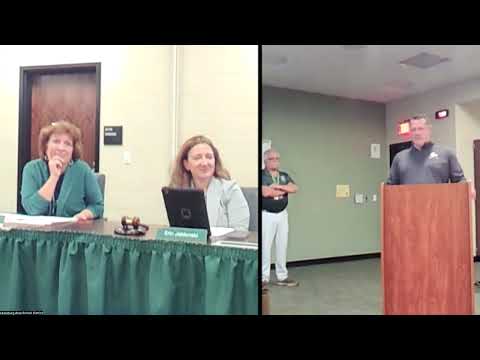
Shane Fischel and Cindy Kostick described the district’s K–5 math intervention approach during the board meeting, outlining daily caseloads, instructional design and assessment tools used to target foundational skills and fluency.
Fischel said he services roughly 85 students daily across kindergarten through third grade in small groups, and expressed that a primary goal is to integrate intervention during math blocks rather than as a punitive “pull‑out.” “The key for me is the relationships that I develop with my students,” Fischel told the board. He described a three‑part focus: relationship building so students want to attend intervention; accountability that emphasizes effort and correctness; and collecting usable, longitudinal data to guide teaching.
Fischel and Kostick listed curriculum and digital tools used in the program: Bridges core curriculum with its intervention component, Nearpod for interactive lessons, Forefront for multi‑year classroom and screener data, IXL aligned to lessons, and ExtraMath for fact fluency practice on iPads. Fischel said the Forefront data use and the Bridges approach have reduced the number of students in the district’s “urgent intervention” category on universal screeners.
Kostick described the Linntown support model for fourth and fifth graders, which combines flexible groupings, one‑on‑one support and push‑in lessons to align intervention with classroom instruction and to prepare students for middle‑school expectations. She highlighted foundational priorities for upper elementary grades — multiplication, division and fractions — and said she uses manipulatives and visual apps to move students from concrete to representational understanding.
Board members asked whether the intervention program had countered national declines in math and reading; Fischel said a visiting teacher and state data reflected an upward trend locally and a reduction in students scoring in the most‑urgent category on the Star screener.
Administrators told the board they plan to continue refining the program and Forefront data collection so intervention is more efficient and actionable for classroom teachers.