Get Full Government Meeting Transcripts, Videos, & Alerts Forever!
Get email alerts on the Wild Horses topic
No spam. Unsubscribe anytime.
BLM draft plan moves Callahan Complex up the queue; Lander County presses for gathers after years of overpopulation
Summary
County natural resources officer and BLM officials updated commissioners on wild horse overpopulation, ecological damage and the Callahan Complex Environmental Assessment; BLM said draft scoping will be issued soon and a record of decision is targeted for mid-July, opening the possibility of gathers in FY2026.
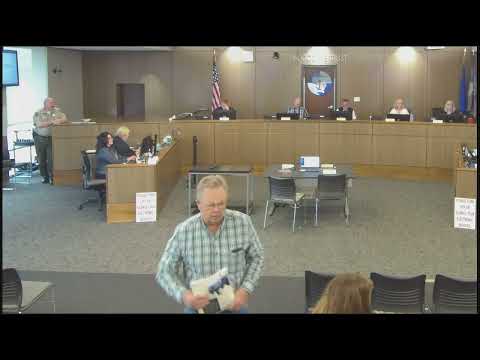
County natural resources officials and Bureau of Land Management representatives told the Lander County Board of Commissioners on March 13 that wild horse numbers across eastern Nevada — and particularly in the Callahan Complex — significantly exceed federal Appropriate Management Levels (AMLs), worsening rangeland conditions and straining water and forage resources.
Pam Harrington, Lander County natural resources officer, said BLM data show severe overpopulation across multiple herd management areas and widespread range degradation: "The feed is essentially gone...there's irreparable damage" in places where perennial grasses have disappeared and soil pedestalling has occurred. Harrington reviewed figures showing some HMAs running hundreds of percent above AML and said local monitoring showed continued deterioration at water sources and winter ranges.
John Shervey, Battle Mountain District manager for the BLM, told commissioners the agency has prioritized the Callahan Complex and submitted a draft environmental assessment and herd management plan to the state office. Shervey said the field office expects to publish public scoping documents shortly and aims to issue a decision by mid-July; if that schedule holds the gather could be scheduled in the fall or winter of fiscal year 2026, though he cautioned calendar timing depends on national and state scheduling priorities and potential legal challenge.
Shervey described the logistical and legal constraints that prolong the process: environmental analyses must be defensible in the face of likely litigation; gathers are scheduled nationwide and prioritized at higher headquarters. He said the Callahan Complex contains about 3,500 horses total while AMLs for the area are roughly 500 horses, underscoring the scale of removals needed to restore AMLs.
County commissioners and members of the public described visible ecological damage, livestock and wildlife impacts, and frustration at the long interval since the last local gather (2011). County and public speakers urged more rapid federal action; several commissioners and public commenters discussed legal options, including litigation, if federal management does not proceed. Public commenters emphasized grass and water depletion, damage to wildlife habitat and safety concerns for ranching operations.
BLM officials described fertility-control options as a tool most effective at lower population levels and as part of a broader management toolbox once numbers are reduced; they said fertility treatments are cost- and labor-intensive and most effective when HMAs are near AML. Shervey said field gathers often include application of fertility control to selected mares, but large-scale fertility programs alone cannot address the present overpopulation.
Harrington and Shervey described coordination steps between the county and BLM, including county field monitoring assistance last year and the recent submission of draft documents to the state office. Harrington said the BLM deputy state director informed county staff that the timetable for the public scoping document could be issued the next day and that the record of decision could be achievable by mid-July. Shervey reiterated that external factors — including federal scheduling and potential government shutdowns — could delay the process.
What to expect next: BLM said scoping documents will be published and a public-comment period will follow; the county will monitor BLM notices and continue to coordinate on monitoring and stakeholder engagement. Commissioners urged continued pressure on the state and federal offices to keep the Callahan Complex high on the gather schedule.
No formal action was taken by the commission at this meeting on the topic; commissioners received the update and discussed possible legal and coordination responses.