Get Full Government Meeting Transcripts, Videos, & Alerts Forever!
Get email alerts on the Grant Priorities topic
No spam. Unsubscribe anytime.
Evanston committee narrows grant priorities to food, financial literacy and employment ahead of summer application round
Summary
Members of the Evanston Social Services Committee agreed to emphasize food-access continuity, financial literacy and employment supports as top priorities when the city reissues public-service funding applications this year.
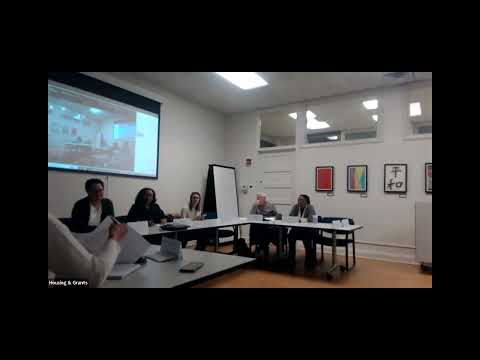
The Evanston Social Services Committee on March 13 focused its next funding round on ensuring food access, expanding financial-literacy supports and boosting employment pathways as the city prepares to reopen applications later this year.
Committee members said the priorities respond to results from the city’s Community Needs Assessment and to recent program changes that put some services at risk.
Staff presented the consolidated-plan survey data that the committee used to identify gaps and existing access points, and outlined next steps for the application process. The city will bring revised case-management and safety-net application drafts to the committee in April, with the goal of finalizing questions in May and opening applications in August. Staff said the city is moving away from the ZoomGrants platform and expects mandatory applicant trainings in July so grantees understand reporting and compliance expectations.
“The next question is: what questions are those applications missing?” a staff member said while describing how the committee’s priorities should shape application language and performance measures. Members pressed for clearer key performance indicators tied to follow-up and successful referrals, not only initial enrollments.
Committee members urged the city to use application language that encourages collaboration among providers and the use of technology for follow-up touches. One member suggested allowing or encouraging joint applications so agencies that deliver complementary services can propose coordinated referral networks. Another said automated text or chat follow-ups could increase case-manager contact without requiring more full-time staff.
City staff also noted uncertainty in state and federal funding and said some budget lines remain contingent on higher-level appropriations. The committee asked staff to compile recent grant-reporting numbers from calendar year 2024 and to surface which external funding sources grantees report as most at risk.
Staff outlined the immediate priorities the committee discussed—basic needs (with an emphasis on food access), financial literacy tailored to residents’ schedules and skill needs, and expanded employment training and placement—then asked committee members to identify which items should appear in the application and which should be expressed as measurable outcomes, such as benefits enrollments completed or successful referrals completed.
The committee directed staff to return in April with the draft application questions and with compiled grant-report summaries for 2024 so the group could finalize evaluation metrics in May.