Get Full Government Meeting Transcripts, Videos, & Alerts Forever!
Get email alerts on the School Bus Safety topic
No spam. Unsubscribe anytime.
House committee hears bill to create school bus safety grant fund, strengthen bus-zone penalties
Summary
Lawmakers heard sponsor testimony on House Bill 3, the School Bus Safety Act, which would create a $25 million grant fund for school bus safety features, expand education and outreach, and raise enforcement tools for violations near stopped school buses. No committee vote was taken at the first hearing.
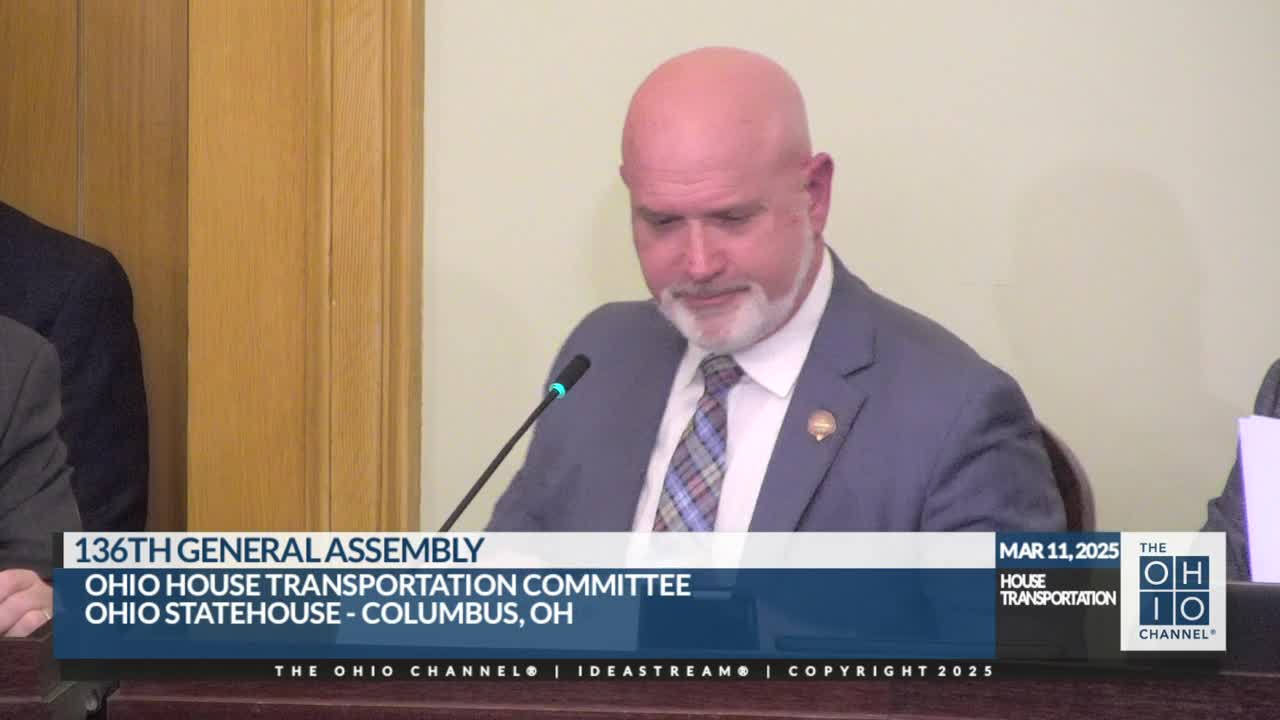
Representative Willis, chair of the House Transportation Committee, and Representative Cecil Thomas presented sponsor testimony on House Bill 3, the School Bus Safety Act, during the committee’s March 11 hearing. The bill would create a school bus safety grant fund, authorize a package of recommended safety features, expand public education about passing stopped buses and upgrade enforcement tools to support prosecutions of motorists who illegally pass stopped school buses.
The proposal would establish an initial $25,000,000 grant allocation to help districts pay for selected safety features, Representative Cecil Thomas said, and allow districts to choose the features that best fit their fleet and needs. “Allowing local school districts the flexibility to choose which features best suit their needs ensures that every district can implement the most effective solution for their unique circumstances,” Thomas said.
Why it matters: committee members were told the bill builds on a governor-appointed School Bus Safety Task Force report and is intended to bolster protections in the immediate zones around stopped school buses — protections that sponsors said are currently less robust than those in posted school zones. Thomas told the committee that many districts prioritize high-quality video cameras and other recommended features over other items such as seat belts, and that the grant fund is designed to let districts request funds for those priorities.
Key provisions and clarifications raised in committee testimony - Grant fund and administration: Sponsors said the Department of Education would administer the grants, using a simplified application process so smaller or less-resourced districts can apply. Representative Willis said the Department of Education “became the natural… grant source” for rollout and that the application should be “as simple as possible.” - Funding level: Sponsors described a $25,000,000 figure as the grant pool discussed during drafting; Representative Willis said the governor’s operating budget also includes some safety-feature funding and that HB 3 seeks to supplement and sustain that funding. Thomas said, “We actually have $25,000,000 in there per year to go forward.” The bill text would determine allocation details; the transcript did not specify an exact per-district formula. - Safety features prioritized: Sponsors and witnesses repeatedly described high-quality on-bus cameras as the single most-requested feature with immediate impact, saying video helps corroborate driver reports of violations when the bus driver cannot safely stop and record details. Thomas said districts already using cameras “have actually already started to see better outcomes around their buses.” - Enforcement and evidence: Committee members asked whether camera footage would automatically issue tickets. Representative Willis and sponsors clarified that the bill proposes cameras as corroborating evidence for law enforcement and prosecutors, not as an automated ticketing system. “You’re not proposing cameras that will give the ticket,” a member asked; the sponsor answered, “Correct. … This literally just becomes another piece of evidence, like any other camera that might be around and available to law enforcement.” - Education component: Testimony described an outreach and education campaign timed to August when buses return to roads; the bill includes an option for drivers cited for illegally passing a stopped bus to complete an educational course as a diversion that can reduce fines and prevent license points, a program sponsors said would be developed with the Department of Public Safety. - Seat belts and vehicle type: Sponsors said the task force examined a wide range of safety measures, including seat belts, but that most districts did not prioritize seat belts. The bill is structured to let districts apply grant funds for measures they select; the transcript does not require seat belts statewide.
Discussion vs. decision: The hearing comprised sponsor testimony and committee questions; no motion or committee vote occurred on HB 3 during the March 11 proceeding. Several committee members asked technical and allocation questions; sponsors repeatedly pointed to the task force report and said finer allocation rules and administrative mechanics would be determined by bill language and the Department of Education’s grant formulas.
What’s next: Committee members did not vote on HB 3 during the March 11 session. Sponsors urged the committee to advance the bill and said they would work with department staff and the committee on allocation details and administrative language.
Ending note: Sponsors framed the bill as a bipartisan, task-force-driven step to reduce the risk of collisions or illegal passing of stopped buses and to equalize safety upgrades across wealthier and resource-constrained districts.