Get Full Government Meeting Transcripts, Videos, & Alerts Forever!
Get email alerts on the Superintendent Search topic
No spam. Unsubscribe anytime.
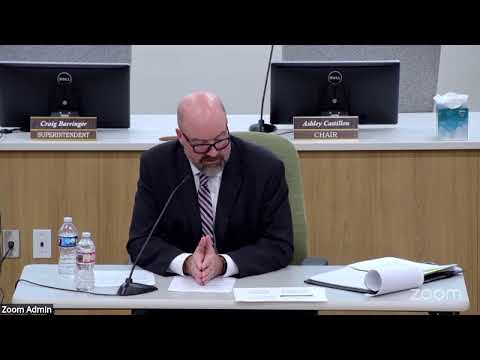
Superintendent finalist Scott Cooper emphasizes career-technical education, recruitment and community engagement at Green River forum
Summary
Scott Cooper, a finalist for the Sweetwater County School District #2 superintendent position, told a Green River audience that he would prioritize career and technical education, grant-seeking and strategic staffing if hired.
Scott Cooper, a finalist for the Sweetwater County School District #2 superintendent position, told a Green River audience that he would prioritize career and technical education (CTE), community partnerships and strategic staffing if hired.
Cooper said he has "25 years of education experience" and highlighted recent work building CTE and online-learning programs through the Colorado River BOCES, including CC Live and EPIC. "I've raised over $4,000,000 in the last 4 years to build those up from scratch," he told the panel and audience, describing live-streamed instruction and hands-on pathways such as construction programs that have built tiny homes.
Why it matters: Cooper framed workforce-ready pathways and external funding as tools to keep students engaged and to address regional labor shortages. He also flagged district-level budget pressures from declining enrollment and urged careful staffing decisions rather than automatic refills of vacated positions.
Most of the forum consisted of timed questions from local business and civic leaders and Cooper's responses. He called for thoughtful budgeting tied to district goals and said personnel costs are a major district expense: "A lot of those people are staff that are directly impacting student outcomes," he said, noting the need to align dollars with priorities for academics, social-emotional supports and workforce readiness.
Career and technical education: Cooper described expanding CTE at all levels, from elementary "makerspace" activities to high-school pathways in construction, welding and automotive, and said work-based credits can be earned while students remain enrolled. He cited partnerships with industry and examples from his Colorado work that placed students with local employers; those collaborations, he said, can lead to early employment and in some cases high pay within a few years of graduation.
Grants and outside funding: Cooper described a multi-pronged approach to funding CTE and related programs, including state and federal grants, county-level funding and congressional earmarks. He cited a $1.5 million Opportunity Now award received in his prior work and said some projects received direct congressional support. Cooper also urged working with county commissioners and industry partners to create recurring funding streams for local programs.
Recruitment and retention: To attract and keep teachers, Cooper emphasized competitive salary schedules, strong extracurriculars and practical supports such as on-campus childcare. He described a prior district where leaders created a childcare center to retain early-career teachers who otherwise would have left because of local childcare shortages.
Instructional and technology supports: Cooper pointed to his dissertation and later work on online learning and synchronous streaming and described CC Live as a model for bringing instructors into rural classrooms. He also described hiring an "AI coordinator" in one district to help teachers use AI to reduce paperwork and improve efficiency, and recommended phased professional development for staff who adopt new tools.
Community engagement and transparency: Cooper said he would pursue a listening tour and maintain regular communication through local outlets and community organizations. He told the panel he would be "very, very collaborative" and described being visible in schools, supporting mentors for new teachers and involving parents through school- and district-level accountability committees.
Staff and student wellness: Cooper outlined a mix of practical steps—mentor programs, staff social events, and designated quiet or recovery spaces for staff—that he has used previously to support teacher morale and mental health.
Panel questions and local context: Panelists who questioned Cooper included Joe Alivas (Industrial Systems Consulting), Kelly Davis (branch manager, Waihai Federal Credit Union and Chamber Board), Crystal Reyes (director of workforce development, Western Wyoming Community College), Bonnie Tippey (small business owner), Dan Stanton (construction company owner and occasional substitute teacher), and John Freeman (chairman, Green River Greenbelt Task Force). Their questions focused on district budgeting, partnerships with local industry, meaningful engagement of less-involved families, confidentiality in personnel matters, and supporting extracurriculars while maintaining academics.
Closing: In his five-minute closing remarks Cooper said he would not "steamroll" changes and reiterated that he would learn the district before proposing significant reforms. The forum concluded with Cooper thanking the community and the Chamber's host.
Next steps: The forum was one of three community forums for finalists; Cooper said he was scheduled to continue conversations with the school board that evening. No board action or vote was taken at the forum.