Get Full Government Meeting Transcripts, Videos, & Alerts Forever!
Get email alerts on the Together Spokane topic
No spam. Unsubscribe anytime.
Parks and Spokane Public Schools outline 'Together Spokane' partnership to fund 200+ neighborhood projects
Summary
City parks staff and Spokane Public Schools presented Together Spokane, a paired parks levy and school bond proposal for the November 2025 ballot that aligns more than 200 projects across neighborhoods, reduces the per‑$1,000 tax rate through shared resources, and advances maintenance, new parks, recreation facilities and joint school‑park uses.
Spokane Parks staff presented the Together Spokane partnership on March 13, a coordinated program pairing a parks levy and a Spokane Public Schools bond for the November 2025 ballot that aims to fund more than 200 projects across the city by combining resources and joint planning.
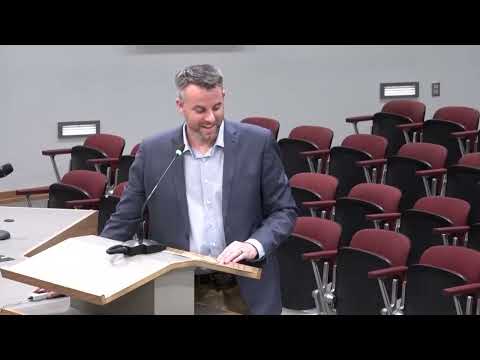
Mr. Jones, presenting the parks component, said the partnership is intended to expand on the parks master plan and to “act on that, rather than just sitting on a plan,” adding that the joint effort touches “every single neighborhood, every single park, every single school.” He said combining the parks levy and the school bond reduces duplicative costs and adds roughly 30 additional projects to what parks could fund on its own.
Staff showed a map and a booklet of project lists (distributed to board members) and described guiding priorities: increasing all‑weather, lit fields to expand evening and off‑season use; doubling field capacity at the Dwight Merkel (Merkle) Sports Complex; working with partners on the Ferris High School Sports Complex; opening school grounds as public parks after hours and weekends; constructing a five‑court indoor recreation center with joint programming and parking; expanding access to indoor pools for swim lessons and therapeutic programs; and investing in playgrounds, restrooms, trailheads, natural lands management and water‑efficient irrigation upgrades.
Jones summarized financial impacts staff presented: if parks and schools went separately, the combined cost to taxpayers would have been more than 31 cents per $1,000 of assessed value; the joint approach initially reduced that to 29 cents per $1,000 in the first year. During the presentation staff later said the combined effort and partner commitments reduced the estimate to about 27 cents per $1,000. Staff also told the board they have pledged roughly $11,000,000 in partnership dollars during the quiet phase of outreach.
A short video shown at the meeting communicated an example homeowner cost: the presentation said a $330,000 home would pay just under $8 per month in 2026 for both measures combined and included a breakdown in the video of the parks and schools share of that monthly cost.
Jones emphasized stakeholder feedback used to shape featured projects and operational commitments: increased funding for Merkle maintenance staff tied to field expansion; more park rangers and vandalism/cleanup funding; enhancements to restroom maintenance; and targeting three new neighborhood parks in high‑need areas (North Indian Trail, Meadow Glen and Shiloh Hills). He said three major park renovations were planned for Minnehaha, Grant and Harmon parks and listed other systemwide improvements (14 renovated sports courts, five trailhead upgrades, natural lands restoration and fuel‑mitigation work where natural lands interface with neighborhoods).
Jones described next steps and a timeline: draft ballot resolutions will be prepared for Park Board endorsement and City Council consideration. The City Council Urban Experience Committee is scheduled to discuss the program April 14; Park Board will review a resolution at its April 16 meeting; school board action is expected on a parallel schedule; and City Council is expected to take a final vote at its first meeting in May. Jones said staff will follow this with an extensive community outreach plan focusing on neighborhood events and an interactive website with maps and a tax calculator.
Board members and staff emphasized the partnership as a strategy to stretch taxpayer dollars, expand access to school facilities after hours, and accelerate deferred maintenance across the park system. No formal board action was required at the March 13 briefing; staff requested direction and public feedback as they finalize ballot materials and outreach.