Pomona Unified approves 2.8 MW solar farm project at Diamond Ranch with 4-1 vote
Loading...
Summary
The Pomona Unified School District board approved a 2.8‑megawatt ground-mounted solar array and related power‑purchase arrangement to offset rising electricity costs, with a 4‑1 vote after a public presentation and Q&A.
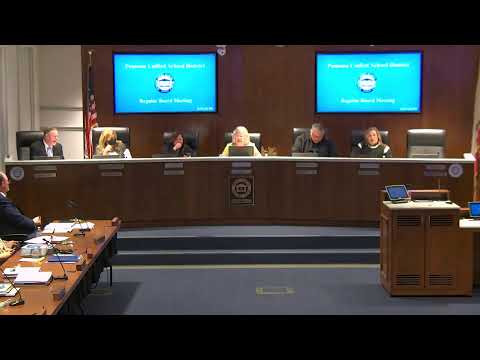
The Pomona Unified School District Board of Education voted 4‑1 on March 12 to approve moving forward with a 2.8‑megawatt, ground‑mounted solar array near Diamond Ranch High School under a power‑purchase agreement.
District staff said the project is intended to curb rising electricity costs and generate tariff credits available to local governments. Mr. Mesa, who presented the project to the board, said the district spends “over $5,000,000 annually just on electricity” and that a 20‑year agreement would let the district lock in a price and use savings to fund other school needs.
The project would occupy roughly eight acres on a plateau between the 60 Freeway and Diamond Ranch High School and include more than 4,000 panels, a new entry road from Diamond Ranch Road and a small customer‑owned substation to connect at Southern California Edison’s 12 kV circuit, according to the district presentation. Mr. Mesa said drone footage and elevation diagrams show the array “will not be visible nor cause any reflection issues” for nearby homes because the panels face south and sit below the adjacent tree line.
Board members pressed staff on project details and neighborhood impacts. Vice President Dr. Nashua asked for clarification about visibility and potential community effects; Mr. Mesa pointed to the district’s renderings and said additional landscaping could be used to screen views without affecting panel output. Board Member Gonzales thanked staff for the visual elevations and said she appreciated the attention to neighboring properties.
The district described the financing as a power‑purchase agreement: a third party would design and construct the array and the district would pay for delivered energy from that system. Staff said the project must be self‑funding through energy savings and tariff credits under a program staff referenced as RESBCT. The district also said it has had third‑party technical reviews confirming the project’s estimated generation and credits.
During the public hearing portion there were no speakers who requested to comment on the project. After discussion the board voted to approve the item; the clerk announced the tally as four in favor, one opposed.
The district estimated the project construction would take about two years and would require environmental and site studies, grading, and permitting before breaking ground. Staff said operations and maintenance obligations, including replacement of failed panels, would be written into contract terms and that the district would have an option to purchase the system at fair market value at the end of the contract term.
The board approval permits staff to continue contract negotiations and to proceed with required environmental reviews and interconnection work with Southern California Edison. The district said any subsequent major contract would return to the board for final approval.
The board’s action follows broader district efforts to reduce energy demand through LED lighting and HVAC upgrades and to consider additional solar and vehicle‑charging projects across campuses.