Get Full Government Meeting Transcripts, Videos, & Alerts Forever!
Get email alerts on the Renewable Energy topic
No spam. Unsubscribe anytime.
Skagit Valley Clean Energy Alliance outlines Solarize Skagit campaign, urges signups before net‑metering changes
Summary
The Skagit Valley Clean Energy Alliance presented results from its Solarize Skagit program and urged residents to sign up this spring to qualify for current net‑metering rules and group purchase pricing.
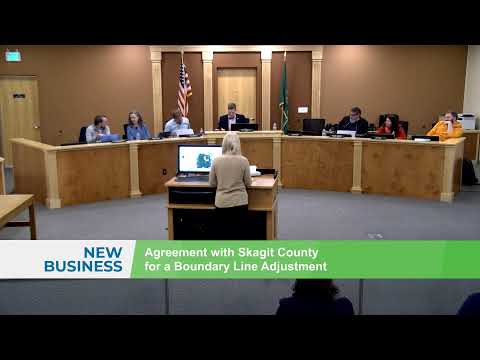
The Skagit Valley Clean Energy Alliance on March 12 gave Mount Vernon City Council an update on its Solarize Skagit program, which pairs pre‑vetted installers with residents and offers a limited‑time group purchase rate on residential solar systems.
Mary Wollev, a board member with the nonprofit alliance, said the campaign aims to make solar “simple, affordable and secure” through a one‑stop sign‑up and pre‑selected installers. She told council that projects with permits submitted by December 2025 are expected to be grandfathered under the current 1:1 net‑metering arrangement, and the alliance is encouraging residents who have been considering solar to pursue permits this year to lock in that benefit.
Wollev outlined the program’s 2024 results: roughly 50 countywide signups led to 17 installations (about 55 kilowatts of capacity). In Mount Vernon specifically the program recorded 46 signups and six installations in 2024. For the 2025 campaign the alliance negotiated a group rate advertised at $2.45 per watt and noted that participants may qualify for the federal 30% residential clean‑energy tax credit; installers in the program also offer financing options through local credit unions.
Wollev described a sample payback calculation for a typical Skagit County home and said payback estimates often fall near 10–13 years depending on system size and energy use. She highlighted local supply chain ties, noting Burlington‑based panel manufacturer Silfab as an available equipment source, and said partnering installers will continue to offer battery backups, Level 2 EV chargers and home energy audits as add‑ons.
Councilmember Adam Vanderschew (name given in the public record as recusing himself) stated on the record that he would recuse himself from matters related to the program because of a professional connection. Special Projects Manager Steve Sexton said staff will support outreach, including utility bill inserts and web communications, and the alliance said it will hold a public kickoff on April 12 at Maple Hall in LaConner.
Why it matters: The program offers a group‑purchase pathway that can lower upfront costs and simplify permitting for residents. The pending changes to net‑metering rates statewide make timing relevant for homeowners considering rooftop solar.
Next steps: The Solarize campaign runs through July 4 for signups, with installations completed through the end of the year. Staff and the alliance will coordinate city communications and encourage residents to attend the April kickoff for one‑on‑one conversations with installers.