Get Full Government Meeting Transcripts, Videos, & Alerts Forever!
Get email alerts on the Childcare Tax Policy topic
No spam. Unsubscribe anytime.
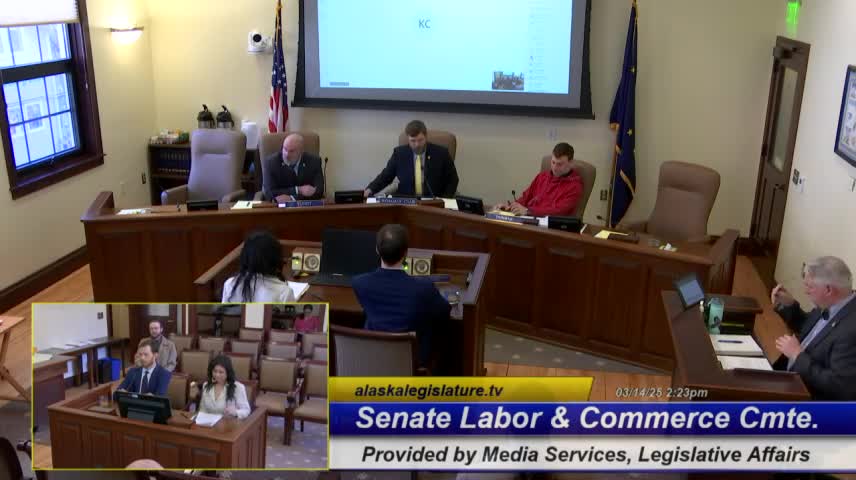
Committee revisits child care tax credit language tied to pending lawsuit; bill set aside
Summary
Senate Bill 96 would reenact and codify child-care tax credit provisions from last year's legislation to protect them from a single–subject legal challenge; the committee set the bill aside for later consideration.
The Senate Labor and Commerce Committee on March 14 received presentations on Senate Bill 96, a measure to reenact and move child-care tax credit provisions into multiple tax statutes separate from SB 189 amid ongoing litigation challenging SB 189 under Alaska’s single-subject constitutional rule.
Supporters said the reenactment would preserve tax credits intended to encourage businesses to provide or support child-care services and thereby expand available child-care slots across the state.
Sonia Kawasaki, Senate Majority Counsel, told the committee a lawsuit filed in November alleges SB 189 violated Article II, Section 15 of the Alaska Constitution (the single-subject rule). Kawasaki said the proposed reenactment aims to give the child-care tax-credit provisions a separate legal existence so they would remain in place regardless of the outcome of the SB 189 challenge. She noted the plaintiff filed a motion for summary judgment on March 12 and the court is awaiting the state's response.
Representative Zach Fields, House District 17, and Evan Anderson, staff to Representative Fields, presented background and a sectional analysis. Anderson summarized SB 96 (version A) as adding a child-care tax credit to multiple tax statutes—corporate net income tax, insurance business tax, oil and gas production tax, mining business tax, fisheries taxes and others—allowing deductions for employer contributions of cash or equipment to operate child-care facilities or employee child-care stipends. Several provisions would allow periodic inflation adjustments to credit dollar limits, set a retroactive effective date of July 23, 2024, and include a statutory sunset on Jan. 1, 2028.
Katie Capozzi, president and CEO of the Alaska Chamber of Commerce, testified in support and described the business case: employers reported recruiting and retention problems tied to child-care shortages, and a Chamber analysis (the Untapped Potential report) estimated childcare-related losses to Alaska’s economy. Capozzi said the tax credit is one component of a multi-pronged approach and that employers are ready to partner to expand childcare supply.
Committee members asked whether reenacting the provisions in identical form would strengthen arguments that the lawsuit is moot; Senate Majority Counsel Kawasaki said reenacting language that closely resembles the original provisions would be most likely to avoid questions that the subject has materially changed. Representative Fields and supporters urged passing the reenactment to provide certainty so businesses and providers can rely on the credits while litigation proceeds.
Chair Senator Bjorkman announced the committee would set SB 96 aside for further consideration at a future meeting; no roll-call vote took place.
The bill includes an uncodified provision to make the effective date retroactive to July 23, 2024, and a sunset date of Jan. 1, 2028, and would add the child-care tax credit across several Alaska tax codes, with inflation adjustments beginning in 2030. The committee did not debate budgetary estimates during the hearing and deferred further consideration to a later date.