Get Full Government Meeting Transcripts, Videos, & Alerts Forever!
Get email alerts on the Economic Development Technology topic
No spam. Unsubscribe anytime.
Committee Hears Pitch for $15 Million to Expand NDSU Research and Technology Park’s Robotics Program
Summary
The Research and Technology Park told the committee it seeks $15 million for a two‑year plan to pivot toward commercial robotics development in precision agriculture and defense through a partnership with Carnegie Mellon’s National Robotics Engineering Center.
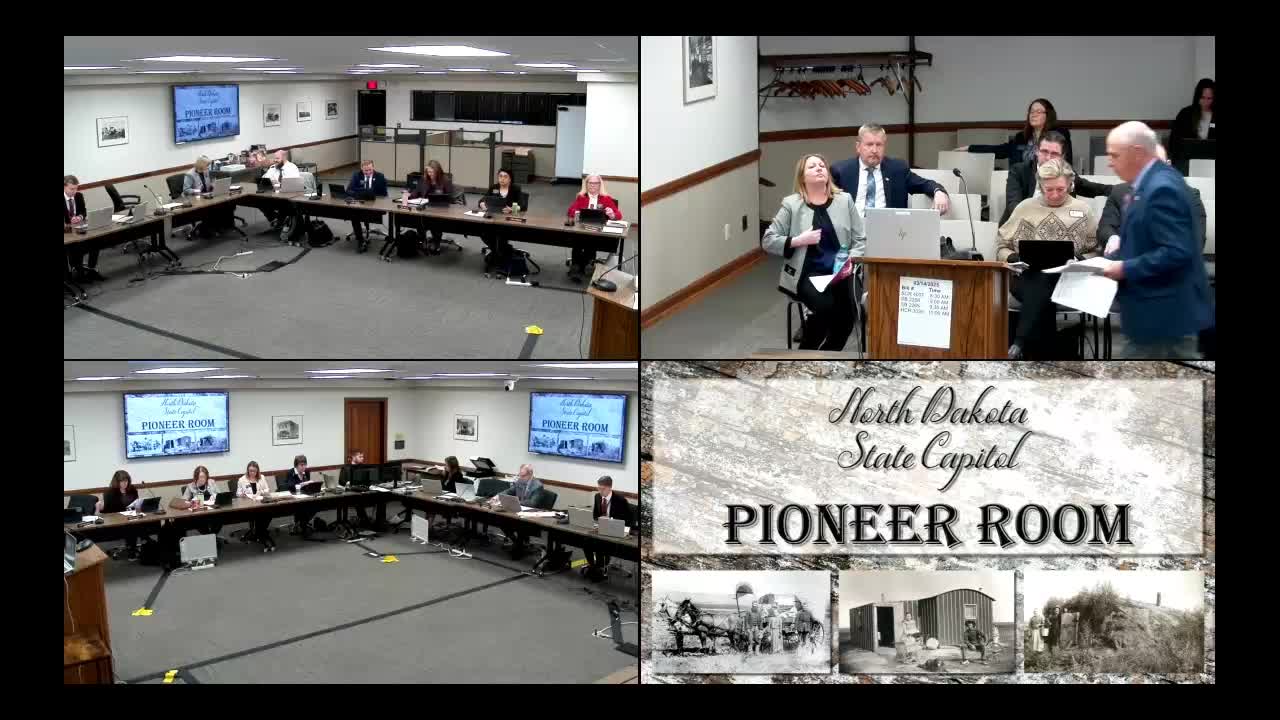
Senate Bill 2256, which would provide state support for a new business model at the NDSU Research and Technology Park, drew detailed presentations from park leaders and outside partners at a House Government and Veterans Affairs Committee hearing.
Senator Ron Sorvaugh, who introduced the bill, said the park is a separate 501(c)(3) nonprofit and aims to shift from an incubator model toward product development and scale‑up by partnering with Carnegie Mellon’s National Robotics Engineering Center. "They not only wanted to, but were very excited," Sorvaugh said of Carnegie Mellon, adding the plan targets robotics for precision agriculture and defense.
Brenda Weiland, CEO of the NDSU Research and Technology Park, outlined a plan to build engineering, product development and business development teams to produce hardware and software for industry customers and to spin out startups. "We're going to laser in on intelligent, autonomous mobile equipment," Weiland said, describing the park’s goal to convert university IP and private‑sector needs into marketable products and to generate revenue that can be reinvested into the park.
Weiland and witnesses recommended a phased funding approach and said the requested $15 million would provide about two‑thirds of the resources needed to implement an initial two‑year plan. "We are out actively raising additional dollars," she said. The bill would direct funds through the Industrial Commission; office staff from that agency told the committee the commission typically requires a 50/50 match for similar programs but the bill does not make a match an absolute statutory requirement.
Brig. Gen. James Clough (ret.), who led remotely piloted aircraft efforts for the Air Force, testified the private sector and major defense contractors often cannot move with the speed required to field some capabilities, and he backed the park’s plan as a way to accelerate delivery of technology to military users.
Jeff LeGault (Jean‑Francois LeGault), associate director of Carnegie Mellon’s National Robotics Engineering Center, described his center’s history of spinning startups and said the Carnegie Mellon group would provide technical collaboration and ecosystem experience that could reduce risk and accelerate commercialization.
Committee members pressed on budgeting, the nonprofit structure and whether the organization should be required to provide a matching contribution. Weiland said the park’s nonprofit status enables speed and risk‑taking, and the park is already raising funds from corporate, foundation and private donors; she asked the committee not to require a matching‑fund condition that could slow launch. Officials from the Industrial Commission indicated the commission’s standard practice is a 50/50 match on grants the commission administers, but that the bill leaves matching requirements to a later plan to be approved by the commission.
No committee vote was recorded during the hearing. The bill has broad private‑sector endorsements but committee members raised questions about the state’s role subsidizing a nonprofit and about whether the appropriation should be spread across biennia.
What happens next: The committee will consider testimony, financial details and possible match conditions before deciding whether to recommend SB 2256 to the full House.