Get Full Government Meeting Transcripts, Videos, & Alerts Forever!
Get email alerts on the State Lands Leases topic
No spam. Unsubscribe anytime.
Bill would let state land board cancel leases if lessee aims to block resource development
Summary
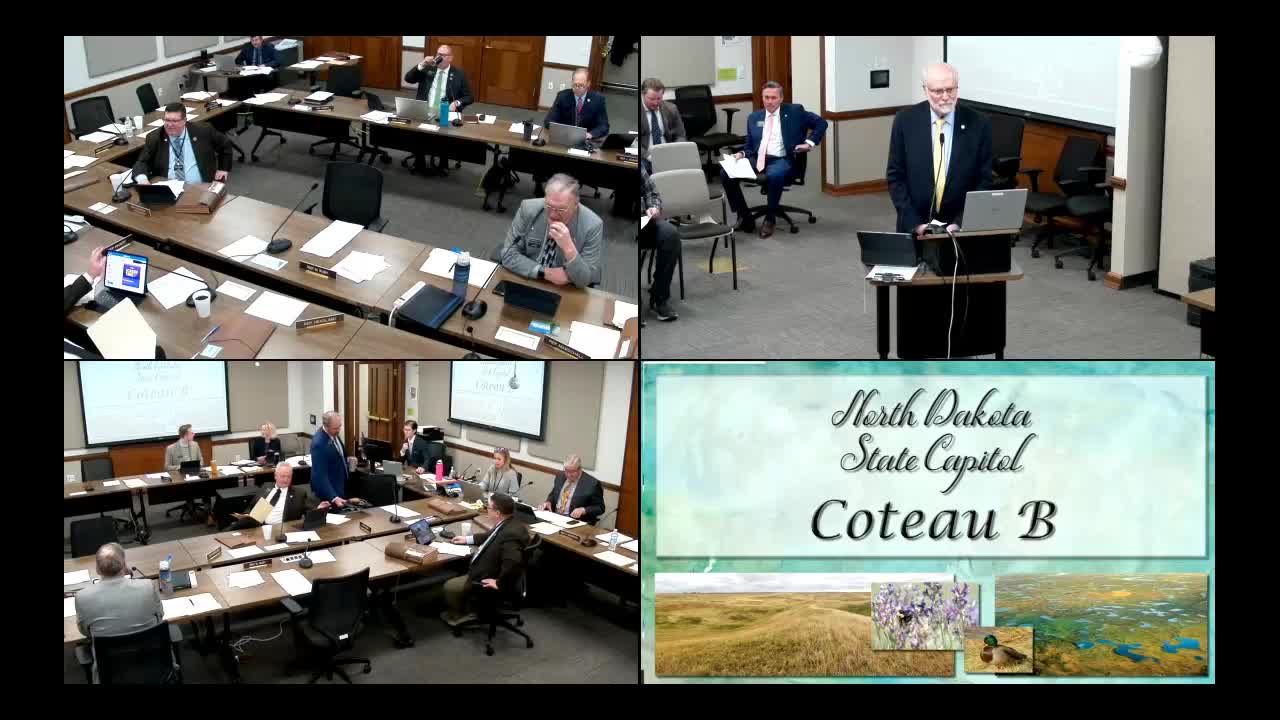
Senate Bill 2302 would give the Board of University and School Lands authority to cancel state mineral leases if a lessee is found to have bid or held a lease with the intent to prevent development of the minerals, witnesses told the House Energy and Natural Resources Committee.
Senate Bill 2302 would add authority for the Board of University and School Lands to cancel state leases when evidence shows a lessee intends to “hinder or block development of the resources,” sponsors and agency witnesses told the House Energy and Natural Resources Committee.
Sen. Dale Patton, sponsor of the bill, said the measure contains clarifying language requested by the Department of Trust Lands and a provision that addresses efforts in other states where entities bid on state mineral leases without intending to develop them. "If it's discovered at some point that the entity who won the bid and has the lease doesn't actually have the intent to actually develop the minerals, that the board would then have the authority to go in and cancel the lease and put it back up for bid," said James Wald of the Department of Trust Lands in his testimony supporting the bill.
Wald described a recent example in Wyoming where a bidder sought to prevent development on a tract because it overlapped a pronghorn migratory route. He said some states have adopted prequalification rules to bar bidders who lack an intent to develop; SB 2302 instead would give the land board an after-the-fact remedy to rescind a lease and rebid.
The North Dakota Petroleum Council joined testimony in support, with Ron Ness saying the state is a major mineral owner in the Williston Basin and that protecting trust minerals is important. Committee members asked whether the bill targets mineral development rather than surface uses; witnesses confirmed the draft is focused on mineral development tied to leases.
The committee heard no opposition testimony and closed the public hearing on SB 2302 with no recorded committee action in the transcript.
Ending: The bill received supportive testimony from the Department of Trust Lands and industry groups; the committee closed the hearing with no recorded opposition.