Get Full Government Meeting Transcripts, Videos, & Alerts Forever!
Get email alerts on the Tod Housing topic
No spam. Unsubscribe anytime.
Broad TOD bill would upzone station areas, set FAR minimums and require affordability; sponsors and cities debate MFTE and feasibility
Summary
A comprehensive transit‑oriented development bill that sets statewide minimum FARs for station areas and ties density to affordability requirements was the subject of a lengthy public hearing on March 14.
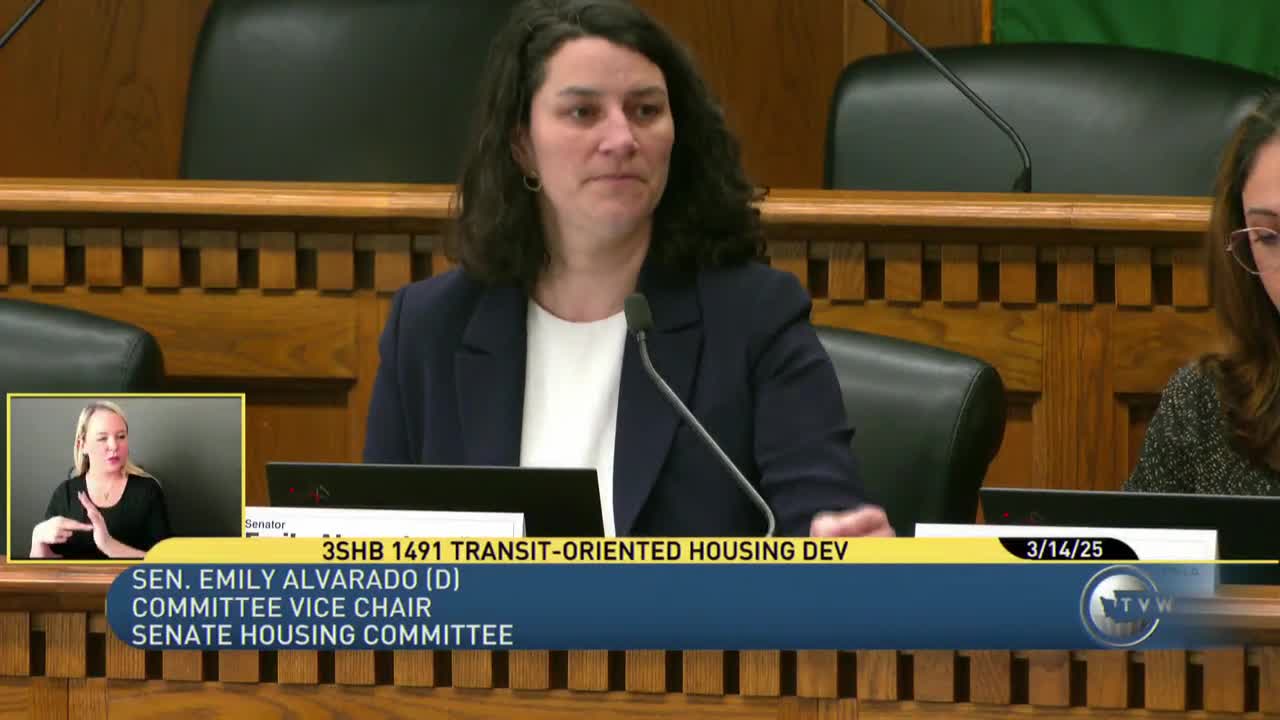
A third‑substitute House bill proposing statewide transit‑oriented development (TOD) standards drew extended testimony and nearly 1,800 written sign‑ins at a March 14 Senate Housing Committee hearing.
Staff described the bill’s main elements: fully planning cities would not be allowed to prohibit multifamily housing in station areas (defined by walkable radii around qualifying rail or fixed‑route bus stops), and the bill would establish minimum floor area ratios (FARs) inside station areas — 3.5 for rail station areas and 2.5 for bus station areas. An additional 1.5 FAR could be granted where all units in a building are affordable or dedicated permanent supportive housing for at least 50 years. The bill would also exempt many TOD actions from the State Environmental Policy Act in station areas, create a 20‑year MFTE for qualifying projects that meet affordability thresholds, and require Commerce to develop a model TOD ordinance by June 30, 2027 and to administer a grant program to help cities implement station‑area planning.
Representative Andrew Reed, sponsor of the House bill, said the measure is intended to create homes near transit and to preserve mixed‑income neighborhoods. "We just don't have enough homes," Reed told the committee, and he cited a FutureWise estimate that the bill could "unlock 3,600,000,000 square feet in housing and small business development capacity" in Central Puget Sound. Reed said the bill offers flexibility for cities to adjust station‑area boundaries and to show substantially similar prior planning to Commerce if they have already done comparable work.
Supporters included the Governor’s office, labor unions, housing advocates and local mayors, who said TOD leverages transit investments, creates construction jobs and helps meet state housing goals. Dave Anderson of the Department of Commerce testified that a TOD approach unlocks housing opportunities while leveraging transportation investments and reducing greenhouse gas emissions.
Developers, real‑estate groups and some cities urged changes to the bill’s affordability and MFTE provisions. Bill Clark (Washington Realtors) and others said the statute should allow local tailoring of affordability levels so projects remain financially feasible in different markets. Lynnwood’s planning manager described competitive market pressures and warned that uniform affordability thresholds and MFTE terms could affect feasibility and the ability to fund related infrastructure.
Staff noted the bill passed the House (recorded in the briefing as 58‑39) and provided fiscal estimates: Department of Commerce costs for the biennium and a capital budget grant program estimate were reported in the staff briefing. Cities would have deadlines tied to their comprehensive plan updates to implement station‑area rules; Commerce would prepare a model ordinance for cities that do not implement the requirements by their deadlines.
Ending: Sponsors and many supporters urged passage to accelerate housing near transit; cities and industry asked for amendments to make affordability requirements locally feasible and to add implementation incentives or guardrails. The committee accepted public testimony and invited technical amendment proposals.