Get Full Government Meeting Transcripts, Videos, & Alerts Forever!
Get email alerts on the Industrial Symbiosis topic
No spam. Unsubscribe anytime.
Committee considers bill to encourage industrial symbiosis by waiving utility connection charges
Summary
Substitute House Bill 13-02 would authorize municipal utilities to adopt ordinances waiving utility connection charges for projects that demonstrate industrial symbiosis, defined in the bill. Supporters urged clarity on meaningful thresholds and suggested reporting or a directory to scale projects.
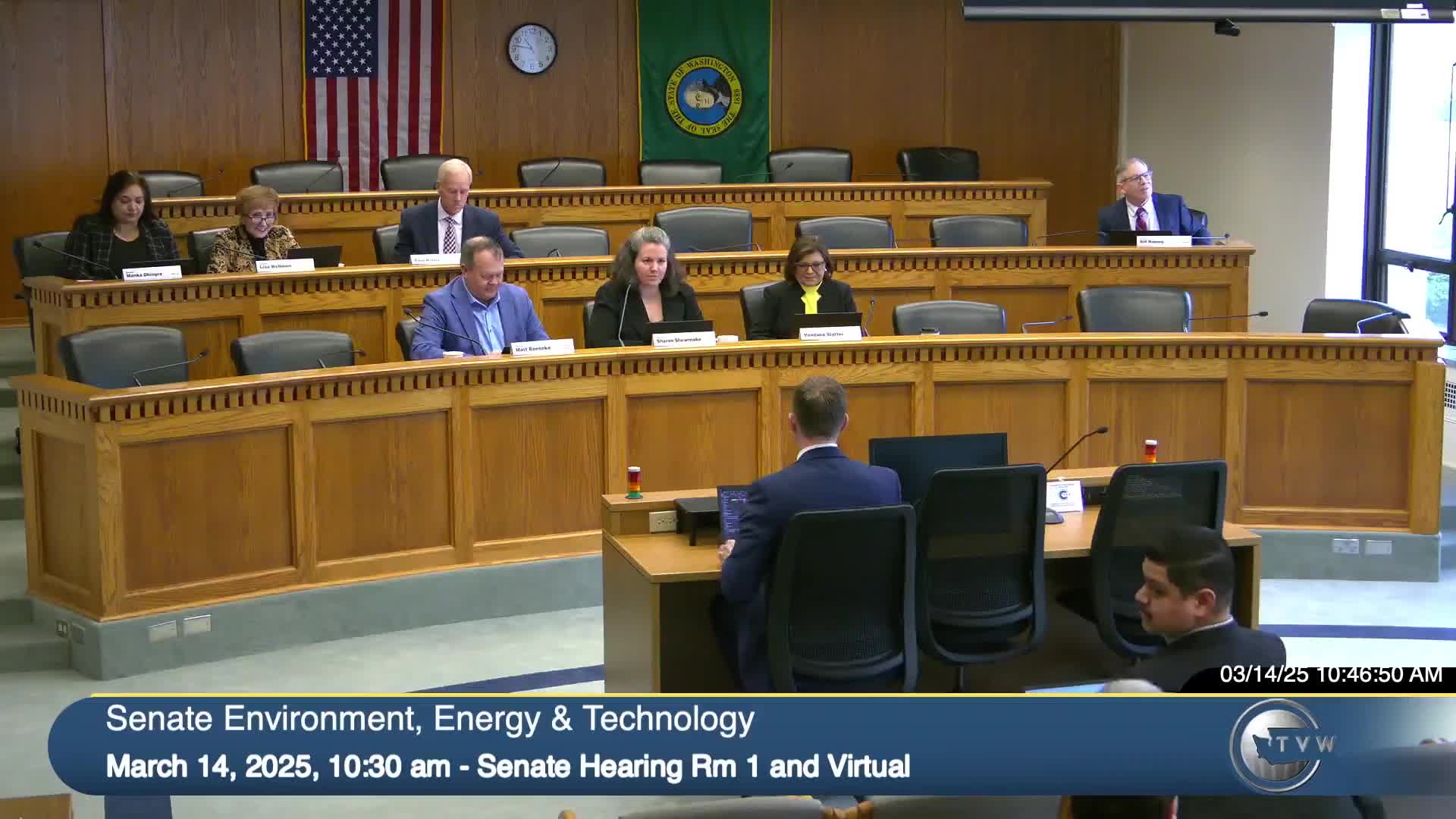
Committee staff Matt Sheprick Coningsworth briefed substitute House Bill 13 02, which would authorize municipal utilities to adopt programs by ordinance to waive or delay utility connection charges for public or private organizations that use properties for industrial symbiosis. The bill defines industrial symbiosis as collaboration among businesses or organizations to exchange materials, energy, water and byproducts to optimize resource use and demonstrate measurable reductions in resource consumption or greenhouse gas emissions while supporting community benefits.
Representative Julio Cortez, sponsor of the bill, said the measure adds another tool for local municipalities to attract companies developing alternative-energy or waste-reuse technologies. "This bill would really just kinda give an option to the local municipalities to waive utility connection charges," Cortez said, adding that federal grants often cover related costs and the definition would make Washington the first state to codify industrial symbiosis.
Testifiers from the environmental and planning communities supported the bill but urged refinements. Heather Trim of 0 Waste Washington asked for a tweak to ensure the statute requires a meaningful level of industrial symbiosis rather than allowing minimal projects to qualify. Rhys Roth and Isaac Kastama (Center for Sustainable Infrastructure) said Washington is already a national leader and encouraged continued funding for industrial symbiosis planning and technical assistance through ports and the Department of Commerce. Senators and committee members discussed whether a public directory or reporting requirement to document who receives waivers and the benefits produced would help scale the program; testifiers said in-person convenings and local port/EDC facilitation are already driving projects and that a reporting requirement could be useful to document outcomes.
The bill is permissive: municipalities would need to adopt a program by ordinance and public-benefit rationales would guide waivers. Witnesses stressed technical assistance, metrics for environmental and economic benefits, and potential capital and budget support via Commerce grants. The committee closed public testimony with broad support and suggested follow-up on whether reporting or a centralized directory would aid replication. No committee vote occurred at this session.