Get Full Government Meeting Transcripts, Videos, & Alerts Forever!
Get email alerts on the Utility Partnerships Private Development topic
No spam. Unsubscribe anytime.
Bill would let consumer-owned utilities sign joint-use agreements with private partners
Summary
Substitute House Bill 12 53 would expand the types of entities municipal utilities, public utility districts and joint operating agencies may contract with, and add renewable and storage facilities to authorized projects.
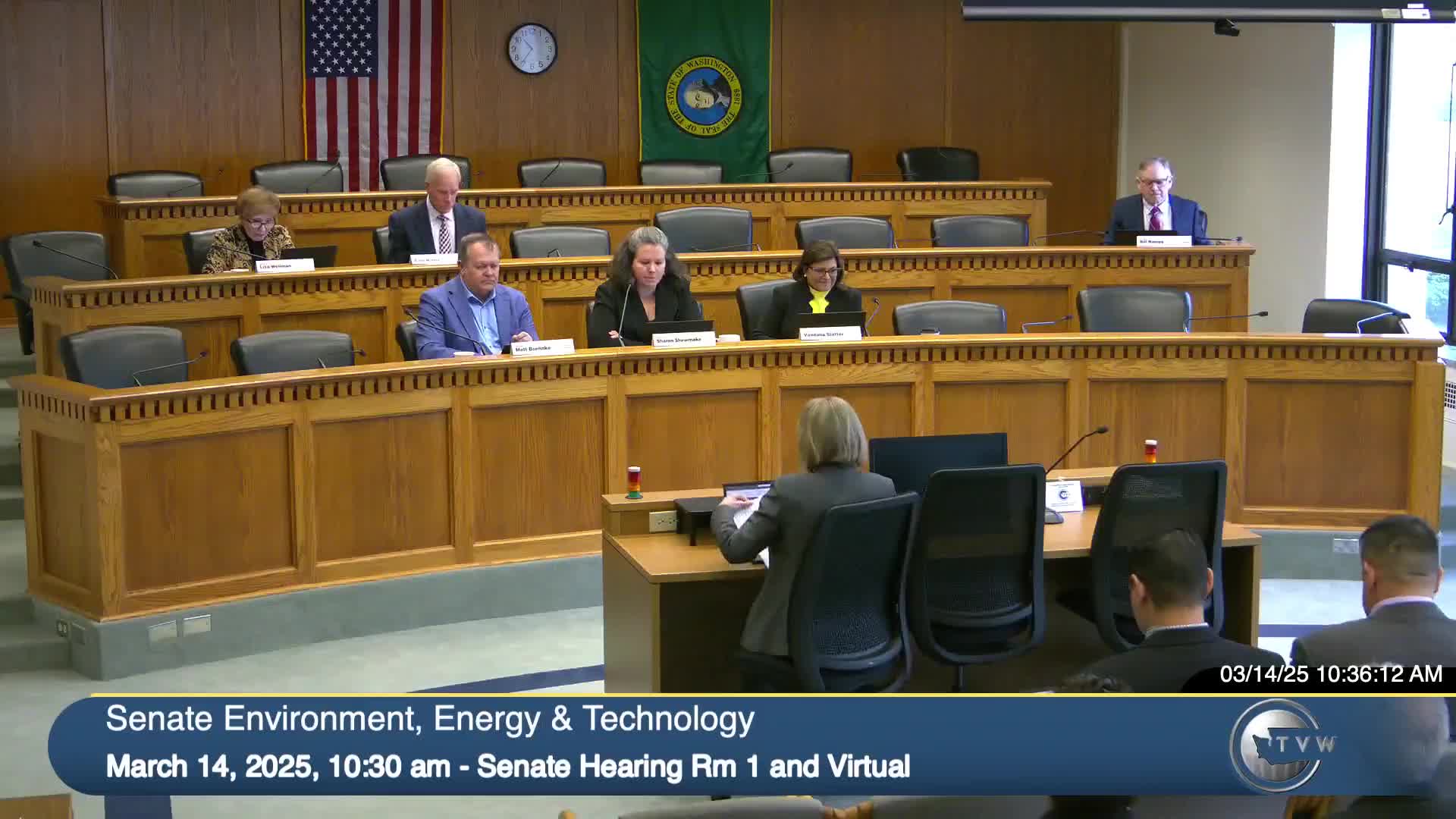
Kim Cushing, staff to the committee, briefed substitute House Bill 12 53, which would expand authorization for first-class cities, public utility districts (PUDs), joint operating agencies and certain counties to enter into a broader range of agreements for planning, financing, construction, operation and maintenance of electric generating and transmission facilities. The substitute would permit agreements "with any person or entity," add renewable energy and energy storage facilities as covered project types, and remove an older, specific authorization tied to coal-fired plants that operated before July 1, 1975.
Committee members asked staff to define "first class cities" (cities with populations of 10,000 or more, seven of which operate municipal utilities) and whether the removed coal provision remains applicable; staff said the Centralia Steam Plant authorization from 1997 is being struck because the facility is going offline.
Representative Ibarra described local demand in his district — including two hydro dams and a pending queue of generation needs — and argued the bill would allow PUDs and other consumer-owned utilities to enter agreements with private developers to bring natural gas, wind and solar resources into their balancing authorities. Testimony in support came from regional utilities: Ryan Holterhoff, senior policy analyst at Grant PUD, said his utility faces about 2,900 megawatts of interconnection requests compared with a summer peak just over 1,000 megawatts and called the bill an additional option to meet demand. Josh Walter, power contracts and regional affairs manager at Seattle City Light, said the bill would allow public utilities to partner with private developers and could enable use of federal incentives such as direct pay under the Inflation Reduction Act.
Representatives and utility witnesses framed the measure as permissive: it grants authority to enter into agreements by ordinance or otherwise but does not require local governments or utilities to do so. There was no formal committee vote on the bill at this hearing; the public hearing was suspended to allow additional prime sponsors to appear later.