Get Full Government Meeting Transcripts, Videos, & Alerts Forever!
Get email alerts on the Housing Tenants topic
No spam. Unsubscribe anytime.
Colorado House passes tenant-protection bill limiting fees and strengthening voucher access
Summary
The Colorado House passed House Bill 12-40 on March 10, 2025, a bill that expands protections for tenants who use housing subsidies, narrows landlord penalties for small "mom-and-pop" owners, and caps late fees; lawmakers debated potential effects on small landlords and litigation risk before passage.
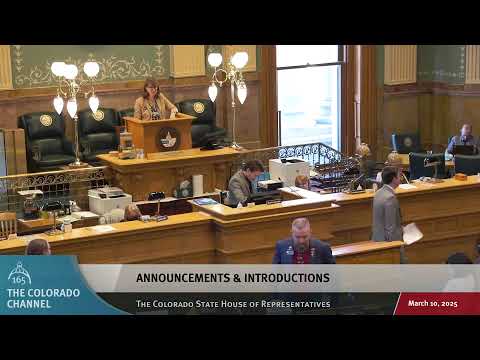
The Colorado House on March 10 passed House Bill 12-40, legislation aimed at strengthening protections for tenants who use housing subsidies and limiting certain landlord fees and penalties.
The bill, sponsored on the floor by Representative Froelich and brought forward with the Business and Labor Committee report, removes a proposed requirement that small landlords be compelled to accept Section 8 vouchers, lowers a proposed $50 late-fee cap to $20, and adds language authorizing technical or financial assistance to landlords.
The measure drew sharply divided debate. Representative Raf Froelich, the bill sponsor, said the measure “helps to give a little bit of grace” to tenants who rely on voucher programs and “strengthens source of income discrimination protection and cooperation with emergency rental assistance application and codifies the CARES Act,” and asked colleagues for a yes vote.
Opponents repeatedly warned of unintended consequences for small property owners. Representative Armagost said she opposed the bill because it “goes after landlords” and “puts a leash and a choke collar on them” and argued it would add regulatory burdens on small businesses. Representative Richardson said the bill “adds increased administrative burdens to landlords” and warned small landlords could leave the rental market after cumulative regulatory changes.
Representative Brooks raised both policy and procedure concerns about the bill’s committee handling and argued the statutory penalties were disproportionate. Representative Brooks also noted the bill references penalties administered by the Colorado Civil Rights Commission and cautioned about imposing broad civil penalties on small property owners.
Supporters countered that the bill was carefully amended in committee to carve out small, single-unit landlords and lower the late-fee cap. Representative Joseph said the committee made changes to excise the small-landlord requirement and reduce fees, and added assistance to landlords. Representative Brown, speaking in favor, said the bill reflects testimony from the disability and housing communities and that protections such as relay services and other supports are important in maintaining stable housing.
Formal actions recorded in the transcript: the Business and Labor Committee report on HB 12-40 was adopted in committee and the House later passed the bill on the floor. The committee vote on the committee report was taken by voice and passed; the floor notation in the transcript records “The bill passes.”
What the bill changes (as discussed on the floor) - Small-landlord carve-out: sponsors said the bill removes a provision that would have required small landlords to accept Section 8 vouchers; that requirement was struck in committee. - Late-fee cap: a month-to-month late fee cap was reduced from $50 in early drafts to $20 in the amended bill. - Technical/financial assistance: the bill contains added language providing for technical assistance or financial assistance to landlords. - Eviction-related notice: the bill requires certain notice requirements in eviction proceedings and codifies parts of emergency measures adopted during the COVID period, according to sponsors. - Penalties and remedies: debate referenced civil penalties starting at $5,000 for some unfair housing practices as administered by the Colorado Civil Rights Commission; opponents characterized that as a litigation risk for landlords, while supporters said the penalties target wrongdoing.
Where debate focused Supporters framed the bill as protecting tenants who rely on housing subsidies and as aligning eviction and habitability law with prior emergency protections. Sponsors emphasized stakeholder engagement and committee amendments that, they said, protected small landlords and reduced fee impacts.
Opponents argued the bill would increase landlords’ administrative risk, raise costs ultimately passed to tenants, and drive small landlords out of the market. Several lawmakers said procedural issues in committee—specifically a tied committee vote that was later resolved—had raised concerns about how the measure was advanced; sponsors responded that a lawmaker’s technical difficulty on Zoom, not vote whipping, explained the committee sequence and that the chair has discretion to wait for a member to vote.
Next steps and implementation The transcript records passage on the House floor. Sponsors and supporters said additional details and implementation questions—such as how financial assistance programs would be administered and how state housing authorities would interact with landlords—would be part of the follow-on work.
Ending Lawmakers split along familiar lines on landlord regulation and tenant protections; the bill’s sponsors emphasized negotiated amendments intended to reduce impact on small landlords, while opponents said cumulative regulatory changes risk reducing private rental supply.