Get Full Government Meeting Transcripts, Videos, & Alerts Forever!
Get email alerts on the Environmental Protection topic
No spam. Unsubscribe anytime.
Halsted residents urge enforcement of county battery-storage ban; county counsel to issue written opinion
Summary
Halsted residents told the Harvey County commissioners they oppose a proposed battery energy storage system inside city limits and said a 2002 county zoning ordinance appears to ban battery storage within mapped Equus Beds protection areas; the county counselor agreed to provide a written opinion.
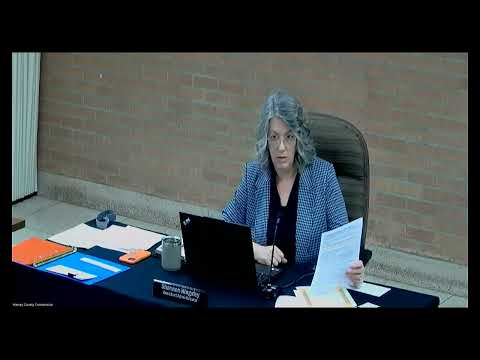
Residents of Halsted and surrounding areas urged the Harvey County Board of Commissioners on March 11 to enforce a county zoning prohibition on primary battery storage in areas mapped to protect the Equus Beds groundwater system.
Kevin Henderson, a Halsted resident, told commissioners he and many Halsted residents oppose a battery energy storage project and cited a county zoning ordinance (referenced in public comment as “ordinance 13.03, section 10,” on the transcript) that he said bans battery storage in mapped groundwater-protection areas. He said he understood a city limit placement could be used to avoid county restrictions and asked the commission to clarify and enforce the county rule.
Speakers and concerns Henderson referenced high-profile fires at large battery-storage facilities — he cited the Moss Landing incident in California — and said the county ordinance was intended to protect the Equus Beds groundwater management district. Another speaker, Peter Aversa, warned about toxic gas plumes and urged commissioners to consider the potential consequences of a storage-system failure.
County response A county counselor told the meeting that he would provide a written opinion on whether the county zoning ordinance applies inside city limits and on related legal questions raised by residents. The commission did not take immediate formal action on a permit or on enforcement at the meeting.
Why it matters Speakers framed the issue as both an environmental-protection and public-safety concern tied to groundwater protection for the county. At issue is the relationship between county zoning rules and city regulatory authority, and whether a project inside municipal boundaries can effectively circumvent county-level groundwater protections.
Provenance Public comments and the counselor’s pledge to prepare a written legal opinion are recorded in the March 11 meeting transcript; no permit application was approved or denied during the meeting.