Get Full Government Meeting Transcripts, Videos, & Alerts Forever!
Get email alerts on the Homestead Exemption topic
No spam. Unsubscribe anytime.
Columbia County holds fourth public hearing on state homestead-exemption law; no local decision made
Summary
County officials and residents spent a fourth hearing debating House Bill 581’s floating homestead exemption, the optional sales tax, and local budget impacts. County staff detailed implementation rules, timeline constraints and possible revenue shortfalls; several residents urged the commission to opt out.
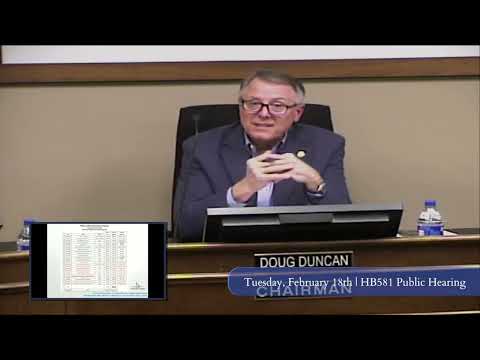
The Columbia County Board of Commissioners held a public hearing on House Bill 581 — the state law that creates a statewide, floating homestead exemption — on Feb. 18 and took public comment but did not vote to opt in or out.
County officials and residents said the law’s mechanics, timing and fiscal consequences remain unclear to many. Chairman, Columbia County Board of Commissioners, opened the hearing and County Manager Mr. Johnson provided a detailed explanation of the bill, its three parts and how it would interact with local budgeting.
Mr. Johnson said House Bill 581 contains three elements: a floating homestead exemption that would limit year‑to‑year assessed increases on homesteaded property to a CPI or a rate set by the state revenue commissioner; an optional local one‑cent sales tax to offset lost property tax revenue; and several property‑tax process reforms. He said the law was 27 pages long and began to take effect Jan. 1, with a March 1 local deadline to declare an intent to opt out. “We were then given from January 1 to March 1 to decide whether or not we were gonna opt in or opt out,” Mr. Johnson said.
Mr. Johnson warned the cap applies only to homesteaded property and does not carry with a homeowner when a property is sold. “Whenever there's a substantial change in your property then you will get a reassessment,” he said, adding the cap would not apply to rental or business properties.
He also described practical constraints: the floating homestead cap must be paired, if desired, with a voter‑approved local option one‑cent sales tax on the November ballot; that sales tax can be levied for up to five years and requires all local cities in the taxing region to participate. “If anybody opted out, it would take away all of our ability to levy the sales tax,” Mr. Johnson said.
County staff provided several numeric examples to show likely local effects. Using a hypothetical county median house, staff estimated a homeowner would save roughly $52 per year over five years under a modest CPI cap, while some non‑homesteaded owners could pay more under the same scenario. Mr. Johnson said Columbia County’s general fund is roughly $100 million, with about $44 million going to courts, jail and related public‑safety accounts; staff estimate the county could face an approximate $4–5 million revenue shortfall tied to the homestead exemption, depending on the CPI chosen by the state and whether a sales tax is approved.
Speakers at the hearing expressed divergent views. Adam Plagens, a Columbia County resident who said he voted against the 2024 ballot item that authorized the General Assembly to act, called House Bill 581 “a bad law written by the Good Idea Fairies in Atlanta,” and urged the commission to lay out a clear local plan if it opts out. Sandra Delk, a resident on disability, described receiving two different tax notices in 2023 after an assessor’s office computer test, said she is on a fixed income and emphasized the difference a few hundred dollars can make in household budgets.
Other speakers, including Betty Sorency (a local real estate professional), Nate Rish and Jonathan Culp, urged the county to retain local control and opt out of HB 581, citing concern that the state law would limit county flexibility and tie the county’s revenue tools to the General Assembly and periodic voter referenda. Several speakers said the Columbia County Board of Education has already voted to opt out; residents said that decision would shift more tax pressure to other property classes if the county opted in.
Speakers also raised procedural questions about ballot language and voter intent. Multiple residents and commenters noted that November’s ballot approved House Resolution 10‑22, which authorized the General Assembly to enact a statewide exemption; they said many voters did not have the text of House Bill 581 itself before voting. Mr. Johnson and others noted the legislature has since introduced cleanup bills (including HB 92 and HB 370) that could change deadlines or require notice language on tax bills, but they cautioned the county must act under the statute as written unless the state changes it.
No formal vote to opt in or out occurred at the hearing. The commission indicated this was the fourth of multiple required public meetings; staff and residents asked the board to consider implementation impacts, communications, and specific plans for any revenue shortfalls before making a final decision.
The commission closed the public hearing and scheduled its regular commission meeting to follow. The county has until the statutory deadline to publish required notices and to state whether it intends to opt out; staff said they will continue to update residents as state legislation evolves and as the county prepares its fiscal year budget.