Get Full Government Meeting Transcripts, Videos, & Alerts Forever!
Get email alerts on the Housing Vacant Properties topic
No spam. Unsubscribe anytime.
College Park committee recommends a vacant‑property registry; council asks for fee study and follow-up
Summary
A city committee recommended a one‑year vacant‑property registry with specified exemptions and asked staff for a fee study and revised language; council directed staff and legal to refine penalties and return in roughly a month.
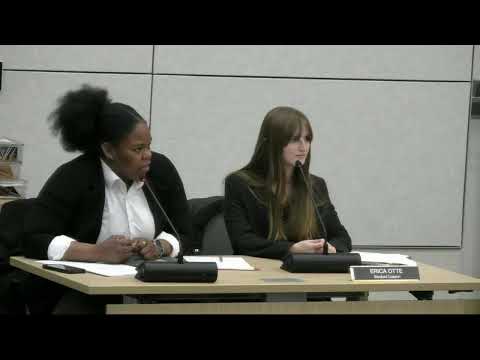
The College Park Vacant and Blighted Property Tax Committee recommended creating a vacant‑property registry and proposed registration rules and exemptions at the Feb. 18 City Council meeting. Committee co‑chairs Bob Catlin and Darren Sharp presented the draft, after the mayor and council asked the committee to research a registry in a prior session.
"The initiative was to take a look at what's going on ... whether or not there should be some depth level of enforcement for vacant and blighted property in the city of College Park," Vice Chair Darren Sharp said during the presentation. The draft recommends that owners of properties vacant for more than 90 days register those properties; registration would last one year and include contact information for owners and local agents.
The draft includes several exemptions, including parcels that are under active development (building permits or site plans in progress), properties subject to active legal proceedings that prevent occupancy, and individual dwelling units in multi‑unit buildings. Committee members and city staff discussed that the multi‑unit exemption was intended to avoid requiring constant updates from apartment managers while capturing truly vacant buildings.
City Attorney Nate Foreman said the committee’s work focused on creating a practical registry to assist code enforcement and to gather data that could support later policy steps. "The purpose of that ... was to talk about a property registry ... how can we assist the Department of Public Services with enforcing properties that are habitually vacant," Foreman said, and noted that a registry is a first step before any potential tax or penalty regime.
Councilmembers raised practical concerns. Councilmember Maggie Mackey and others asked whether owners could repeatedly renew a vacant registration to avoid penalties; committee members replied that a registration is not intended to be a penalty and that any escalated penalty or tax would require additional legal review. Councilmember Esther Doctor asked whether the committee could limit the number of renewals; the committee suggested that the next phase of work, and legal review, would address penalty structures and potential sliding scales used by other municipalities.
Several council members asked staff to estimate the administrative cost of running a registry. City staff said they will prepare a fee study — including staff time, inspection time and attorney time — to recommend a registration fee intended to cover administrative costs. Committee members suggested a nominal registration fee and proportionally higher noncompliance penalties, and pointed to examples in other Maryland municipalities (for example, Mount Rainier’s registration fees and penalty structures were discussed).
Councilmember Whitney urged the committee to consider collecting data on multi‑unit vacancies by proportion (for example, share of units vacant in a multi‑family building) because that information may be useful for affordable‑housing planning. Committee members said the registry’s immediate aim is to inventory vacant parcels; decisions about using registry data for economic development or tax incentives would follow once the inventory existed.
City staff and the committee agreed to refine the draft, involve the city manager and legal staff on fee and enforcement options, and return with updated language and suggested fees in about a month. No formal ordinance vote was taken; the council asked for a follow‑up work session to complete remaining items.