Get Full Government Meeting Transcripts, Videos, & Alerts Forever!
Get email alerts on the Land Use Zoning topic
No spam. Unsubscribe anytime.
Board weighs wide-ranging zoning rewrite; asks staff to tighten rules on cannabis, charging stations, animal buffers and shooting ranges
Summary
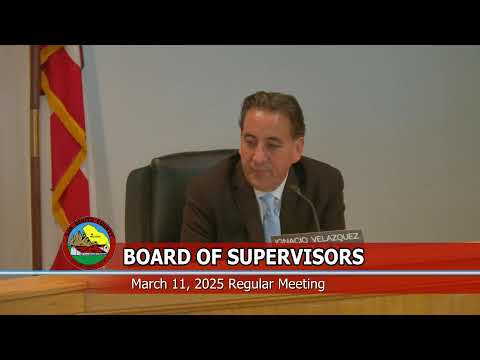
The San Benito County Board of Supervisors held a public hearing March 11 on proposed, comprehensive amendments to Title 25 of the county zoning code and directed staff to return with several targeted changes and clarifications.
The San Benito County Board of Supervisors held a public hearing March 11 on proposed, comprehensive amendments to Title 25 of the county zoning code and directed staff to return with several targeted changes and clarifications.
Planning staff summarized the package as a deletion and restatement of multiple zoning chapters to reflect recent policy changes and state law updates. Planner Abraham Prado told the board the package broadened public notice from 300 feet to 1,000 feet in many cases to "go above and beyond what's required in government code," clarified administrative procedures, and updated a wide range of use tables and standards for specific uses, including accessory dwelling units (ADUs), kennels, short‑term rentals, and indoor shooting ranges.
The hearing generated detailed comments and questions from supervisors, members of the public and industry stakeholders. Key topics the board asked staff to refine before a second reading included:
- Agricultural buffers and ag‑land mitigation: Supervisors and farm stakeholders urged stronger protections for prime farmland and recommended the county consider raising mitigation ratios above the draft 1:1 standard for conversions. Staff said the ag element and a stakeholder planning group will reexamine definitions of "prime" soils and options for mitigation; the board asked staff to bring interim zoning changes where feasible to limit subdivisions while the ag element proceeds.
- Waiting period for reapplications: Staff noted the draft included a 1‑year waiting period for reapplying on a denied application; after discussion the board agreed to consider changing that to 2 years and to add language preventing trivial edits from being used to circumvent a denial.
- Cannabis permitting and security: With new cannabis applications arriving, staff and supervisors asked for explicit fencing, security and parking standards for cannabis facilities in agricultural zones; the board directed staff to return with proposed language.
- EV charging stations: Planning staff had proposed treating charging stations as a conditional use requiring Planning Commission review. Supervisors asked staff to propose a higher threshold (for example, a small number of chargers) that could be permitted without a full conditional‑use process to avoid unnecessary delays for small businesses.
- Shooting ranges: The draft added indoor shooting ranges to some commercial and industrial zones and added facility standards. Supervisors asked staff to revisit provisions for proximity to residences, enforcement options for violations and impacts on existing ranges.
- Animal‑keeping and right‑to‑farm matters: Several supervisors and public speakers said new residences near existing farms have created conflicts (for example, organic certification impacts). The board directed staff to prioritize amendments to Title 13 (animal‑keeping) and to coordinate those changes with the agricultural element work.
The board did not adopt the rewritten code at this meeting. Staff advised that some changes could be moved forward more quickly via zoning code amendments while larger ag element work continued; supervisors asked staff to present a timeline and to solicit input from the farm stakeholder planning group and the Farm Bureau. Planning staff also agreed to provide potential language to avoid gaming of reapplication time limits and to circulate proposed edits to the board before the next hearing.
Public commenters included farmers, members of the Farm Bureau and residents urging more protection for farmland and clarity on residential standards near agricultural operations. Several supervisors said they wanted follow‑up meetings or special hearings to speed changes on priority items such as the animal‑keeping code, cannabis security and EV charging thresholds.
The board set a second reading date for the larger Title 25 package (staff had proposed March 25) but instructed staff to return with the narrower, higher‑priority amendments sooner if possible.