Get Full Government Meeting Transcripts, Videos, & Alerts Forever!
Get email alerts on the Cannabis Tax Code topic
No spam. Unsubscribe anytime.
Board introduces amendment to county cannabis tax code and continues adoption to Feb. 25
Summary
The San Benito County Board of Supervisors introduced an ordinance to amend Chapter 5.03 of the county code on cannabis business activity, directed staff to continue the item for formal adoption on Feb. 25, and voted 3–2 to proceed with the first reading.
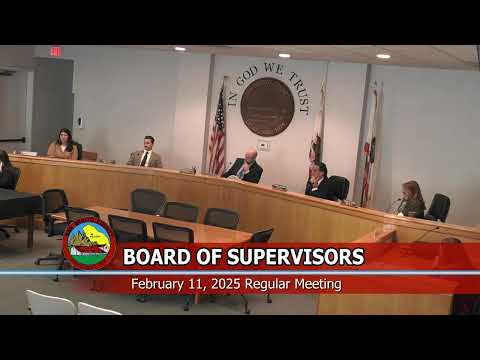
The San Benito County Board of Supervisors introduced an ordinance on Feb. 11 to amend Chapter 5.03 of the San Benito County Code governing cannabis business activity and continued the matter to the board’s Feb. 25 meeting for formal adoption.
Staff said the proposed changes would allow flexibility in tax-exemptions for certain cultivation businesses through Dec. 30, 2026, and would align the county’s tax structure to be more competitive with neighboring jurisdictions. Senior staff explained the draft would exempt cultivation businesses from the county cannabis business tax through December 2026 while allowing the county to recover actual costs for services provided under the county master fee schedule.
Why it matters: Supervisors and members of the public said the county’s tax and fee levels affect whether legal cannabis businesses locate in San Benito County or remain in the illicit market. Staff noted placing a county tax measure on a 2026 ballot would cost roughly $50,000–$75,000 depending on other ballot measures.
During public comment, speakers urged both caution and opportunity: some residents warned of social impacts and enforcement costs; others said an organized, regulated industry could reduce black-market activity. Several public commenters asked whether the county would limit acreage and retail permits; staff noted an existing cap of 500 acres for the current year, expanding by 500 acres annually up to 2,000 acres, and a five‑store limit for retail permits.
The board voted to introduce the ordinance, waive first reading, and continue the item to Feb. 25. The roll call vote was 3–2: Supervisors Kozmicki, Zenger and Sotelo voted yes; Supervisors Velasquez and Currow voted no.
The board asked staff to finalize the ordinance language and to return on Feb. 25 for formal adoption and any additional direction on fees and monitoring mechanisms.