Get Full Government Meeting Transcripts, Videos, & Alerts Forever!
Get email alerts on the Parks And Recreation topic
No spam. Unsubscribe anytime.
Riverview Regional Park delayed by possible salamander habitat; county weighing $2.2M mitigation versus two-season study
Summary
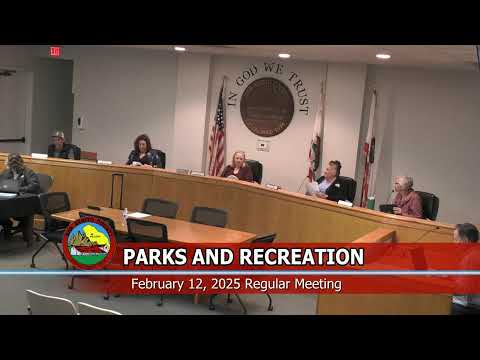
San Benito County staff told the Parks and Recreation Commission that recent state wildlife findings mean Riverview Regional Park may require either $2.2 million in off‑site mitigation or two seasons of additional field studies, which would delay major construction for roughly two years.
Riverview Regional Park — a 50-acre project south of the high school in District 3 — faces a choice between paying for off‑site mitigation or conducting two more years of biological studies after recently revised wildlife findings, San Benito County public works staff said.
Public Works Administrator Steve Loop told the Parks and Recreation Commission that the California Department of Fish and Wildlife (CDFW) disagrees with an earlier federal determination that the site likely lacks California tiger salamanders. If the county does not conduct further on‑site studies, CDFW’s position would require purchase of roughly 50 acres of off‑site mitigation at an estimated cost of about $2,200,000 plus approximately $200,000 in permitting and related costs.
Loop said the alternative is to dig a series of perimeter trenches and monitor them for two seasons; if no salamanders are found the county’s costs would total roughly $200,000 for the studies and related work. He said the county currently has about $7 million in combined grants and county park impact funds available to build the park’s primary infrastructure but did not budget the multi‑million dollar mitigation amount.
Loop also described other permitting work on the site: an owl and two bumblebee studies that were already underway and that would extend the permitting timeline into the fall if the county proceeds with full environmental review. Loop told commissioners an EPA grant application submitted three months earlier — a competitive request that would fund up to $10 million for construction and programming if awarded — would require the county to start construction this fall. A requirement to perform two seasons of salamander monitoring would conflict with that schedule.
Loop summarized funded versus unfunded park elements. He said core items — parking, some restrooms, maintenance yard and several ball fields — are covered by existing grants and county funds (about $3 million in grants and roughly $3.7 million from park impact funds). Many proposed amenities remain unfunded, including additional restrooms, a concession/storage building, amphitheater, bocce courts, botanical garden and expanded landscaping and irrigation.
Commissioners and staff discussed fundraising and sponsorship options during the meeting, including bench and tree sponsorship ideas and a forthcoming park sponsorship policy. Loop said staff would return with a status update to the commission at the next scheduled Parks meeting.
Loop emphasized the two funding paths and timetable options but did not report a binding decision from the commission during the session.
Ending: Loop said staff would present an update at the commission’s next meeting and would continue pursuing grants while the commission and supervisors consider whether to allocate funds to avoid the two‑season delay.