Get Full Government Meeting Transcripts, Videos, & Alerts Forever!
Get email alerts on the School Budget topic
No spam. Unsubscribe anytime.
Bridgewater-Raynham school committee presents FY26 "level services" budget, warns of $6.4M shortfall
Summary
At a public hearing, the Bridgewater-Raynham School Committee presented a FY26 level-services budget that would keep current staffing but leaves a projected $6.4 million deficit; committee leaders urged town support and warned of program and staff cuts, larger class sizes and potential DESE compliance consequences if funding is not increased.
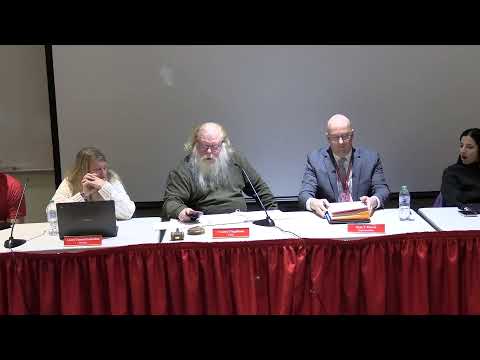
The Bridgewater-Raynham School Committee presented a FY2026 "level services" budget at a public hearing at Bridgewater-Raynham Regional High School, describing a projected $6,400,000 deficit and asking the two member towns to consider increased funding or an override to avoid program and staff cuts.
The committee said the proposed budget preserves current staffing levels for one year but will not reduce class sizes and would rely on $2.0–$2.4 million from the district’s E&D (savings) fund and school-choice receipts to balance part of the gap. "This budget will not address class size," Budget Subcommittee Chair Miss King said. "However, it will hopefully keep us status quo while the towns and school committee work together to figure out a better plan for funding future budgets."
Why it matters: committee and district leaders warned that without additional town or state funding the district would face program reductions (including extracurriculars and some electives), elimination of positions, and higher class sizes that would damage instruction and special-education compliance. Superintendent Mister Powers said staffing shortfalls have already led to DESE complaints this year and that "we found ourselves out of compliance, on 3 occasions, because of staffing." He added that sending students out of district to meet needs typically increases costs rather than reducing them.
Key numbers and drivers - Projected deficit for a level-services FY26 budget: $6,400,000 (presented by the budget subcommittee). - Proposed local assessments in the presentation: about a 4.67% increase for Bridgewater and about a 3% increase for Raynham; combined town assessment increase presented as roughly 13.4% when capital and debt are included. - District operational increase (level services): presented as ~13.06% (overall budget including capital shown at ~11.74% in the slides). - Major cost drivers called out in the presentation: transportation contract increases (presenter cited a 25% increase for bus contract), out-of-district special education tuition (presenter cited a 34% increase), utilities (+17%), health insurance (presenter cited ~20% increase), and estimated contractual step/negotiation costs (~$2.8 million tentative). - Proposed use of E&D (savings): $2,000,000–$2,400,000 to offset the FY26 budget; presenters said they prefer to retain at least about $1,000,000 in E&D as an emergency cushion. - Staffing context: district reported a loss of about 24 positions last year; presenters said filling vacancies for compliance-driven special education positions would be required if cuts force services out-of-district.
What the committee proposed and voted on - The school committee unanimously approved a motion (voice vote; exact count not recorded) to request formation of a smaller FY26 budget working group that will include two school committee members (anticipated chair and vice chair or designees), two Bridgewater town council appointees, one Raynham selectman, and one Raynham Finance Committee member. The chair said she would send the request to the towns by email. The motion was moved by Miss Davenport and seconded by Mister Floche.
Discussion and alternatives Committee and administration members repeatedly emphasized that the "level services" budget is the minimum the committee felt it could advance without losing more staff immediately. Presenters outlined possible deficit-closing options if the towns do not fund the ask: additional E&D use, postponing capital projects (~$1.2M potential), eliminating or making extracurriculars self-funded (~$1.1M potential), not filling retirements (presentation estimated 16 retirements not filled could save ~$1.7M), and deeper staffing reductions across departments. Presenters cautioned several options carry legal or compliance risk (in particular special-education caseloads and related services).
Public testimony and reaction More than two dozen residents, parents, teachers and students addressed the committee. Comments emphasized the effects of large class sizes and stressed special-education needs, extracurriculars and arts. Resident Catherine McDonald told the committee, "Level services isn't good enough," and urged community action including an override or pursuit of federal/state funding. Several student speakers described crowded classrooms and the effect on learning: a third-grade student said, "I am sitting there waiting to learn something," and other students said smaller classes and preservation of specials (art, music) are essential. State Representative Dennis Gallagher spoke in support of additional chapter 70 funding at the state level and encouraged residents to contact Beacon Hill lawmakers.
Next steps - The public hearing is informational; no budget vote was taken at the hearing. The budget will be taken "under advisement" and the district schedules a school committee meeting on March 26 to act on the budget. The district listed upcoming town-level steps including a Bridgewater town council meeting in May and Raynham town meeting in May where town funding and assessments will be decided.
What was not decided The committee did not adopt an override or finalize town assessments at the hearing. The superintendent and budget subcommittee repeatedly urged rapid town-district discussions because, if a budget is not certified by July 1, the state can impose a 1/12th budget and take over district finances, a scenario presenters said would be worse than the current proposal.
Officials quoted in this report are identified in the transcript excerpt from the public hearing and are named as they were in the hearing.