Get Full Government Meeting Transcripts, Videos, & Alerts Forever!
Get email alerts on the Pool Construction Funding topic
No spam. Unsubscribe anytime.
Carbondale pool project running ahead of schedule but contingency strained after large change orders; fundraising and grants still in progress
Summary
Commission and staff reported the new pool’s entertainment walls poured and excavation underway, but a $354,000 change to irrigation/backwash storage has used a large share of contingency. Fundraising and several grant applications are active to close the remaining budget gap.
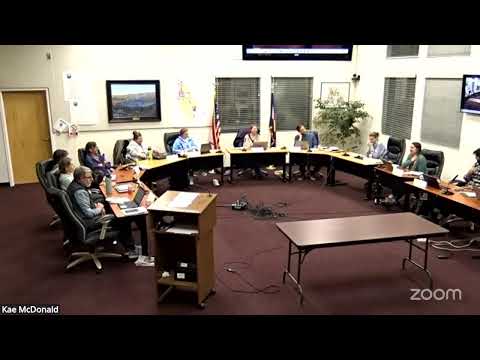
Carbondale’s Parks and Recreation Commission heard detailed construction and fundraising updates Wednesday on the town’s new pool project, which contractors report is slightly ahead of schedule but facing large change orders that have reduced contingency funds.
The update, led by Eric Friendlinger, Carbondale’s parks and recreation director, and a campaign presenter, said crews poured the entertainment pool walls and have begun stripping forms, excavating the backwash tank and forming the bathhouse foundation. The project team described the work as roughly six weeks ahead of an earlier schedule projection.
The campaign presenter told commissioners that gifts and pledges stood at $1,583,410 as of the Monday before the meeting and that leadership participation from commission members and trustees is helping public fundraising outreach. Campaign activities described included paid social posts, targeted print ads, testimonials with donor photographs, a trifold brochure and planned volunteer booths at community events and first-Friday markets to solicit donations.
Why it matters: staff said the project can proceed more predictably if fundraising and grant applications close part of the remaining funding gap, while construction decisions taken now affect operations and long‑term costs.
Construction change orders and contingency
Friendlinger described a set of recent change orders that pushed budgeted contingency toward depletion. The largest single change discussed was an approximately $354,000 increase tied to irrigation and the pool backwash-water handling system. The design originally assumed reuse of backwash water and an in‑ground irrigation system; after review, staff said that reuse would have required extensive retreatment to meet code and that the originally proposed system differed substantially from other town irrigation systems.
Because the backwash volumes are larger (three bodies of water will be backwashed), the project team said they needed a much larger holding tank and associated pump/controls. Prefabricated tanks had lead times estimated as long as two years, so staff and contractor agreed to build the tank on site to avoid a multi‑year delay. Friendlinger said the $354,000 sum “ate a big chunk” of an original contingency that started at roughly $600,000.
Staff emphasized that some earlier value‑engineered items have been restored to the scope for long‑term safety and programming: they reinstated site lighting and a comprehensive security camera layout covering all pool water surfaces to avoid blind spots, and they added lighting in the entertainment pool to support shoulder‑season and evening programming.
Grants and fundraising
Campaign and staff presenters described multiple active grant efforts and fundraising channels. Staff said they are pursuing an energy‑efficiency grant through CORE (Community Office for Resource Efficiency) for solar panels; they resubmitted a quarterly T‑Mobile grant request (staff indicated a $50,000 target); they submitted materials to the Gates Family Foundation (application due the week of the meeting); and they completed an environmental/foundation grant for the ski co. Staff said they would also continue outreach to other foundations and to potential matching donors.
Public outreach tactics noted included direct mail with a remittance envelope sent to a purchased mailing list (staff apologized that the donor and mailing lists were not cross‑checked before purchase and said they will follow up by email), paid social and print advertising, and volunteer booths at community events.
What commissioners asked and directed
Commissioners questioned the nature of the large PCO (project change order) and whether the irrigation design had been mis‑specified. Staff explained the original in‑ground irrigation concept and the need to redesign after confirming town water rights and the practical limits of backwash discharge rates. Commissioners also pressed on how much of the contingency remained and were told fundraising will be necessary to fill the gap.
No formal commission vote on construction change orders was recorded during the meeting; staff reported having “pulled the trigger” on the site lighting and camera change orders in order to avoid schedule delays.
Ending
Staff and the campaign team asked commissioners to volunteer for upcoming outreach booths and to help promote campaign mailings and events. Friendlinger and campaign staff said they will continue submitting grant applications and report back on outcomes and any further material cost changes at future meetings.