Get Full Government Meeting Transcripts, Videos, & Alerts Forever!
Get email alerts on the Student Technology Policy topic
No spam. Unsubscribe anytime.
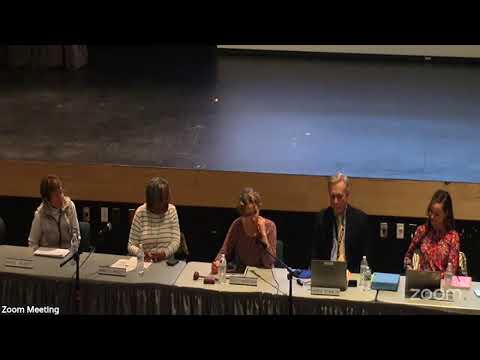
Wallingford-Swarthmore Policy Committee reopens debate on cellphone rules; advances revised Policy 2.37 to full board
Summary
After extensive public comment and board debate, the Policy Committee voted March 12 to advance a revised electronic-device policy (2.37) and accompanying administrative regulation to the full Wallingford-Swarthmore School Board with edits, including tightened definitions, exception language and a plan to measure implementation.
The Wallingford-Swarthmore School District Policy Committee took up a revised electronic-device policy (2.37) for first reading on March 12, and after extended discussion and public comment voted to advance the revised policy, with specified edits, to the full board for consideration.
The proposed policy would restrict student use of cellphones and other electronic devices during instructional periods and require designated storage locations during those times. The draft also included definitions for "instructional period," "legitimate educational purpose," "designated storage area," and start/end of day language; an accompanying administrative regulation spells out permitted uses, educational programming on digital responsibility and progressive discipline for violations.
Dr. Scanlon presented the slide deck, summarized survey results, focus-group feedback and visits to other Pennsylvania high schools that have implemented bans or pouch systems. He told the committee staff had surveyed parents, staff and students: roughly three-quarters of K–12 respondents supported defining consequences for violations; staff and students reported different levels of compliance by level (staff report higher compliance in middle school than high school), and many parents and staff cited social-media concerns.
Board debate and clarifications
Committee members asked staff to tighten definitions and to clarify whether field trips and restroom breaks are included in "instructional period"; staff answered that teacher-directed field trips would be considered instructional time unless an exception applied. Members sought clearer language on beginning/end of school day, and asked that the policy explicitly include students with medical or IEP accommodations.
Several board members — including Michelle (board member) and Christine (board member) — described mixed evidence but signaled support for a moderate approach that limits phones in classrooms while preserving lunch and between-class access for high school students. Christine asked the district to revisit the policy in a year with data; staff agreed to add a measurement component.
Public comment and community response
More than two dozen public commenters addressed the committee. Parents, teachers and students voiced a range of opinions: several parents and community members urged a bell-to-bell ban in the high school and middle school citing teacher redirection rates and concerns about social media and student mental health; other parents and many high-school students asked to preserve phone access between classes and at lunch for practical reasons (team communications via apps such as TeamSnap, fifth-block scheduling and family coordination). Students and some parents emphasized teaching digital responsibility rather than an outright ban.
Key clarifications staff committed to add
- Clean up and shorten the definitions for "instructional period" and "beginning/end of school day." - Add language clarifying field trips are instructional when teacher-directed; clarify restroom access and how that interacts with designated storage. - Add explicit references to educational, medical and legally-required exceptions (including IEP accommodations). - Strengthen the "must" language around parent/guardian communications to ask parents to contact the school office rather than text students during the day. - Add a measurement plan (surveys/benchmarks) so the district can track teacher redirection rates and implementation progress and return to the board in approximately one year.
Committee action and next steps
The committee voted by affirmation to advance the revised policy, with the edits discussed during the meeting, to the full board agenda for March 24. Staff will incorporate the clarifications into the policy and administrative regulation and return the text to the committee for a second review prior to final board action.
What this would mean if adopted
Under the draft regulation presented to the committee, middle-school students would be required to keep phones off and stored during instructional periods (the committee discussed making that bell-to-bell). At the high school the draft sought a middle ground that restricts phones during instructional periods but preserves access before and after the official school day and, as discussed, typically at lunch and between classes unless the board chooses otherwise. The draft administrative regulation outlines progressive discipline (verbal warnings, office referral, parent contact and escalating consequences) and allows exceptions for medical/IEP needs and teacher-approved instructional uses.
Votes at a glance
- Motion to advance Policy 2.37 (Electronic devices) and its administrative regulation, with edits discussed at committee, to the full board for first reading: approved by affirmation (committee vote: all in favor).