Get Full Government Meeting Transcripts, Videos, & Alerts Forever!
Get email alerts on the Energy Aggregation topic
No spam. Unsubscribe anytime.
Belknap County delegation tables consideration of countywide Community Power plan
Summary
After a presentation from the Community Power Coalition, the Belknap County delegation voted 15–1 to table action on a countywide community power aggregation plan, citing the need for more review and public input.
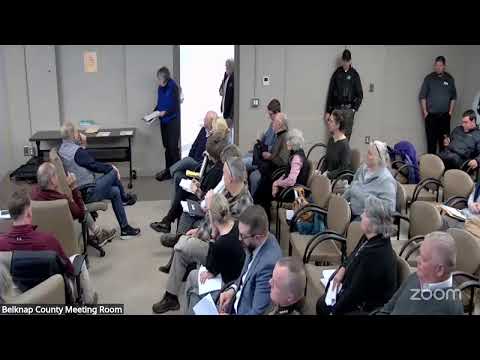
Belknap County delegates heard a presentation on a proposed countywide Community Power aggregation program and voted 15–1 to table consideration of the plan to a future meeting.
The Community Power Coalition presented an overview of a county aggregation option enabled by RSA 53‑E, which allows municipalities and counties in New Hampshire to form local electricity aggregation programs that offer electricity supply alternatives to the utilities’ default supply. Henry Herndon, identified in the presentation as acting general manager of the Community Power Coalition, described the coalition as a nonprofit joint powers agency serving member municipalities and counties and said the coalition has grown to about 70 members in the state.
The plan presented to the delegation would create a countywide “opt‑in” Community Power program available to residents and businesses across Belknap County; the presentation and materials stressed that adoption of the plan would not immediately change customers’ service but would create a new supplier option. Presenters said that the plan, if adopted by the delegation and approved by the New Hampshire Public Utilities Commission, would authorize the county commissioners to implement and later launch the program at their discretion; presenters repeatedly told the delegation that the plan itself would not create a tax obligation for the county or its taxpayers.
Delegation members asked procedural and policy questions. Several representatives sought clarification about opt‑in versus opt‑out enrollment mechanics, how municipal governments inside the county could adopt the county program as a local default, and how any project‑specific contracts or generation projects would allocate costs only to participating towns. Delegates also raised timing and notice concerns: some members said they had received presentation materials only within 48 hours of the meeting and requested more time for review and additional public input before taking action.
The delegation voted to table the matter and defer any final action to a subsequent meeting so members can review materials and allow for public comment. The vote to table passed 15–1.
The presenters noted the coalition has completed public hearings in several member jurisdictions (presenters said two public hearings had been held on the county plan in November and December of the prior year) and that other counties in New Hampshire have adopted county or municipal aggregation plans. They also explained the program’s consumer protections and customer service channels and said program rates historically produced average savings for participating customers, though they acknowledged that in the most recent six‑month period coalition rates were marginally higher than prevailing investor‑owned utility supply rates for some customers.
What’s next: the Community Power plan would still require approval by the New Hampshire Public Utilities Commission after any formal action by the delegation and the county commissioners. By tabling the item, delegates said they were seeking additional time for review and for public comment prior to any delegation vote that would adopt the plan and authorize the commissioners to proceed.
Sources and context: The presentation referenced RSA 53‑E (the state statute enabling municipal/community aggregation), the coalition’s joint powers agreement, and the requirement that the Public Utilities Commission review and approve aggregation plans. The delegation’s tabling vote and repeated requests for more public notice framed the immediate outcome: no action to adopt the county plan was taken at the meeting.