Get Full Government Meeting Transcripts, Videos, & Alerts Forever!
Get email alerts on the Comprehensive Plan topic
No spam. Unsubscribe anytime.
Planning board advances comprehensive plan work and raises airport, solar policy questions
Summary
Members reviewed the comprehensive plan update, set a May target for completion, and flagged airport land-use limits and solar decommissioning as topics for further planning-board input.
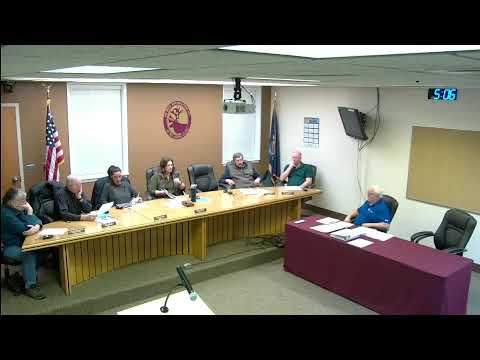
The Caribou Planning Board reviewed progress on the city’s comprehensive plan March 13 and asked members to submit comments ahead of the next meeting so the board can finalize a future land-use section it hopes to complete by May.
Board members discussed several substantive planning topics that will shape the future land-use plan: the riverfront project, development near the hospital and existing apartment projects, FAA restrictions on airport property, and the potential conversion of farmland for solar development — including decommissioning and bonding requirements.
Planning staff said maps and draft sections have been circulated to consultants (the transcript names Ben Smith and a firm referenced as Northstar) and that the board’s input on growth areas and land-use designation will inform the final document. The board chair (or a board member) asked each planning-board member to “take a look at it, write down some of your thoughts” and return suggested edits at the April meeting.
On airport property, staff told the board the Federal Aviation Administration (FAA) restrictions limit non-aviation structures in the airport safety/approach zones. Members recalled a prior FAA-driven citation that led to removal of a house built inside an approach zone on Dennett Road, and concluded any development on the airport parcel would need to be aviation-related and comply with FAA height and setback requirements.
On solar development, members raised community concerns about conversion of farmland, aesthetics and long-term site management. The board discussed contract provisions and decommissioning clauses used elsewhere, noting that some developers include bonding and contractual decommissioning responsibilities but that local policy can prescribe site-specific expectations. Members referenced nearby communities that have used moratoria or zoning limits as a policy response and suggested including guidance for solar siting and decommissioning in the comprehensive plan’s land-use section.
Staffing and capacity also surfaced: the board was told the top candidate for code enforcement did not progress to a second interview and did not respond to follow-up calls; meanwhile a candidate for economic and community development received a positive second interview. Board members discussed interim coverage and the practical value of having a dedicated code enforcement presence at planning-board meetings.
Next steps: Board members will return written comments on the comprehensive plan drafts before the April meeting; staff will compile those comments and aim to present a consolidated draft in May for final review and referral as required.