Get Full Government Meeting Transcripts, Videos, & Alerts Forever!
Get email alerts on the Strategic Priorities topic
No spam. Unsubscribe anytime.
Bonita Springs council workshop emphasizes resiliency, transportation and downtown planning
Summary
At an informal workshop, the Bonita Springs mayor and council discussed narrowing eight existing strategic priorities toward a shorter set focused on stormwater resiliency, transportation, downtown aesthetics and financial reserves; staff will return with follow-up workshop items.
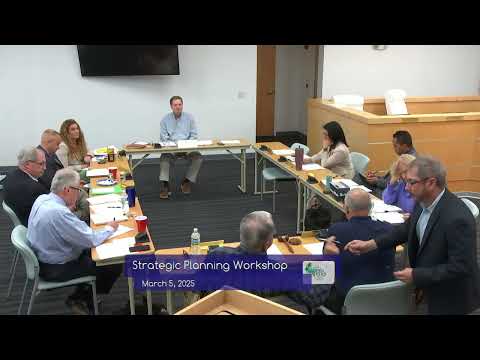
Bonita Springs mayor and council met in an informal workshop to review and refine the city's strategic priorities, focusing discussion on stormwater resiliency, transportation, downtown aesthetics, parks and long-term finances.
Dr. Bob Lee, the meeting facilitator, framed the session as a high-level exercise: “my understanding of my purpose today is to, end of the day, to have a product that would include up to 8 up to 8 strategic priorities.” The council and staff discussed whether to keep the current eight priorities or compress them to a smaller, multi‑year set the city can act on and measure.
Council members repeatedly raised stormwater and resilience as a top priority. “Using the term resiliency… it's not about managing stormwater anymore. It's about becoming more resilient,” Council member Nigel Folke said, arguing the city should update past resiliency work and pursue state planning grants. Several members recommended renaming or reframing the existing “improve stormwater management” priority to emphasize resilience and long‑term planning.
Transportation and downtown revitalization were the other recurring themes. Council members urged continued work on major corridors such as Bonita Beach Road, Imperial and the Marney fields area, and several suggested parking solutions for downtown. Council member Jesse proposed building parking vertically at the library site or at the bioreactor parcel, noting both are city‑owned locations that could support greater parking capacity near downtown.
Members also discussed recreational and economic benefits tied to trails and sports facilities. Council members referenced rails‑to‑trails and the Legacy Trail as examples of projects that can generate both transportation options and economic activity from visitation, while others urged expanding and better marketing the city's parks and tournament venues to drive revenue from regional events.
Finance and reserves were raised as a near‑term implementation concern. Council member Laura Carr noted recent changes to reserves: “we increased our reserves by a million dollars. So the last report, we had $2,000,000 in reserves.” Multiple members requested a staff presentation breaking down fund balances, reserve policy, and potential revenue or borrowing options, including state grant opportunities and the Florida governmental loan programs mentioned during the meeting.
Other recurring items included improving permit processes to support economic development, better public communication about what services the city provides (versus county or special districts), and addressing Wi‑Fi and cellular coverage gaps as potential quality‑of‑life and revenue opportunities through use of public land and streamlined permitting for cell infrastructure.
No formal votes or policy adoptions were taken at the workshop. The facilitator and city manager said staff would note short‑term items raised during the discussion and return with proposed workshop agendas or briefings to develop specific objectives, budgets and timelines tied to the strategic priorities.
The conversation concluded with the group agreeing to continue in an informal format and to schedule follow‑up workshop items so staff can prepare targeted information for council decision‑making.