Get Full Government Meeting Transcripts, Videos, & Alerts Forever!
Get email alerts on the Boards Committees Reform topic
No spam. Unsubscribe anytime.
Bonita Springs council moves to study consolidation, standards for advisory boards and external appointments
Summary
City leaders agreed to develop two workshops to review combining land-use boards and to standardize qualifications, training and term rules for city boards after members raised concerns about low attendance, overlapping duties and legal limits from state law.
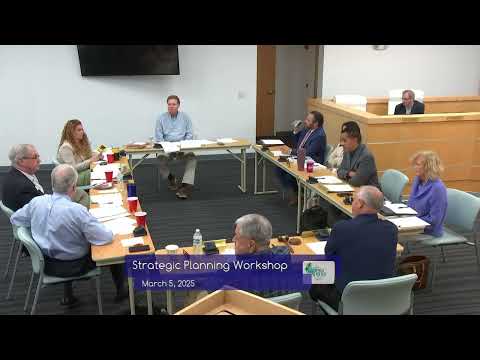
Bonita Springs city leaders on Thursday agreed to pursue workshops to review combining several land-use advisory boards and to standardize qualifications, training and terms for city boards and committees.
City Manager Arlene told council members staff had received repeated requests to include a review of boards and committees in strategic planning and urged a focused workshop process to identify which boards to workshop, combine or recommend for elimination.
The council’s discussion centered on four land-use-related bodies—local planning agency (LPA), zoning, historic preservation and the tree advisory board—and whether those roles could be combined into a single “land use” board or handled by alternative models. Staff and council members also flagged several external and internal committees for possible elimination or consolidation, including the Chamber of Commerce (identified in the meeting as Southwest Florida Inc.), the Human Services Advisory Council, the special events committee, and participation with the West Coast Inland Navigation District and Blue Zones initiatives.
Council members noted several recurring problems: some boards meet infrequently or struggle to achieve quorums; members sometimes lack relevant expertise; overlapping responsibilities between bodies can lead to inconsistent recommendations; and some external groups operate with autonomy that can confuse the public about the city’s role. City staff said combining land-use bodies could reduce staff time spent supporting multiple meetings while keeping volunteers engaged by giving them a fuller role in projects from early review through final design.
Legal constraints were raised. A council member warned that changes to certain boards tied to development review are constrained by state law (identified in the meeting as Senate Bill 250) and said those procedural changes could not be implemented until after the statute’s moratorium ends in October 2026.
Staff provided several factual clarifications during the discussion: the city currently lists roughly 22 locally designated historic structures; the historic preservation board administers a local non-demolition delay and reviews alterations to designated properties; and loss of a certified-local-government status would primarily affect access to historic preservation grant funding rather than broader city operations. Staff also said volunteers appointed by the county historically provided about $40,000 annually to supplement local law-enforcement funding for channel and roadway work—a funding relationship cited as one rationale for retaining the West Coast Inland Navigation District connection.
Council members described practical next steps by consensus: (1) schedule a workshop focused on the four land-use boards (tree advisory, zoning, LPA and historic preservation) and alternatives such as a combined board or a hearing-examiner model; and (2) schedule a second workshop addressing standardization of boards and committees citywide, covering qualifications, mandatory training, term lengths and quorum rules. Council members also asked staff to bring back an agenda item at a future regular meeting that would present options for eliminating or modifying several external advisory roles (the Human Services Advisory Council, Chamber of Commerce liaison and Blue Zones participation were mentioned specifically).
Council members emphasized enforcement of qualifications, mandatory onboarding training (including Sunshine and harassment training and, where relevant, emergency-management basics), and clearer scopes for each advisory body so volunteers—and the public—understand whether a body is advisory only or has permit-review responsibilities. Some members argued for term limits or more rigorous renewal decisions when volunteers are not active; others urged care to preserve eligible grant funding tied to specialized boards such as historic preservation or tree- and Arbor Day–related designations.
No formal votes were taken during the discussion. Instead, members reached consensus to pursue the two workshops and to return with agenda items that would present alternatives, legal constraints and staffing implications.
The council concluded with staff and the facilitator agreeing to develop materials for the workshops and to return with specific ordinance or administrative-code changes if council direction after workshops requires legal amendments.
Ending: The council set the workshops as the next step and asked staff to prepare comparative options, training proposals and a schedule for returning potential board-termination or consolidation items to a regular meeting agenda for formal action.