Get Full Government Meeting Transcripts, Videos, & Alerts Forever!
Get email alerts on the Public Health topic
No spam. Unsubscribe anytime.
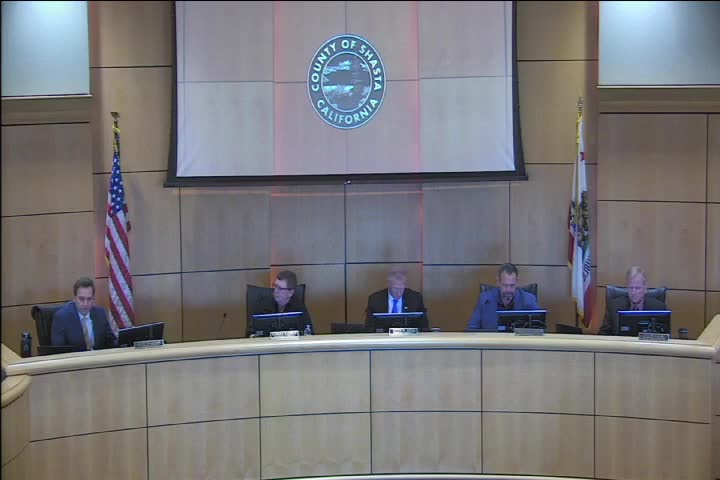
Board appoints Ted Leidy to Mosquito and Vector Control board after debate over drone use
Summary
Supervisors voted 3‑2 to appoint Ted Leidy to the Mosquito and Vector Control District board; debate focused on past use of aerial mapping and proposed drone deliveries and privacy concerns.
The Shasta County Board of Supervisors on Jan. 28 appointed Ted Leidy to a four‑year term on the Shasta Mosquito and Vector Control District board after a divided discussion focused on technology the district might use to locate and treat mosquito‑harboring sites.
Three applicants were considered: Philip Kramer (a senior environmental scientist who previously represented the City of Redding on the Mosquito and Vector Control District board), Richard Gallardo (who withdrew his nomination and recommended Leidy), and Ted Leidy, a lifelong local resident and veteran who described his volunteer and community experience. Supervisors debated experience and community representation; Supervisor Kevin Scribe and others said experience and subject-matter background were important for technical boards, while other supervisors favored new community representation.
A separate line of discussion centered on district plans to use drones and aerial imagery to identify neglected pools and to deliver targeted treatments. Supporters described drones as a tool for targeted pesticide delivery to difficult‑to‑reach water features and for operational efficiency; opponents raised privacy and Fourth Amendment concerns, said available high‑resolution commercial aerial imagery is already publicly accessible and urged strict limits on drone use. County staff and board members said the district has not yet conducted drone operations and that staff indicated the program remains to be developed and vetted, including training and policy safeguards.
The board voted 3‑2 to appoint Ted Leidy. Supervisors who supported the appointment cited local ties and community service; those who opposed cited Kramer’s prior agency experience and technical background. The district’s staff and trustees will continue developing any drone program and any operational changes would be subject to district rules and applicable state and federal law.
Why this matters: the motion fills a trustee seat on a technical district that handles public‑health risks such as West Nile virus. The meeting highlights the continuing local debate over using aerial technologies for public‑health surveillance and treatment and the need to reconcile operational tools with privacy protections and public trust.