Get Full Government Meeting Transcripts, Videos, & Alerts Forever!
Get email alerts on the Air Quality topic
No spam. Unsubscribe anytime.
Shasta County air board: district monitors ozone and particulates, cannot regulate aircraft emissions or investigate alleged 'chemtrails'
Summary
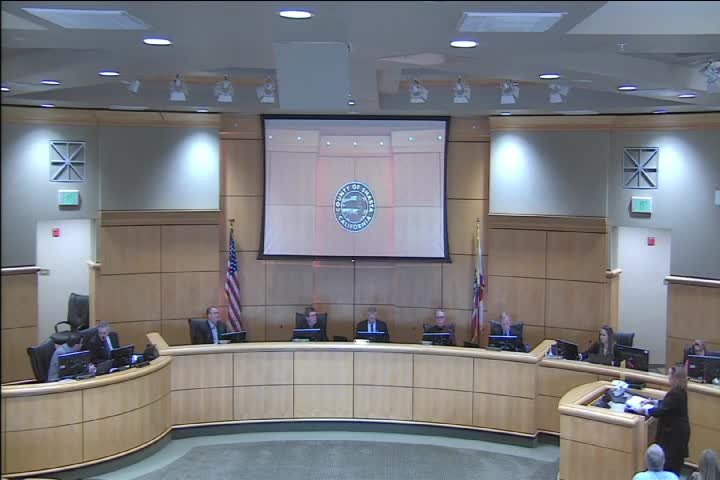
At its March 11 meeting the Shasta County Air Pollution Control Board heard public concerns about so-called "chemtrails" and received a presentation from Air Pollution Control Officer Sean Ewing clarifying the district's jurisdiction, monitoring responsibilities and limits. The board approved its consent calendar 5-0.
Shasta County Air Pollution Control Officer Sean Ewing told the Air Pollution Control Board on March 11 that the local air district is responsible for stationary-source permitting, monitoring ozone and particulate matter and adopting rules to meet state and federal ambient air standards — but it does not have authority to regulate aircraft emissions or to unilaterally investigate airborne substances beyond the pollutants the state requires.
The presentation, delivered during the regular morning meeting of the Shasta County Air Pollution Control Board, followed public comments in which three residents raised concerns about so-called "chemtrails" and potential links between atmospheric spraying and local health problems. The board then approved its consent calendar items C1 and C2 by a 5-0 vote.
Ewing, the district's air pollution control officer, summarized the district's history, statutory duties and current operations. He said the district — which began as a committee in 1959 and was activated by resolution in 1970 — issues permits for stationary and area sources, enforces district rules, responds to complaints and operates ambient-air monitoring stations. "As an air district, we regulate facilities that are built within our jurisdictions. We implement incentive and grant programs to help reduce emissions. And we maintain equipment to monitor ambient air and report it to the state as part of the state's monitoring program," Ewing said.
Ewing and staff described two monitoring sites in Shasta County: one at Shasta Lake Fire District Station 3 on Lake Boulevard and a second at the county Health and Human Services building on Breslauer. Both sites monitor ozone; the Breslauer site also monitors particulate matter (PM10 and PM2.5). Ewing said the district currently holds about 658 active permits (not counting vapor recovery and backup-generator permits) and that mobile sources (vehicles and aircraft) are outside the district's regulatory authority.
When asked about toxic air contaminants beyond state and federal ambient standards, Ewing cited procedures in the California Health and Safety Code directing the California Air Resources Board (CARB) and the Office of Environmental Health Hazard Assessment to evaluate substances and provide recommendations. "Any additional concerns for potential air contaminants being emitted in the state of California should be directed to the California Air Resources Board for their evaluation as outlined in the health and safety code," he said.
Public commenters raised a range of claims and concerns. Laurie Bridgeford told the board she distributes informational flyers locally and described visible patterns in the sky she attributed to geoengineering. Linda Glass and another commenter identified in the transcript as Dan L (and later Bill Ward in sequence) described a belief that recent wildfires and unusual fire behavior were linked to deliberate aerosol spraying. The board and staff did not endorse those claims; Ewing said the district is "open to suggestions" but asked for clear direction and a funding source if the board sought additional monitoring or research beyond current state-required parameters.
Board members pressed staff on regulatory scope and attainment status. Rob Stahl, the district manager, said the federal PM2.5 standard recently became more stringent and that, based on current data, Shasta County is expected to meet that level. Ewing and board members said the district is in attainment for particulate matter and "nonattainment transitional" for ozone, and that basinwide coordination through the Sacramento Valley basin-wide air pollution control council (referred to in the meeting as the BCC) is used when multiple districts must address compliance.
Member discussion emphasized limits on county authority for aircraft and mobile-source emissions and the need to take any broader concerns to state or federal agencies. Chair Kraft and several members said the presentation clarified the district's narrow regulatory remit. No formal action was taken to open new monitoring or to direct staff to investigate the public allegations; Ewing said the district is not currently positioned to fund research or monitor substances that are not part of existing ambient standards without explicit direction and identified funding.
The board approved consent calendar items C1 and C2 on a 5-0 vote. The clerk confirmed the next board meeting is scheduled for June 9. The meeting record indicates public concerns about local disease clusters and air quality were raised in public comment but no new district initiatives or rule changes were adopted at the session.