Get Full Government Meeting Transcripts, Videos, & Alerts Forever!
Get email alerts on the Drainage topic
No spam. Unsubscribe anytime.
Parish engineers report progress and right‑of‑way hurdles on multiple drainage projects, urge short‑term parish work to limit flooding
Summary
Parish engineers and staff told the drainage committee and police jury that snagging and partial excavation work is under way across multiple canals but that landowner refusals, levee breaches and a constrained cross‑culvert at Georgia Street are forcing a phased approach and immediate parish labor to reduce short‑term flood risk.
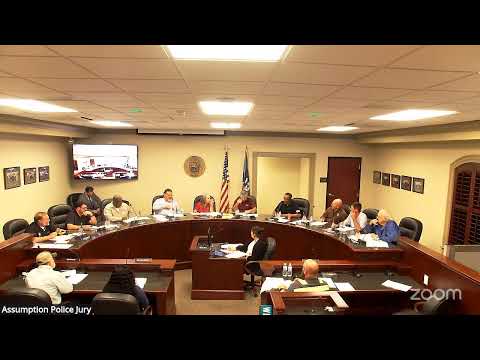
A drainage committee meeting and the full police jury heard updates Wednesday on multiple ongoing drainage projects across Assumption Parish, from Lavenderville canals to pump‑station and levee repairs near Georgia Street and Lower Texas.
Committee and engineering staff said several excavation and snagging contracts are complete or under way, but landowner refusals to grant excavation right‑of‑way are delaying the excavation portions of projects in Lavenderville and other reaches. Parish staff said they will pursue a cooperative agreement (CEA) with the landowner while continuing to advance snagging and other work that required only limited access.
Engineers from GIS Engineering and the parish’s drainage staff described field findings and preliminary designs. For the South Loop Canal reaches, staff reported completed snagging and excavation work and that no further issues were reported after completion. For the Locust Road/Redwood Street reach, GIS provided invert elevations that indicate roughly three feet of material could be removed over about 3,700 linear feet; staff said they will prepare a cost estimate for excavating to Bayou Lafourche and for dam removal.
At the Georgia pumping station and connected reservoirs, staff described repeated short‑duration flooding and a constrained cross‑culvert that limits inflow to pumps. Parish staff said enlarging that cross‑culvert (to 24 inches) or adding a second crossing and expanding the reservoir would increase inflow to the pumps, reduce repeated pump starts and improve local drainage. Staff said they will produce a cost estimate and work with the engineer to identify immediate tasks the parish can do with in‑house crews before sending the larger package to bid.
Committee members and the engineer recommended splitting work: have GIS/consultant complete the overall design and permit work while the parish identifies and implements discrete tasks (clearing, small earthworks, temporary berms or culvert work) that can be done immediately with parish labor and drainage funds.
On right‑of‑way issues, staff said one Lavenderville landowner provided a set of restrictive conditions for excavation access (including time constraints and liquidated damages), which the parish is attempting to resolve through negotiation and a potential CEA. Where full excavation access is not granted, staff said snagging and tree removal that require limited access can proceed and have been progressing.
The drainage committee reported the following approvals or directions within the committee: staff were authorized to pursue the Supreme Canal clean‑out and to examine the levee breach near the Judge Pumping Station/Georgia area and to prepare cost estimates for levee repairs and culvert improvements. The committee chair asked staff to pursue overtime or weekend work where feasible to accelerate clearance in high‑risk neighborhoods.
Public comments during the regular meeting amplified residents’ concerns from Lavenderville and Locust Road about large, newly dug private canals that residents say divert water into parish drains. Parish staff said these claims will be reviewed alongside GIS invert data and right‑of‑way negotiations.
Next steps listed by staff include finishing GIS design cross sections, pursuing the Corps of Engineers permit where required for Himalayan Canalwork, preparing cost estimates for targeted levee/culvert repairs, and phasing construction so parish crews can implement early actions while consultants finish the bid‑ready packages.