Get Full Government Meeting Transcripts, Videos, & Alerts Forever!
Get email alerts on the Waste Reduction topic
No spam. Unsubscribe anytime.
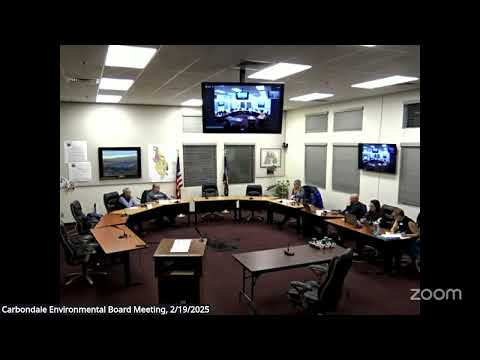
Carbondale board discusses composting, bear-resistant bins and a one-time bag-fee windfall; approves $500 for Bee Friendly outreach
Summary
Environmental Board members reviewed waste-reduction options — curbside compost, community drop-off, bear-resistant containers and education — for spending from a one-time bag-fee fund windfall. The board approved using up to $500 from its Bee Friendly allocation for yard signs, plant preorders and outreach.
The Carbondale Environmental Board discussed possible uses for a one-time increase to the town’s bag-fee fund and considered program options including curbside composting, a community drop-off site, bear-resistant containers and an education campaign.
Scott Wenning, staff liaison, told the board that “there was a kind of a onetime windfall of some money from that bag fee fund” and suggested the Environmental Board could advise the Board of Trustees on how to use extra funds that are eligible under the fund’s waste-reduction guidelines. He said some grant-funded programs (for example, for meter replacement) were at risk of being paused due to broader federal funding constraints.
Board members discussed peer models: Aspen’s organic-waste ordinance (which requires composting of organic waste in certain contexts) and Basalt’s centralized community compost drop-off, which is free to residents and serviced by a contractor. Members weighed whether the town should push to add curbside composting when the municipal trash/recycling contract is next up for renewal, or pursue a less costly, centralized drop-off option that would serve renters and others who lack curbside pickup.
Several members raised bear-resistant containers as a potential one-time purchase or rebate program. Board members noted that bear-resistant carts and containers are more costly than standard cans but can reduce wildlife conflicts and decrease unsecured waste that ends up in the natural environment.
The group discussed education and outreach as another use of funds. Sarah Jane Johnson said she would draft a communications plan and suggested the board consider paid advertising, print materials and targeted business outreach if the board decided to fund an education push. Scott Wenning said he would speak with Kevin (public works staff) about contractual and cost implications of adding compost to existing service.
The board also reviewed Bee Friendly programming and the upcoming Dandelion Day event. Hannah Hunt Wanderer, board chair, said Be Friendly will open a turf-replacement grant application in mid-March funded largely through a Colorado Water Conservation Board (CWCB) grant, and noted that the state passed legislation that will require municipalities to limit new nonfunctional turf by 2026; the town will need to plan for compliance.
On a budget item, the board voted to use up to $500 from the Environmental Board’s Bee Friendly funds for spring outreach — preordering plants, yard signage and related educational materials. Quinn made the motion; Fred seconded. The chair called the vote; the board recorded unanimous support. The board previously allocated $2,000 for Bee Friendly projects in this cycle and will use the approved amount as part of that program.
The board agreed to pursue further research between meetings: Scott will check contract timing and costs with Kevin; Sarah Jane will draft a communications plan and options for outreach; and another board member volunteered to gather details on potential composting and bear-bin costs for the next meeting. No ordinance or formal municipal policy change was adopted at the meeting.