Get Full Government Meeting Transcripts, Videos, & Alerts Forever!
Get email alerts on the Open Meetings topic
No spam. Unsubscribe anytime.
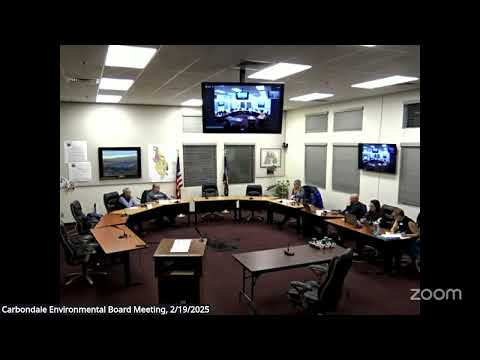
Town clerk warns Carbondale Environmental Board about email chains and Colorado open-meeting rules
Summary
Town Clerk Patrick T. Lowe reminded the Environmental Board that email exchanges involving multiple board members can create a ‘meeting’ under Colorado open-meeting statutes and may be subject to notice and public-record requirements, including CORA requests.
Patrick T. Lowe, Carbondale town clerk, gave the Environmental Board a brief briefing on Colorado open-meeting requirements and the risks of using group email for board business.
“Colorado statutes expressly state that electronic email … is subject to open meeting laws,” Lowe said, warning that an email thread among board members that discusses public business can be treated as a public meeting and thus become subject to notice and recordkeeping requirements. He said that even an exchange that is not synchronous can be “considered an ongoing conversation” if it involves a public-body policy-making function.
Lowe noted the board uses an email group (Carbondaleeboard@googlegroups.com) for logistical notices and said that routine logistics — for example, notifying members whether they can attend a meeting — are acceptable on that list. But he added that discussions that “take the tone of a board discussion of a formal action” should be paused and moved to a properly noticed meeting.
Board members asked practical questions. Sarah Jane Johnson, board member, asked whether personal email accounts or cell phones are vulnerable to public-record requests. Lowe replied that if the communications “do include … more than 3 members of the body” or otherwise discuss public business, they could be subject to CORA. He recommended caution and said the town could consider creating a managed board email address that would give staff oversight, although that would not remove open-meeting obligations.
The discussion included procedural guidance: if an email thread begins to read like deliberation toward a decision, participants should stop, notify one another of the potential open-meetings implications, and move the topic to a noticed meeting. Lowe emphasized that failing to treat such exchanges as meetings could expose the town to litigation or claims of bad faith.
No formal actions or votes resulted from the reminder. The board and staff agreed to use direct staff channels for follow-up questions and to be mindful of when email threads cross into policy discussion.