Get Full Government Meeting Transcripts, Videos, & Alerts Forever!
Get email alerts on the Building Energy Codes topic
No spam. Unsubscribe anytime.
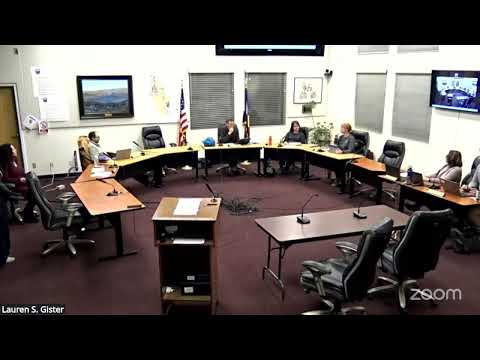
Carbondale trustees revisit ‘path to net‑zero’ as staff updates building codes
Summary
Trustees discussed how strictly to tie code updates to Carbondale’s Path to Net‑Zero goals, with consensus to prioritize modest code updates now, avoid onerous requirements for existing homes and return with specific code language for later votes.
Carbondale trustees spent the bulk of a work session debating how closely to align upcoming building‑code updates with the town’s adopted Path to Net‑Zero, ultimately urging staff to make minimal, practical modifications now and return with specific draft code language for further review.
The trustees framed the discussion around the gap between the town’s long‑term goals — reducing community greenhouse gas emissions to 50% below 2009 levels by 2030 and 100% by 2050 — and what is technically and economically feasible for existing homes today. “New construction is the easy part,” said Jeff Dickinson of CLEAR, summarizing materials in a memo he prepared for trustees. Building official Aaron said the main challenges arise in applying net‑zero expectations to existing building stock, where retrofits can be costly and technically difficult.
Why it matters: Carbondale’s code updates will guide permitting and inspections for years and affect homeowners, builders, contractors and local event organizers. Trustees said they want to avoid rules that make routine remodels prohibitively expensive while keeping the town on a credible path toward electrification, efficiency and more renewables over time.
Trustees and presenters debated a concise, shared definition of “net‑zero.” Some board members favored the plain definition — a building that produces as much energy as it uses — while others preferred a carbon‑based definition that allows for off‑site renewable supply as the grid decarbonizes. “If we say we require on‑site generation, then we should be ratcheting that up,” said Trustee Ben, noting the grid is getting greener and the town’s policy should evolve.
On specific code elements, Jeff and Aaron said the town is proposing: (1) adoption of more current model energy codes; (2) use of HERS (Home Energy Rating System) scoring for some compliance paths with a proposed option that keeps a prescriptive, lower‑cost path for smaller homes; and (3) adoption of the state’s solar‑ready and electric‑ready requirements. Aaron said he is working to simplify the existing Residential Efficiency Building Program (REBP) by bringing some of its provisions into the energy code so compliance becomes more straightforward.
Trustees sought clarity on three recurring themes: (1) avoid requiring expensive on‑site renewables or battery storage for routine remodels; (2) preserve an affordable, prescriptive compliance path (especially for smaller homes and modest renovations) while using HERS or other performance metrics for larger or luxury projects; and (3) coordinate with regional work so Carbondale’s rules align with neighboring jurisdictions. “We don’t want to make it so onerous that a minor remodel becomes prohibitively expensive,” Trustee Jess said.
Trustees asked Aaron to return with draft code language and concrete compliance options so the board can review them in at least two public meetings before adoption. Aaron confirmed he will bring proposed updates back for another round of discussion and public comment; trustees suggested allowing time for community input and for CLEAR or the regional net‑zero group to present the regional roadmap before any final vote.
Ending note: Trustees emphasized that the Path to Net‑Zero is a living document. For the near term they favored updating codes to current model standards with limited local amendments, reserving more ambitious or prescriptive measures for future review as technology, contractor capacity and the grid evolve.