Get Full Government Meeting Transcripts, Videos, & Alerts Forever!
Get email alerts on the Pharmacy Benefits Managers topic
No spam. Unsubscribe anytime.
Arkansas committee debates PBM reforms aimed at expanding pharmacy access; sponsor pulls one bill for amendment, advances related licensure changes
Summary
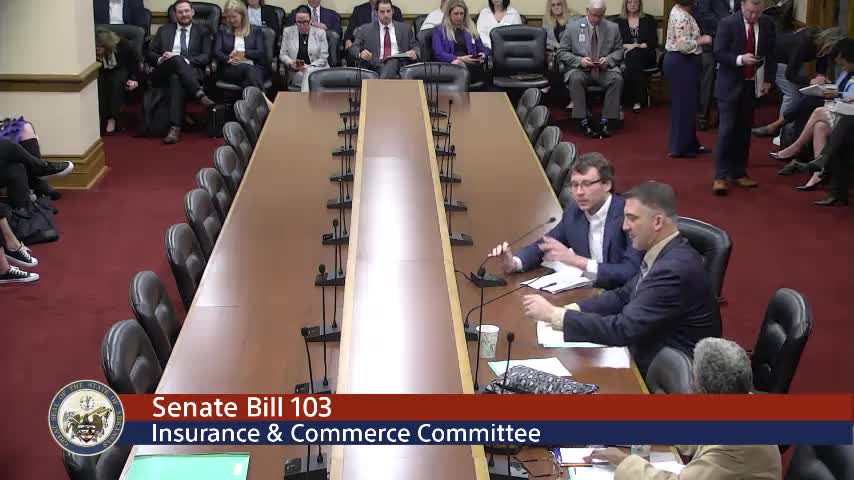
Senate Insurance & Commerce members spent more than an hour on complaints about pharmacy benefit managers (PBMs), hearing from an oncology practice and PBM industry representatives about how PBM network rules affect Arkansans’ access to prescriptions.
Senate Insurance & Commerce members spent more than an hour on complaints about pharmacy benefit managers (PBMs), hearing from an oncology practice and PBM industry representatives about how PBM network rules affect Arkansans’ access to prescriptions.
Sen. Clint Penzo, sponsor of the measures, told the committee the bills are meant to ensure patients can obtain medicines at local pharmacies by modernizing Arkansas’ “any willing provider” framework and clarifying how PBMs may include or exclude pharmacies from specialty networks. "SB103 is all about, expanding access to care," said Simon Debruzzo, Highlands Oncology Group, testifying that patients with complex regimens can face harmful delays when prescriptions are steered to mail-order affiliates owned by PBMs.
The hearing documented concrete complaints: testimony said some PBM-owned mail-order pharmacies have low online ratings and that prescriptions routed out of state have sometimes not arrived. Witnesses urged clearer rules so hospital-owned and independent Arkansas pharmacies that meet participation requirements cannot be “arbitrarily excluded.” The bill text cited federal Medicare Advantage language—"reasonable and relevant" terms of participation—to mirror protections that apply in the federal program.
The Pharmaceutical Care Management Association, represented by Phil Cristianelli, argued the bills go beyond existing Arkansas law and would give the Arkansas Insurance Department new authority to renegotiate or second-guess privately negotiated contract terms. Cristianelli raised concerns about vague standards such as “reasonable” or “relevant,” and argued that some contract provisions reflect patient-safety and clinical standards that PBMs use when arranging specialty-drug distribution. "The law requires that our companies contract with any pharmacist who wants to comply with the terms and conditions of the contracts," Cristianelli said, and warned that the bill's complaint process and emergency clause could create compliance problems for plans and PBMs.
Committee members pressed both sides on specifics: whether state and school plans use PBMs (witnesses confirmed they do and described an RFP process), how non‑disclosure agreements affect transparency, and whether federal enforcement or FTC/DOJ litigation addresses vertical integration concerns. Several senators voiced particular concern about cases where patients were forced to use mail-order pharmacies despite clinical needs; proponents said SB104 (the PBM licensure bill) contains protections for medically necessary exceptions and prohibits the use of an affiliate pharmacy as the sole option in a network.
After discussion, Sen. Penzo asked to pull SB103 to allow time for drafting clarified language and to add explicit accreditation or participation standards; the sponsor said staff and stakeholders would work on tightened definitions before reintroduction. The committee later took up SB104, described in testimony as the “sister bill” addressing licensure, affiliate steering, ghost networks and patient health-information sharing; the committee approved SB104 on a voice vote with no recorded opposition.
Why it matters: PBM contracting and specialty‑pharmacy network design affect where Arkansans obtain prescriptions and how quickly they get them. The bills aim to balance patient access and safety by specifying participation standards, complaint remedies, and limits on affiliate steering. Supporters said the changes would let Arkansas patients use local specialty pharmacies and hospital pharmacies that meet accreditation standards; opponents urged careful drafting to avoid unintended clinical or contractual consequences.
What comes next: Sponsor Penzo said he will work with stakeholders and the insurance department on tightened language—particularly around accreditation and definitions used to determine whether terms are “reasonable and relevant”—and bring SB103 back later. SB104 will move forward from committee to the next stage of the legislative process.
(Ending) The committee hearing showed broad agreement on the problem—access limitations experienced by patients—but differing views on how state law should remedy PBM practices without creating regulatory or clinical risk. The sponsor and stakeholders signaled readiness to continue negotiations on specific drafting before further committee action.