Get Full Government Meeting Transcripts, Videos, & Alerts Forever!
Get email alerts on the Electric Generation Infrastructure topic
No spam. Unsubscribe anytime.
Southeast Alaska Power Agency seeks funding to add generator at Tyee Lake to boost capacity
Summary
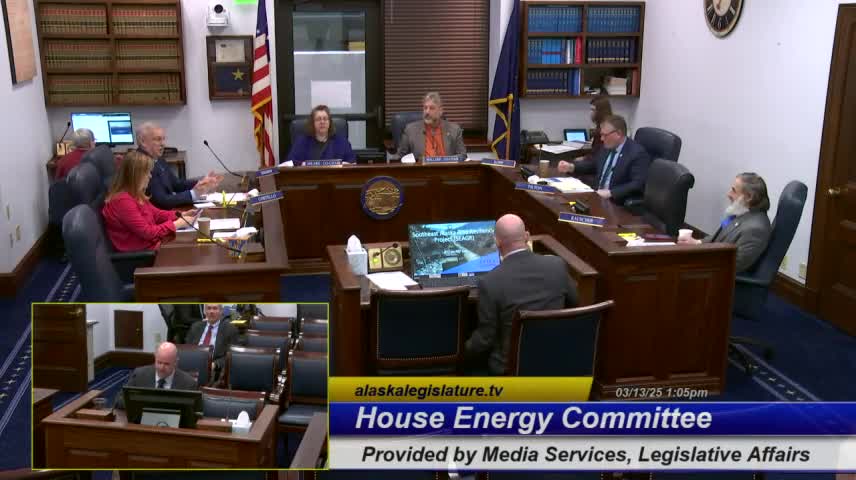
Southeast Alaska Power Agency CEO Robert Seidman told the Alaska House Energy Committee on March 13 that SEPA plans to install a 12‑megawatt generator in the existing Tyee Lake powerhouse skeleton bay to raise peaking capacity from about 48 megawatts to roughly 60 megawatts.
Southeast Alaska Power Agency CEO Robert Seidman told the Alaska House Energy Committee on March 13 that SEPA plans to install a 12‑megawatt generator in an existing “skeleton bay” at the Tyee Lake powerhouse to raise the system’s peaking capacity from about 48 megawatts to roughly 60 megawatts.
The project, Seidman said, would increase the CIBA system’s peak capacity by about 25 percent and provide contingency and resiliency benefits so the system would not have to switch to diesel generation immediately if an existing unit fails.
Why it matters: SEPA presented the plan as a lower‑cost alternative to building a new hydro facility and said higher winter peaks driven by residential conversions from oil heat to electric heat pumps are shrinking the margin between available hydro peaking capacity and winter demand. Seidman told the committee the agency produced about 180 gigawatt‑hours per year on average but that peaking shortfalls in 2022 required diesel generation because monthly peak megawatts fell below system need.
Details and timeline SEPA’s presentation said construction would primarily install a transformer at the existing substation and place a 12 MW generator in the Tyee Lake powerhouse skeleton bay. SEPA reported procurement and design milestones completed in late 2024 and early 2025, with bid responses due in March 2025, generator delivery targeted for June 2026, transformer delivery anticipated in mid‑2027, and full commissioning in December 2027, subject to equipment lead times.
Permitting status Seidman said SEPA was designated by the Federal Energy Regulatory Commission (FERC) as the non‑federal representative for stakeholder consultation in November 2024 and that stakeholder consultations in December 2024 produced written endorsements. He told the committee that SEPA received a second‑stage consultation waiver in January 2025 and had filed a final FERC application in February 2025; SEPA expects an expedited FERC approval in second or third quarter 2025.
Funding and economics SEPA described a roughly $20 million project total. Funding sources described to the committee include a Department of Energy grant under a program Seidman referenced as the Inflation Reduction Act Section 247 (a $5 million award SEPA expects to be “thawed”), about $4 million recommended in last year’s Alaska Energy Authority legislative recommendation, potential federal investment tax credits (ITC), and SEPA reserves or forward‑funding accounts that have covered early design work. Seidman said $265,000 had been spent on switchgear design and $858,000 on generator/turbine design to date. He cautioned that most remaining upfront cash or bonds would likely come from ratepayers (reserves or bonding repaid through rates) if federal grant dollars do not materialize.
Questions from committee members probed whether ratepayer savings from household heat‑pump conversions could be captured to finance projects, and Seidman stressed that those residential savings accrue to customers and would only be collectible for system funding if rates were raised — a step he said could accelerate out‑migration by increasing basic energy costs. He also told the committee a board decision on whether to pause contracting was imminent because SEPA’s procurement award would trigger 20–30 percent down payments, and delaying the contract to await federal funds could push the schedule back about a year.
Context and implications SEPA said Southeastern communities are converting heating from diesel fuel oil to electric heat (SEPA’s study found about 22 percent of homes converted since 2016), and that conversions plus possible port electrification and electric vehicles are increasing peak capacity needs faster than annual energy growth. SEPA estimated summer spill of unused hydro energy averages 20–30 GWh per year; converting heating load to electricity (about 3.7 million gallons of diesel equivalent) could shift roughly 36 GWh into usable electricity if delivered by additional generation capacity.
SEPA emphasized the Renewable Energy Fund’s leverage of federal grants and said the program historically displaced more than 100 million gallons of diesel statewide. Seidman closed by noting that fully funding the REF at $21 million on a ~$6.5 billion state budget would represent roughly 0.3 percent of that budget, an argument framed as the statewide economic benefit of avoided diesel expenditures.
Ending SEPA asked the committee to consider the project’s timeline and funding uncertainties as the agency prepares a board recommendation; the presentation left unresolved whether the board would pause pending federal and state decisions and whether incremental ratepayer funding would be acceptable to support the upfront capital.