Get Full Government Meeting Transcripts, Videos, & Alerts Forever!
Get email alerts on the K9 Emergency Care topic
No spam. Unsubscribe anytime.
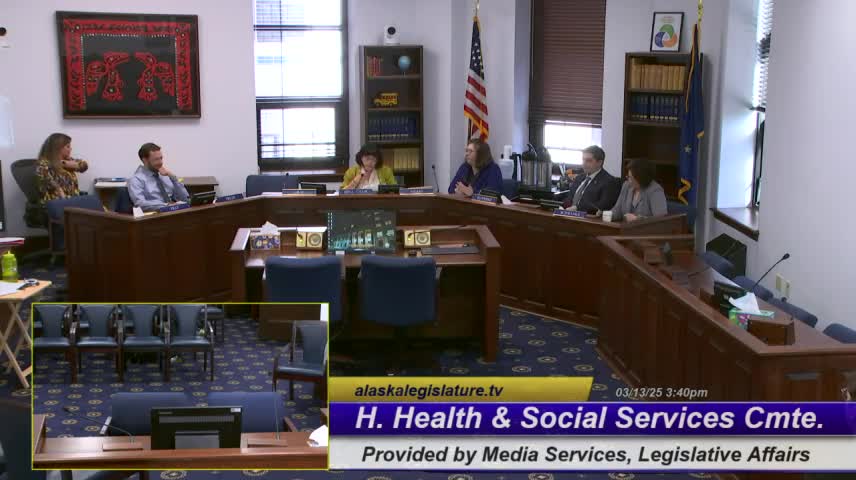
Lawmakers hear competing views on HB70 allowing EMS to treat and transport operational canines; bill set aside
Summary
House Bill 70 would authorize EMS personnel to provide pre-veterinary emergency care to operational canines and include legal protections, training and protocols. The committee heard extensive pro and con testimony from paramedics, search-and-rescue handlers and multiple veterinarians; the bill was set aside for a future hearing.
House Bill 70, sponsored by Representative Shragi, would authorize emergency medical services personnel to provide on-scene pre-veterinary trauma care and transport for operational canines (K9s), add legal protections for EMS clinicians when they provide that care, and require training and written protocols if an EMS service chooses to participate. The sponsor summarized the bill as optional for services and focused on low-frequency, high-acuity events such as a police or search-and-rescue dog suffering combat-type trauma.
The bill prompted a division between EMS/tactical-medicine witnesses and veterinary associations. Brian Webb, a tactical paramedic from Anchorage who helped draft the sponsor language, described military and civilian canine tactical emergency care training and said the proposal was narrow and voluntary. "EMS participation of canine care will be completely optional and is based on need and 100% approved by each services medical director," Webb told the committee. He and other EMS witnesses argued trained paramedics already use a small set of emergency medications and skills that can be applied to dogs to preserve life en route to veterinary surgery.
Veterinarians uniformly urged caution or opposed the bill as written. Rachel Berngardt, immediate past chair of the Alaska Board of Veterinary Examiners, said the board had not taken an official position and cautioned that "Mister Webb spoke about nearly identical protocols. Nearly identical and identical are not the same thing," and urged careful definition of which medications and procedures would be allowed. Dr. Katrina Backus, a hospital medical director who testified as a veterinarian, warned that "inappropriate treatments in emergency situations often do more harm than good" and emphasized that some emergency interventions can worsen outcomes without specialized veterinary oversight.
Other testimony underscored the bill's practical arguments. Dr. Sean McPeck, a veterinary hospital owner who supports the bill, described remote and austere scenarios in Alaska where timely veterinary surgical care can be hours away and where paramedic interventions can be lifesaving: "This is in route, in transit to a veterinarian... If we have massive hemorrhage, that can be direct pressure. Very simple, easy things." Search-and-rescue and law-enforcement handlers described rare but real incidents where transport or basic field interventions might have changed outcomes. Several veterinarians and the Alaska Veterinary Medical Association urged continued consultation and refinements to protocols and training, recommending an advisory process led by credentialed veterinary emergency specialists.
Ending: After extensive invited and public testimony on both sides, the committee set HB70 aside for a future hearing to allow further work on training, protocol specifics and veterinary oversight.