Get Full Government Meeting Transcripts, Videos, & Alerts Forever!
Get email alerts on the Stroke And Heart Attack Systems topic
No spam. Unsubscribe anytime.
Committee adopts amendment to allow special designations for heart-attack and stroke care; HB27 passes from committee
Summary
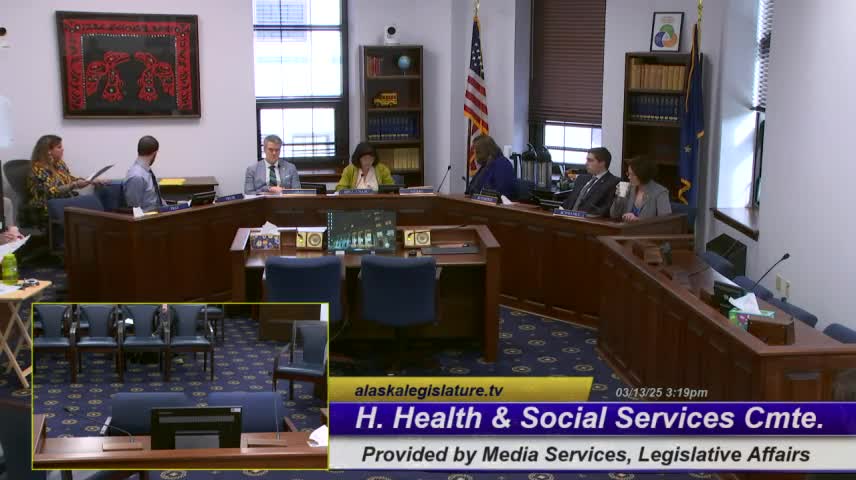
The House Health and Social Services Committee adopted an amendment to House Bill 27 to authorize the state to create special designations for facilities that provide heart attack and stroke care and advanced systems of care. The committee passed a substitute for HB27 out of committee with no objections.
Chair Representative Mina opened the second hearing on House Bill 27, a bill to improve statewide response to major medical emergencies including heart attacks and strokes, and said the committee would hear committee discussion, public testimony and consider one amendment. Representative Ruffridge moved Amendment 1, which would add authority in statute for the state to designate and regulate varying levels of care for major medical emergencies, modeled on existing trauma center designations.
The nut graf: The amendment would let the Office of EMS use nationally recognized standards to credential hospitals as heart-attack or stroke centers and to form expert committees and registries similar to the trauma system; committee staff and agency witnesses said adopting the change would require modest additional personnel and database resources identified in the bill's fiscal note.
Dr. Michael Levy, an Anchorage EMS director and emergency physician, described the clinical rationale for acting on time for certain strokes. "The types of interventions that are done now for certain types of strokes can convert devastating strokes that involve a large part of the brain to strokes that actually people have complete recovery from, even many, many hours after the onset of the stroke," Levy said, arguing timely triage and transport to capable centers reduces long-term disability. Gene Wiseman, section chief for Rural and Community Health Systems, told the committee the Office of EMS would replicate the trauma designation process for heart attack and stroke, including identifying nationally recognized credentialing bodies, forming subject-matter committees and maintaining registries. "They work in conjunction with the American College of Surgeons for our level 2 hospitals ... I envision that it would be replicated, very, very, similarly to that system," Wiseman said.
Wiseman and other staff said the Trauma Systems Unit currently has limited staffing and that the fiscal note's proposed third position plus a database would be needed to coordinate designations and to maintain statewide registries tied to the new designations. Representative Ruffridge framed the amendment as a way to allow statutory flexibility to recognize facilities that meet national standards "that produce that high level care and wanna take that designation on." The sponsor removed her objection after asking Wiseman how the amendment would function operationally; there were no further objections and Amendment 1 was adopted.
Later the committee voted to move a committee substitute for House Bill 27 from committee with the attached fiscal note. The clerk recorded no objections during the floor handling; committee members indicated the matter passed from committee for further processing.
Ending: The committee signed the report and proceeded to other bills. The record shows the committee adopted Amendment 1 and advanced HB27 with the committee substitute and fiscal note.