Get Full Government Meeting Transcripts, Videos, & Alerts Forever!
Get email alerts on the Divorce Alimony topic
No spam. Unsubscribe anytime.
Panel hears argument in Scopa v. Braunstein over alimony, good-faith obligations and contempt claim
Summary
The appeals court heard argument in Scopa v. Braunstein about whether a husband’s early retirement and cessation of alimony payments could support a contempt finding under the parties’ separation agreement.
The appeals court heard oral argument in case 24P703, Scopa v. Braunstein, a dispute over whether a separation agreement and the parties’ conduct supported a contempt finding when the husband stopped working and ceased paying alimony without first obtaining court approval.
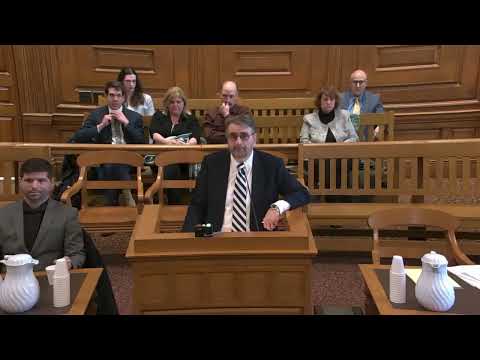
Richard Novich, counsel for appellant Leslie Scopa, argued the separation agreement’s termination clause prevented the husband from unilaterally ending his alimony obligation by retiring early. Novich told the panel the agreement should be read in full and that paragraph e required a party seeking termination to “file a complaint for modification.” He urged that allowing the husband to stop payments without court approval was “self-help” that should have supported a contempt finding.
Counsel for the appellee, Carolyn Van Tynen, said civil contempt has higher burdens — clear and convincing proof and a clear, unequivocal order — and that a dispute about contract interpretation and the implied covenant of good faith and fair dealing does not automatically satisfy contempt standards. Van Tynen noted the trial court made no contempt finding and that other remedies remain available, including modification proceedings and equitable relief.
The judges asked about whether the implied covenant of good faith and fair dealing could create the “clear and unequivocal” obligation required for contempt; counsel debated whether precedent required contempt or other remedies and whether merger of the separation agreement into a divorce judgment affected available remedies. Both sides cited appellate cases (including Larson and a more recent Talbotai decision referenced by counsel) and Lee-era precedent about contract interpretation. The court heard argument about trial-court collateral proceedings and scheduling, including that a modification complaint remained pending in the trial court.
After extended questioning the panel took the arguments under advisement. No ruling was issued from the bench.