Get Full Government Meeting Transcripts, Videos, & Alerts Forever!
Get email alerts on the Property Law Adverse Possession topic
No spam. Unsubscribe anytime.
Appeals court hears neighbor dispute over adverse possession, with parties contesting visibility and permission
Summary
The appeals court heard oral argument in Johnson v. Holbrook over whether long-term neighborly use became adverse possession of a driveway turnaround and a rear parcel.
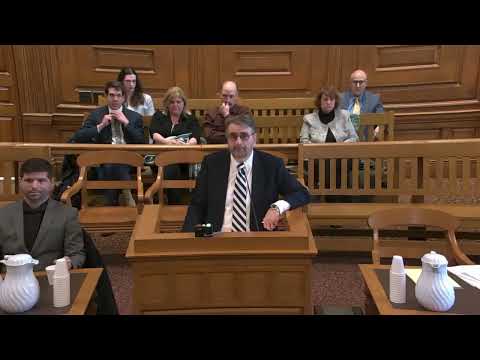
The appeals court heard argument in case 24P479, Johnson v. Holbrook, an adverse-possession dispute between neighboring property owners over a driveway turnaround and an adjacent rear parcel.
David Uidi, counsel for the appellants (the Johnsons), argued the trial court erred by finding the original owner’s permission was limited when, he said, the record contains repeated testimony granting permission to “use this area” and to “park on that area,” including commercial vehicles and trailers. Uidi told the panel that the judge provided no factual basis in the decision for narrowing the scope of the permission his client testified to and that the trial judge’s contrary finding was clearly erroneous.
Maureen Carroll, counsel for the Holbrooks, countered that the dispute involved more than parking and turning. She told the panel the contested uses included stacked firewood, a movable basketball hoop, a pet cemetery, a fish pond, a kennel and other improvements that collectively were continuous and sufficient to support adverse possession. Carroll argued the Holbrooks treated the contiguous parcel “as their own” and cited testimony that they planted shrubs and placed a gazing ball and bench.
The judges asked technical questions about what a reasonable owner could have seen, whether invited visitors would have observed improvements, and whether vegetation or tree cover on the Johnsons’ property made the rear improvements effectively concealed. Counsel debated whether visibility from an owner’s property or from someone “who might reasonably be expected to communicate their knowledge to the owner” was required for notoriety under the applicable case law; counsel discussed precedent the panel could consult.
Both sides referenced a view of the property conducted during the trial and the appellate panel heard argument about how that view informed the trial judge’s factual findings. The court did not rule from the bench and said it would take the case under advisement.