
School committee outlines internal and external special-education review, staff to pursue data and vendor interviews
Get AI-powered insights, summaries, and transcripts
Subscribe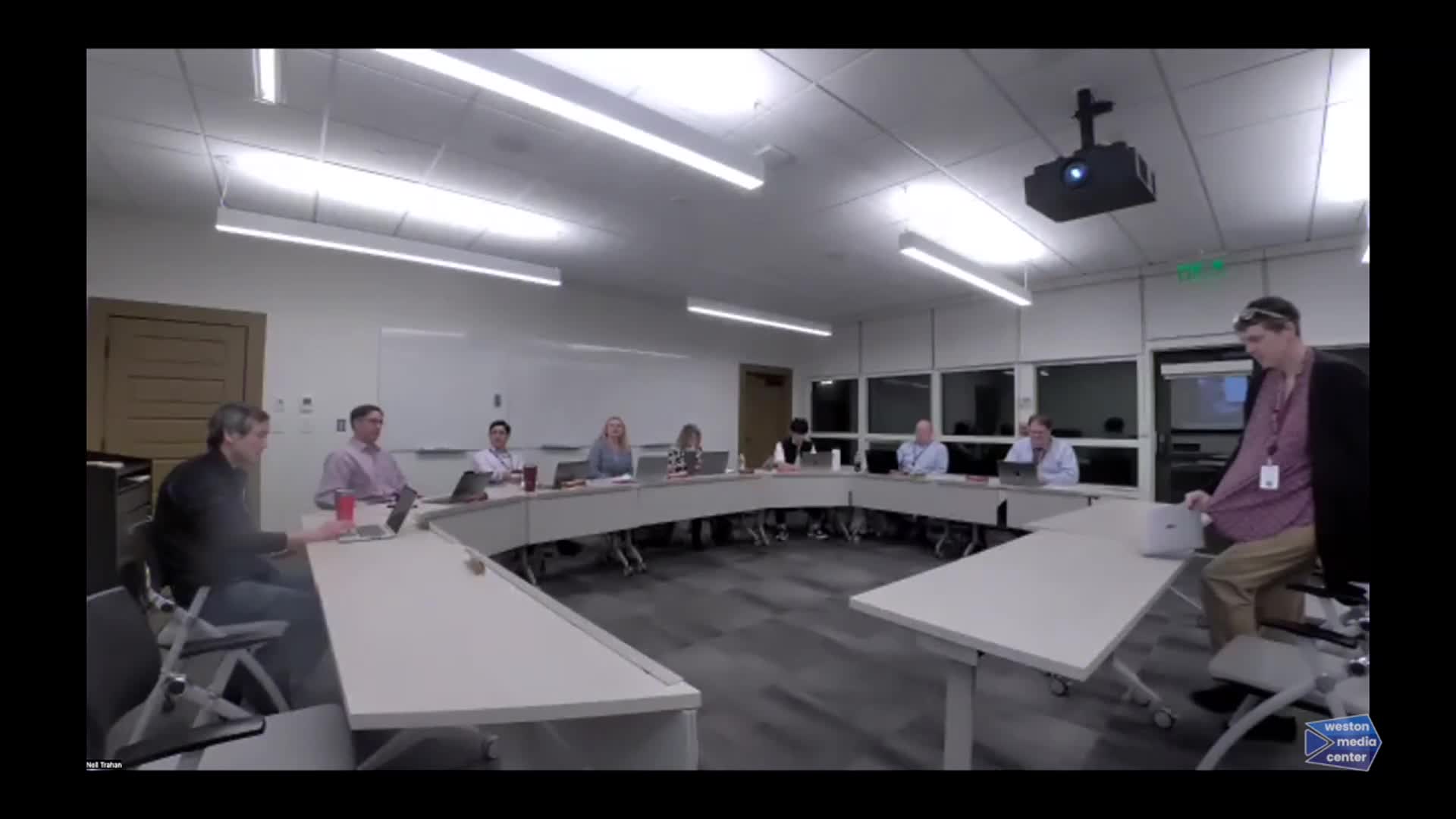
Summary
District staff recommended a two-part special education review — an internal analysis to be completed by June and an external review to follow — focused on eligibility, programming, caseload, IEP quality and out-of-district placements. Committee members asked for prioritized questions and benchmarks for a small-district context.
District staff presented a proposed two-part review of special education services at the Weston School Committee meeting, saying it is time for a comprehensive look at eligibility, programming, staffing, workloads and data following recommendations from previous reports.
The proposal divides the work into an internal review the administration aims to complete by June and a longer external review that would take roughly 120–190 days if outsourced. The internal review will analyze trends in special-education eligibility and out-of-district placements, IEP development practices, professional development, and facilities and technology needs. The external review will probe programming effectiveness, caseload and workload metrics, the MTSS (Multi-Tiered System of Supports) process, and whether instruction and interventions are implemented with fidelity.
Martha (last name not specified in the transcript), who led the presentation, said state law calls for periodic reviews and that last year’s Athena report and the superintendent’s entry findings recommended a deeper look. “We really try to delve into… what are the specific areas for review?” she said, describing eight topic “buckets” the team proposes to examine.
Committee members urged the team to prioritize review questions for a district the size of Weston and to benchmark against similar, smaller districts rather than only larger neighboring systems. One member asked for the review to identify the three highest-priority hypotheses — for example, questions about eligibility rates, rigor of specially designed instruction, or the potential to increase in-district programming to reduce expensive out-of-district placements.
Staff noted federal funding sources and state grant programs that support special-education services. The presenters said the district currently receives IDEA (Individuals with Disabilities Education Act) funding and other federal grants that together amount to several hundred thousand dollars annually; staff cautioned that changes in federal funding could affect the district’s budget.
On timeline and resourcing, staff said they have interviewed potential external reviewers and will refine scope and cost estimates. The internal review will focus on data collection, eligibility patterns, and existing practices; the external review, they said, should be performed by a contractor with experience benchmarking small districts and examining program fidelity.
The committee asked staff to return with a prioritized scope and more detailed timeline, and to ensure the external review considers comparable small districts and collaborative options, including the feasibility of shared postgraduate programming or joint programs with neighboring districts.