Get Full Government Meeting Transcripts, Videos, & Alerts Forever!
Get email alerts on the School Budget topic
No spam. Unsubscribe anytime.
Northbridge officials outline $777,000 FY26 deficit and list potential cuts including 11 FTEs
Summary
District leaders presented a draft FY26 operating budget showing a $777,000 shortfall, proposed reorganizations (including moving eighth grade into the high school) that would reduce costs by about $324,603, and a list of potential program and staff cuts if additional revenue or revolver funds aren’t available.
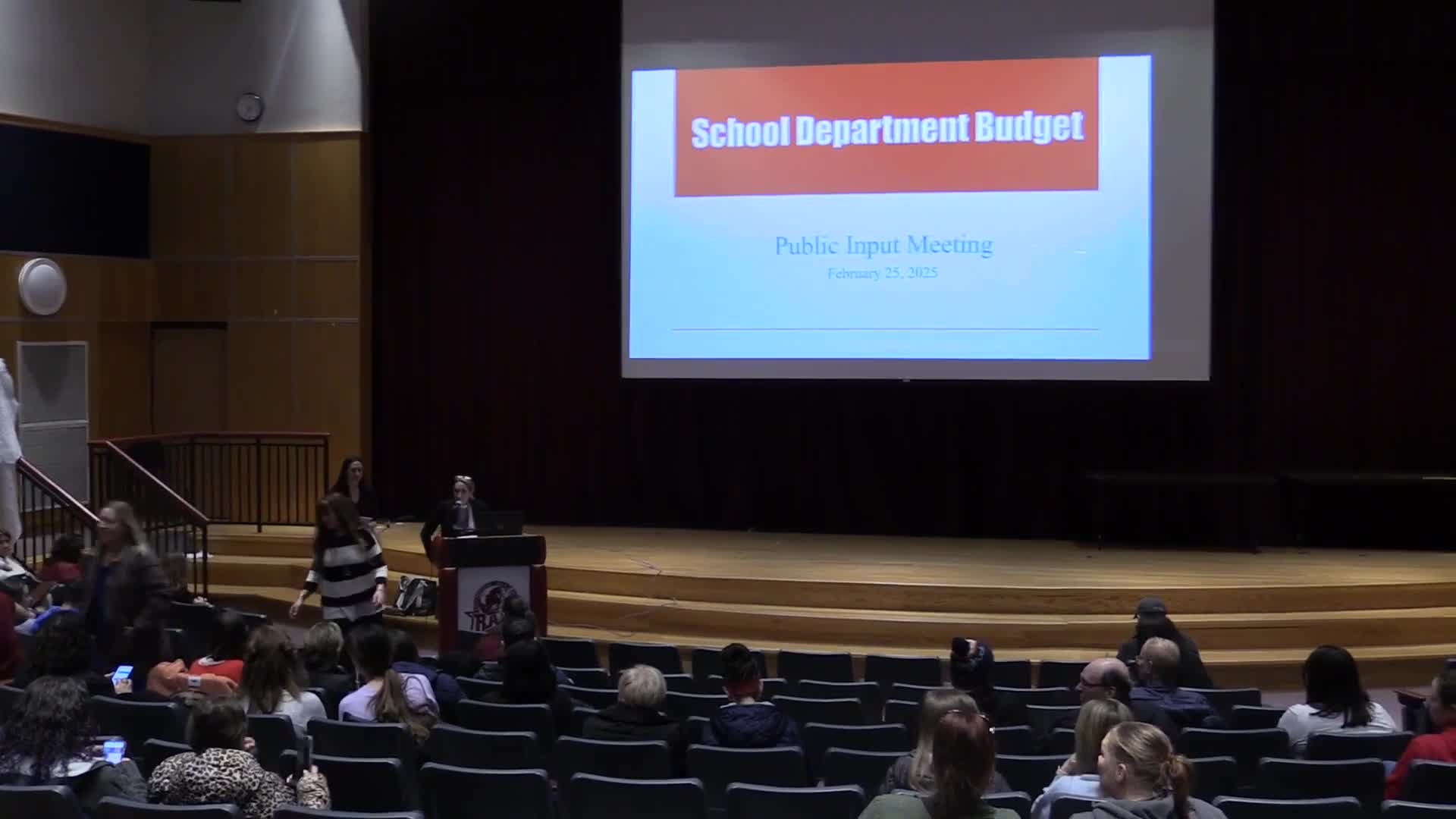
Superintendent (name not specified) opened a public input meeting to present the Northbridge Public Schools draft FY26 operating budget and said the district faces a projected $777,000 deficit for fiscal year 2026.
The presentation explained the district’s revenue mix — state aid (referred to in the meeting as Chapter 70/Chapter 78), town appropriation, grants and so-called “revolver” funds (fee- and program-generated accounts) — and projected that the district expects roughly $16.2 million in state aid, a proposed $391,000 increase in town contribution and about $1.1 million in grant funding for FY26. The draft budget totals were presented as approximately $33.84 million, with the $777,000 gap after applying those revenue sources and proposed revolver use.
Why it matters: district leaders said Northbridge serves a higher share of high-needs pupils than many neighboring towns — including English learners, students with disabilities and low-income students — and that those populations drive substantially higher per-pupil costs. The superintendent cited examples in the presentation showing individual students’ annual costs ranging from roughly $34,000 to more than $50,000 when special education and other services are included, compared with an average per-pupil allocation of about $16,723 for the district and a state average near $20,767.
Most-significant proposed changes: to shrink the FY26 gap, the administration proposed several reorganizations and reductions that together would reduce costs by about $324,603. The largest single structural change discussed was moving eighth-grade students into the high school beginning next year; administrators said that move would allow consolidation of staffing and facilities and could improve access to electives and athletics for eighth graders. That move would shift a number of middle-school positions to the high school (including grade 8 teachers and two special-education inclusion teachers) and eliminate several middle-school positions (a middle-school music teacher, PE teacher, adjustment counselor and two grade teachers), plus a high-school behavior technician.
New/additional positions proposed in the draft budget include a full-time athletic trainer, a culinary/home-ec teacher at the high school, an additional BCBA at the elementary level, and a middle-school special-education inclusion teacher. Administrators said those additions reflect student interest (woodshop and other electives) and rising caseloads for special-education and related services.
Potential cuts if the district cannot close the gap include up to 11 FTEs and a lengthy list of program reductions: cuts to supplies and materials across schools and district office, elimination of some middle-school athletics and three non-varsity high-school sports, reductions in athletic supplies and transportation, elimination or reduction of library clerks and school secretaries, and multiple classroom and special-education teaching reductions (with some replacements proposed as instructional assistant positions). Administrators warned that such staffing reductions would increase class sizes and reduce services.
Officials also described rising contract and service costs: the district’s transportation contract out to bid produced an increase of over $200,000; out‑of‑district special-education placements can cost hundreds of thousands of dollars for a single student; and step plus negotiated-salary increases across multiple bargaining units raised the projected personnel cost. Revolver accounts and one-time federal grant funds (ESSER and other COVID-era grants) previously helped balance budgets, but administrators said many of those funds are expiring and cannot reliably be used long-term.
Public response and next steps: residents and parents at the meeting urged mobilization for a Proposition 2½ override and described organizing an override committee to collect voter support. Speakers stressed that the override process includes deadlines and town procedures; one attendee noted an article-deadline of March 7 to place an override on the town meeting warrant and that selectboard action is required to finalize the warrant. Administrators said they would post the slide deck and host additional informational sessions and a FAQ, and encouraged public comment at school committee meetings. No formal vote on the budget or an override appeared in the meeting record.
The district’s presentation, administrators said, shows a multi-year risk: with level services budgeting and modest appropriation growth, officials projected a much larger deficit for FY27 if current funding trends continue, and warned that repeated cuts could lead to program erosion and staffing losses that would be slow to reverse.