Get Full Government Meeting Transcripts, Videos, & Alerts Forever!
Get email alerts on the Ferry Maintenance topic
No spam. Unsubscribe anytime.
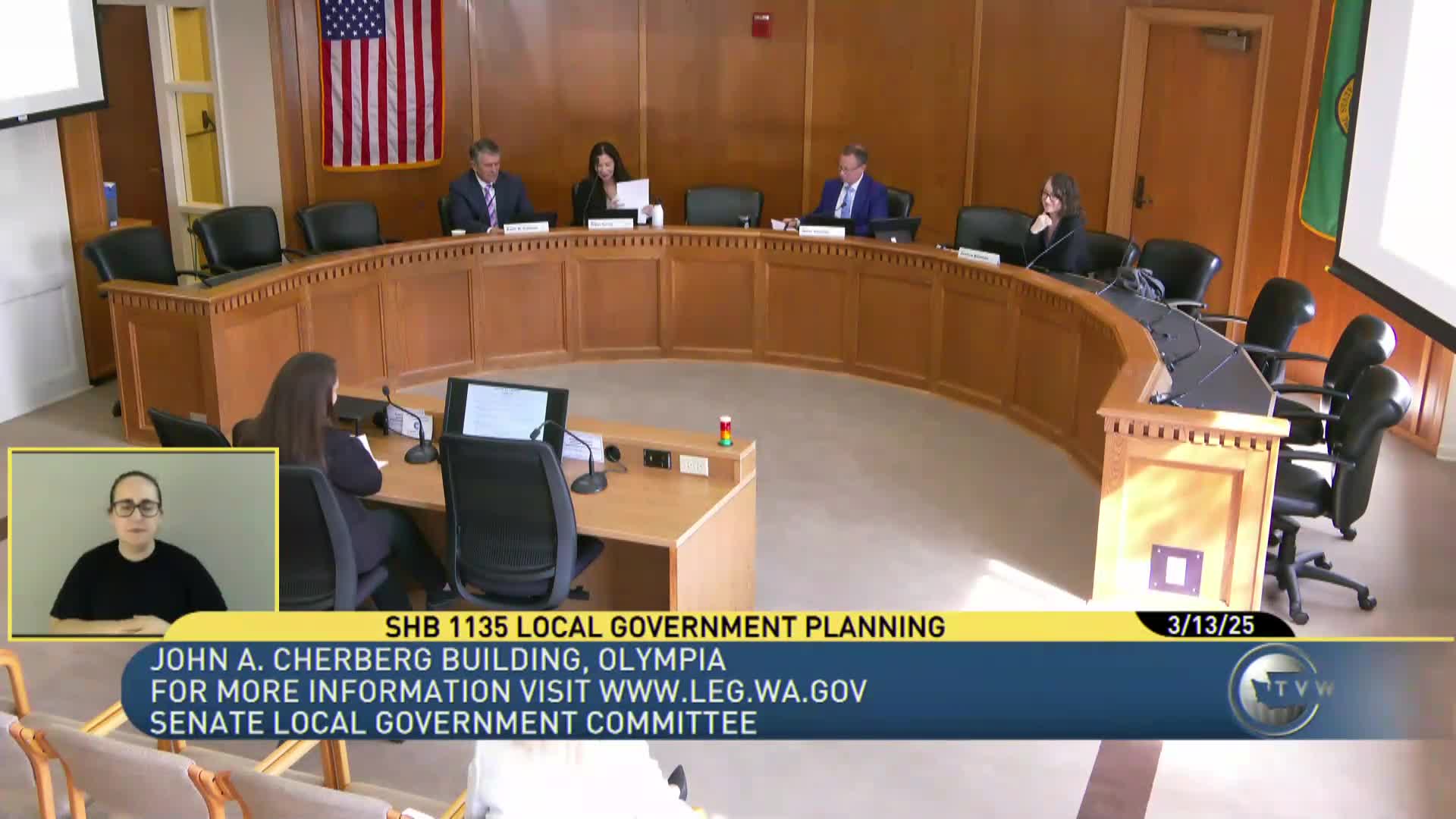
Senate committee hears bill to allow 10-year county ferry maintenance contracts
Summary
Supporters told the Senate Local Government Committee extending unit-price contract terms to 10 years would help small counties secure dry-dock time and lower costs for county-run ferries that serve islands such as Anderson Island.
March 13 — The Senate Local Government Committee reviewed House Bill 1054 on Wednesday, a bill that would allow counties with purchasing departments to use unit-price contracts of up to 10 years for maintenance and repair of county ferry vessels.
Committee staff said the bill is intended to let small ferry-operating counties negotiate longer contracts so they can compete for scarce dry-dock space and reduce emergency costs. "For counties with purchasing departments, unit price contracts for the maintenance or repair of a county ferry vessel or a county ferry district vessel may be for a term of up to 10 years rather than 1 year," staff summarized.
Supporters told the committee that the change is largely a procurement fix to address limited dry-dock availability and small bid pools. "Dry docks are really hard to schedule. There's not a lot of dry docks available and providers who provide those dry docks generally don't want to take the time that it takes to do a bid for a 1 year contract," Representative Marie Lovett, sponsor of the bill, said. Lovett described Anderson Island in Pierce County as dependent on the county-run ferry: when the ferry broke down in February 2023, residents and students were stranded for several days.
Pierce County representatives said a longer contract term would make the county a more attractive customer to shipyards and allow more predictable scheduling. "We went to the MSRC procurement experts ... and they recommended taking this existing method of enterprise contracting and then creating that longer period of time so that we can negotiate," said Michael Shaw, who signed in representing Pierce County as a contracts lobbyist. Raymond Williams, Pierce County ferry administrator, said Coast Guard rules require dry-dock inspections every two years and that the county often gets only one bid when it goes to procurement. "This structure kind of reduces our ability to adjust maintenance schedules based on availability," Williams said.
Testimony included a county savings estimate: Pierce County told staff it expects a reduction in expenditures of $245,000 in the current biennium; fiscal impacts for the other three counties identified in the fiscal note were listed as unknown. Jacob Anderson, an Anderson Island resident and member of the Anderson Island Citizens Advisory Board, said the ferries are a "lifeline" and supported the bill as a tool to improve reliability.
No formal committee vote occurred during the public hearing; the committee closed public testimony after several speakers and did not take executive action on this bill during the same meeting.
Details and context: the bill follows earlier, related proposals and was rewritten with input from county procurement experts to address prevailing-wage and minority-business certification requirements while still enabling longer-term contracting. The committee received written and oral testimony from Pierce County staff and community members describing operational constraints and community impacts when ferries are out of service.
What happens next: the bill remains in committee; proponents said it would help counties that operate ferries (Pierce, Skagit, Wahkiakum and Whatcom were named in staff materials) secure maintenance work and reduce service interruptions.